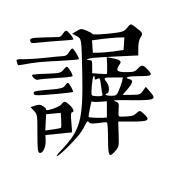
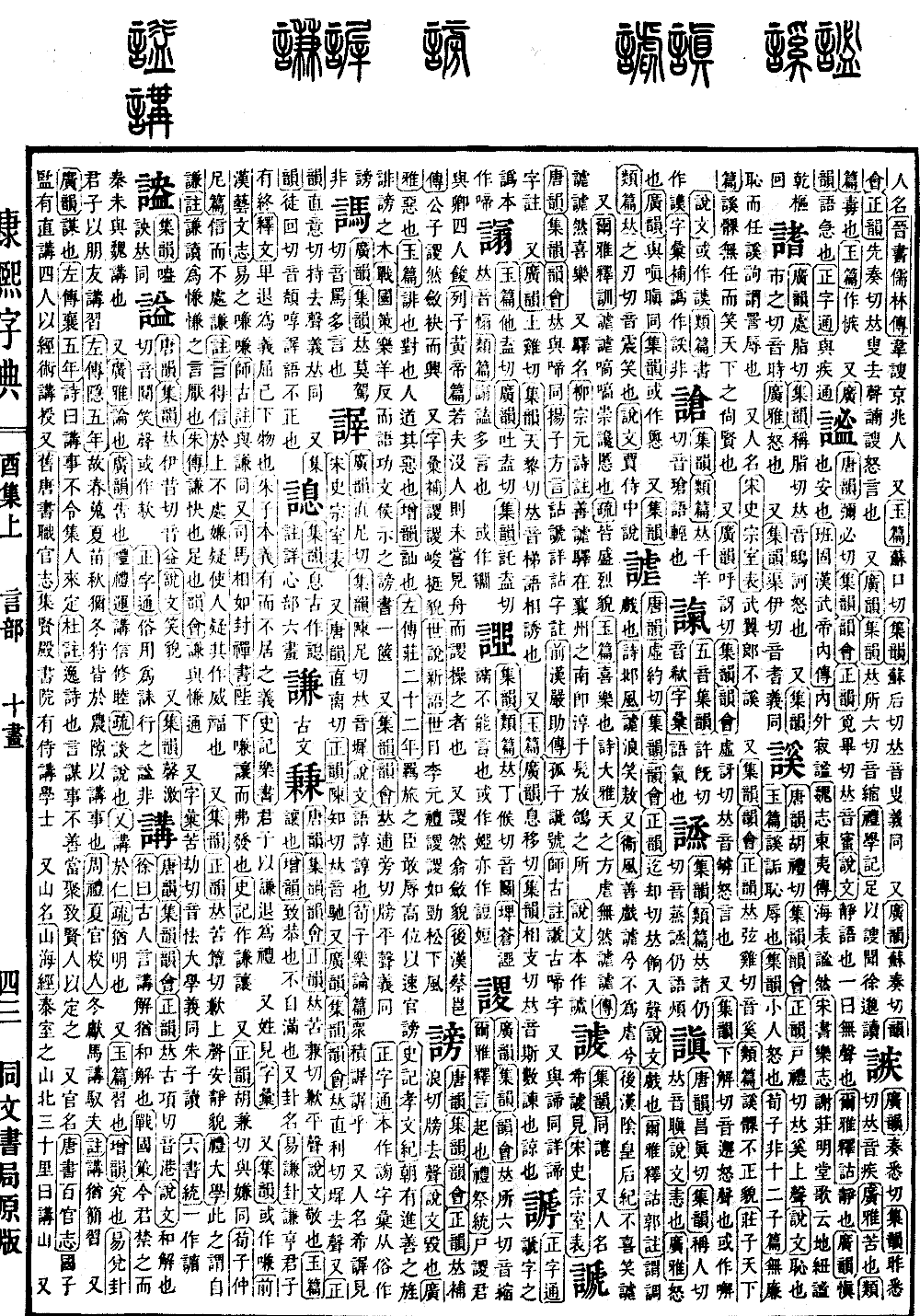
You Collection, Upper Volume
Radical: Speech (yán)
Yi
Kangxi strokes: 17
Page 1175, Entry 18
According to the Broad Rhymes (Guangyun), it is pronounced chi. According to the Collected Rhymes (Jiyun), it is pronounced chi.
According to the Explanation of Simple and Compound Characters (Shuowen Jiezi), it refers to words spoken earnestly. In the Discourse on Music chapter of the Xunzi, it says, the crowd is gathered in great numbers. It is also used in a personal name; Xichi, as seen in the History of Song (Songshi), Table of the Imperial Clan.
Additionally, according to the Tang Rhymes (Tangyun), it is pronounced chi. According to the Correct Rhymes (Zhengyun), it is pronounced chi. According to the Broad Rhymes (Guangyun), the Collected Rhymes (Jiyun), and the Rhyme Collection (Yunhui), it is pronounced chi (falling tone). According to the Correct Rhymes (Zhengyun), it is pronounced chi (falling tone). The meaning is the same.
Additionally, according to the Collected Rhymes (Jiyun), it is pronounced tui. Tunchi refers to speech that is not proper.
Textual Research: In the Explanation of Simple and Compound Characters (Shuowen Jiezi), it originally read as words spoken earnestly. It has been corrected to read as words spoken in a repetitive manner as indicated in the original text.