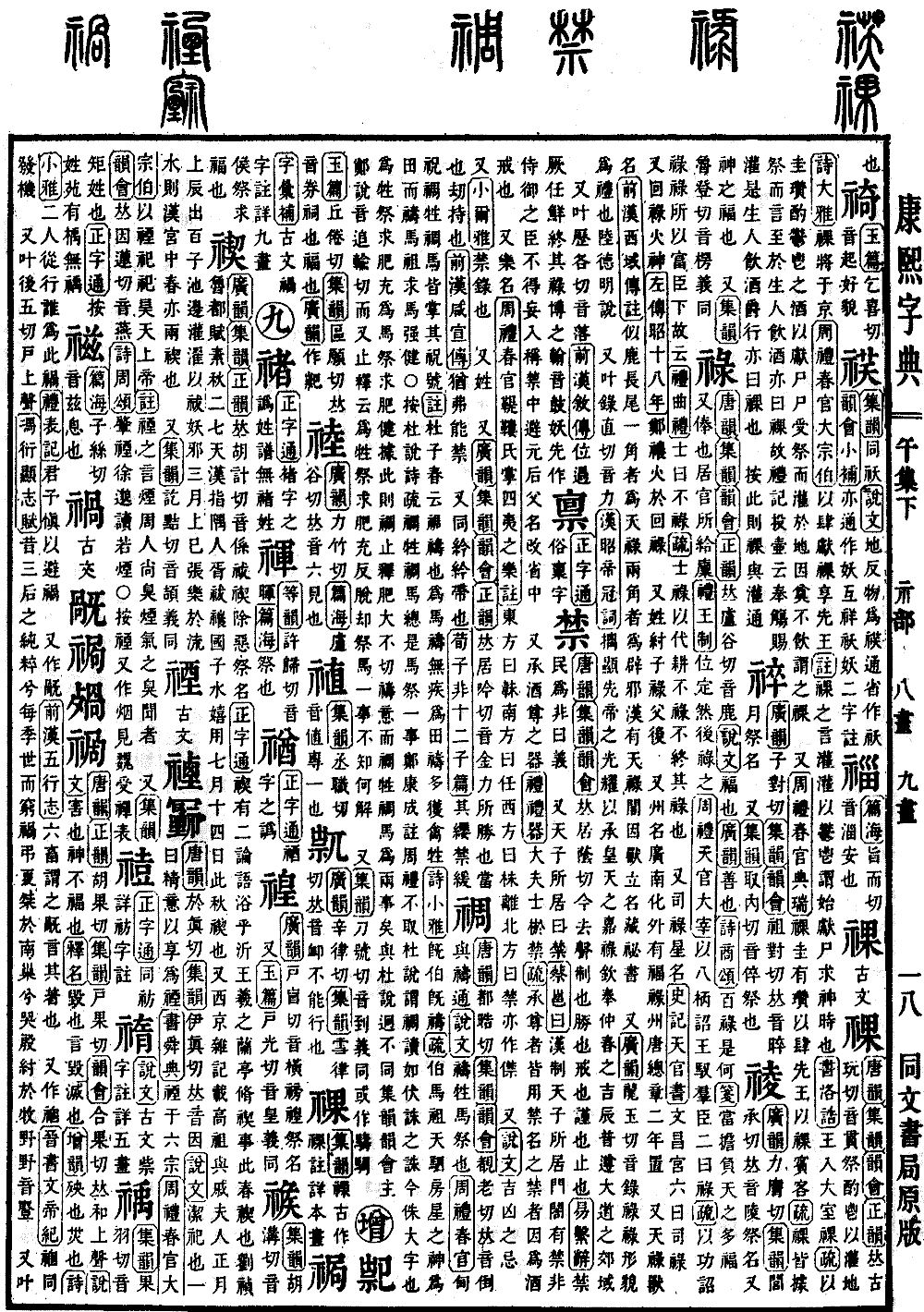
Wu Collection, Lower Volume
Radical: Grain (hé)
Kangxi Strokes: 13
Page 844, Entry 14
Pronounced lin (rising tone).
As defined in the Shuowen Jiezi (Shuowen): The granting of grain. Derived from grain.
Xu says: It refers to public grants and bestowals.
In the Guangyun (Guangyun): To give.
In the Zengyun (Zengyun): To supply, to provide, to receive.
Book of Rites, Doctrine of the Mean (Zhongyong): Once received, manage according to the task.
Ouyang says: In ancient times, when people were provided with food, it was taken from the granary (lin), therefore it is called supplying food or providing food.
Book of Han (Hanshu), Annals of Emperor Wen: Officials whose provisions should be received as congee.
Shigu notes: To supply or provide.
Pronounced bing (rising tone).
To receive an order is called bing.
Book of Documents (Shujing), Charge to Yue (Shuoming): The ministers have no orders to receive.
Commentary: To receive.
Mao says: Modern usage refers to reporting matters to superiors as bing; this meaning did not exist in ancient times.
Also the name of a river.
Commentary on the Water Classic (Shuijingzhu): There is the Bing River in the northern boundary of Changshe.
Pronounced bin (falling tone).
To receive.
In the Yunhui (Yunhui): Commonly written as bing, which is incorrect.