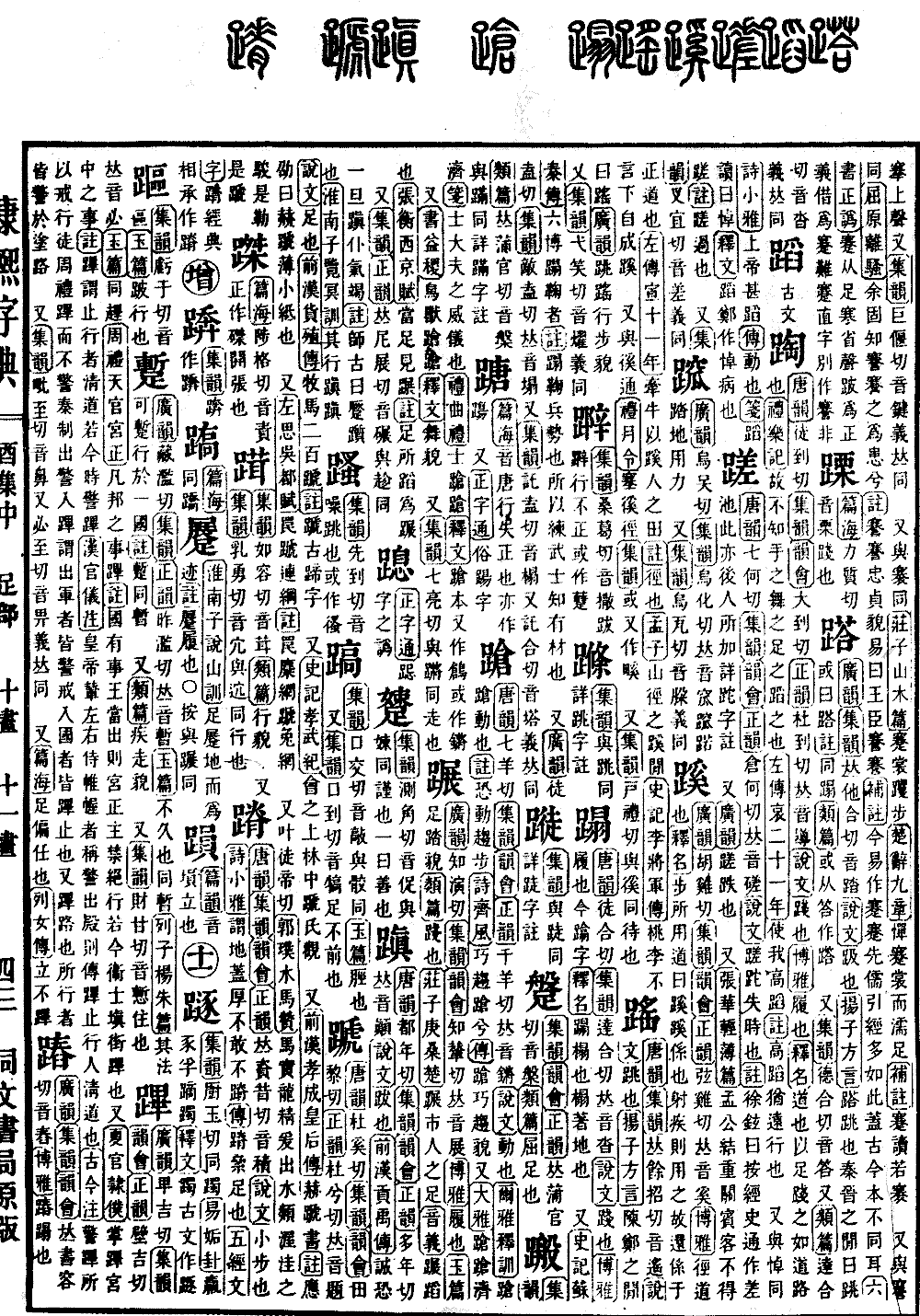
You Collection, Middle Volume
Radical: Foot (zú)
Character: bi
Kangxi Strokes: 18
Page 1231, Entry 01
Guangyun (phonetic dictionary): Pronounced bi.
Jiyun (phonetic dictionary), Yunhui (phonetic dictionary), Zhengyun (phonetic dictionary): Pronounced bi.
Yupian (phonetic dictionary): Equivalent to the preceding entry.
Book of Rites (Zhouli), Section on Heavenly Officials: In all matters of the state, there is bi. Commentary: When there are state affairs and the King is to go out, the Palace Administrator oversees the prohibition of public movement, similar to how modern palace guards clear the streets.
Also in the Section on Summer Officials: Manages the bi of affairs within the palace. Commentary: Bi refers to stopping pedestrians and clearing the road, similar to modern protocol for clearing a path for imperial travel.
Han Official Ritual Commentary: Those who attend the Emperor in his palanquin are called the guard; when leaving the palace, one announces the bi, which means stopping pedestrians and clearing the road.
Ancient and Modern Commentary (Gujin Zhu): Clearing the road is a method to warn pedestrians. The Book of Rites (Zhouli) mentions bi without the warning. The Qin system required warning upon exit and bi upon entry, meaning those departing on military campaigns were to be on alert, and those entering the state were to stop movement.
It also refers to the road; those traveling have their routes cleared.
Jiyun (phonetic dictionary): Pronounced bi.
Jiyun (phonetic dictionary): Pronounced bi.
The meaning is the same.
Pianhai (phonetic dictionary): To favor one foot.
Biographies of Exemplary Women (Lienü Zhuan): Standing without favoring one foot.