You Collection, Upper Volume
Radical: Speech (yán)
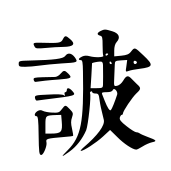
Bi
Kangxi stroke count: 12
Page 1155, Entry 10
Pronounced bi (falling tone).
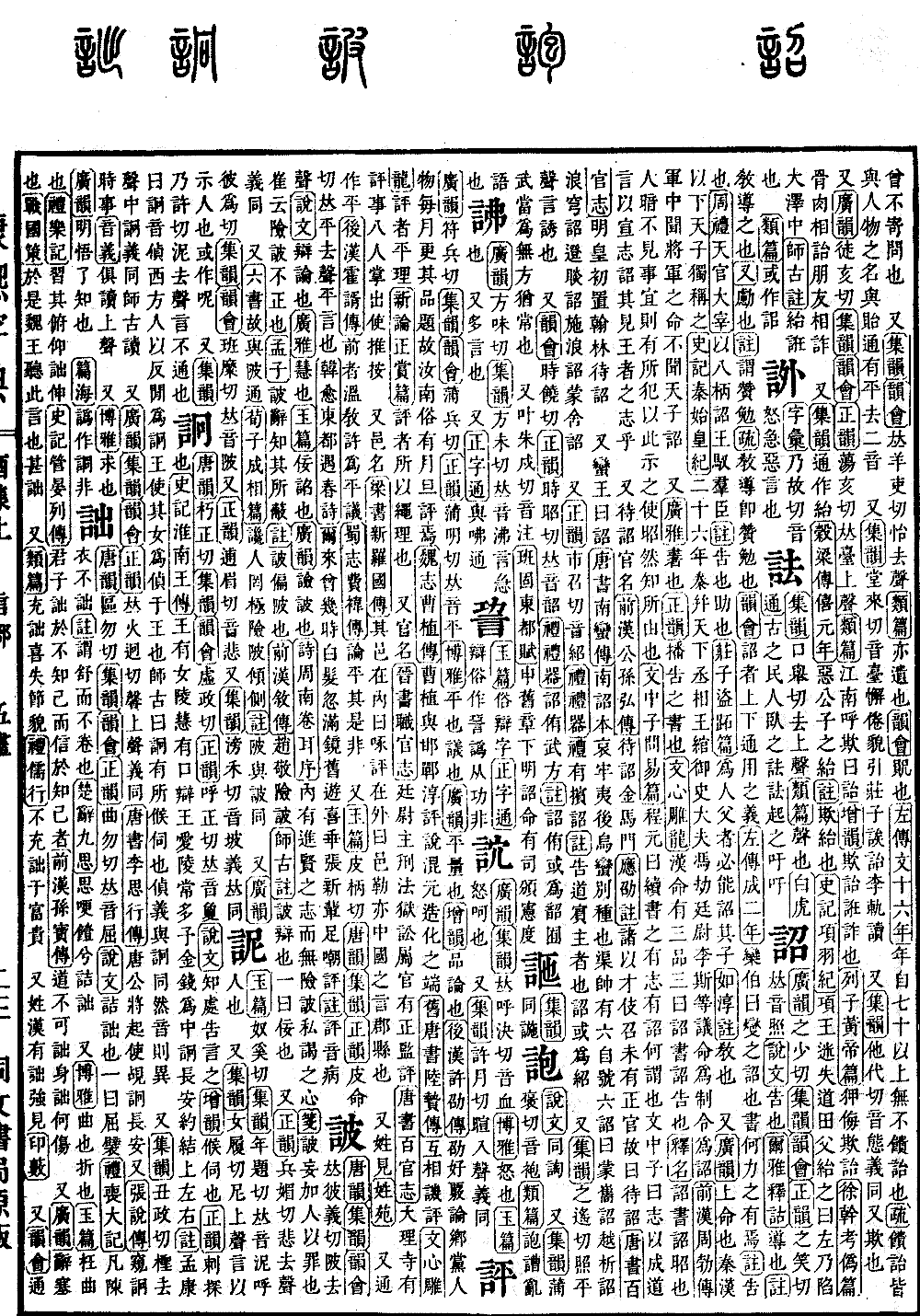
Shuowen Jiezi (Dictionary of Character Etymology): To argue.
Guangya (Expanded Dictionary): Intelligent.
Yupian (Jade Chapters): Flattering and fawning.
Guangyun (Broad Rimes): Flattering, fawning, and not upright.
Book of Odes (Shijing), Zhou South, Juan Er Preface: Within, having the ambition to advance the worthy, and without a heart of treacherous, biased, and private petitioning.
Explication of Texts: Bi means to recklessly accuse others of crimes. Cui says: Treacherous and biased means not upright.
Mencius: From biased words, one knows what they are obscured by.
Commentary: Bi means biased and not upright.
History of the Former Han Dynasty (Qian Hanshu), Narrative Biography: Zhao Jing was treacherous and biased.
Shigu Commentary: Bi means to argue. Another interpretation says it means to flatter.
Also pronounced bei (falling tone). The meaning is the same.
Also, in Six Books Fundamentals (Liushu Gu), it is used interchangeably with bei.
Xunzi, Cheng Xiang Chapter: Slanderers have no limit; they are treacherous, biased, and inclined to one side.
Commentary: Bei is the same as bi.
Also pronounced bei.
Also pronounced bei.
Also pronounced po. The meaning is the same.
Verification: Book of Odes (Shijing), Zhou South, Juan Er Preface: Within, having the ambition to advance the worthy, and without a heart of treacherous, biased, and private petitioning.
Commentary: Bi means to recklessly accuse others of crimes.
We have carefully corrected the source text citation from Commentary to Explication of Texts.