You Collection, Lower Volume
Radical: Bitter (xīn)
Kangxi Strokes: 21
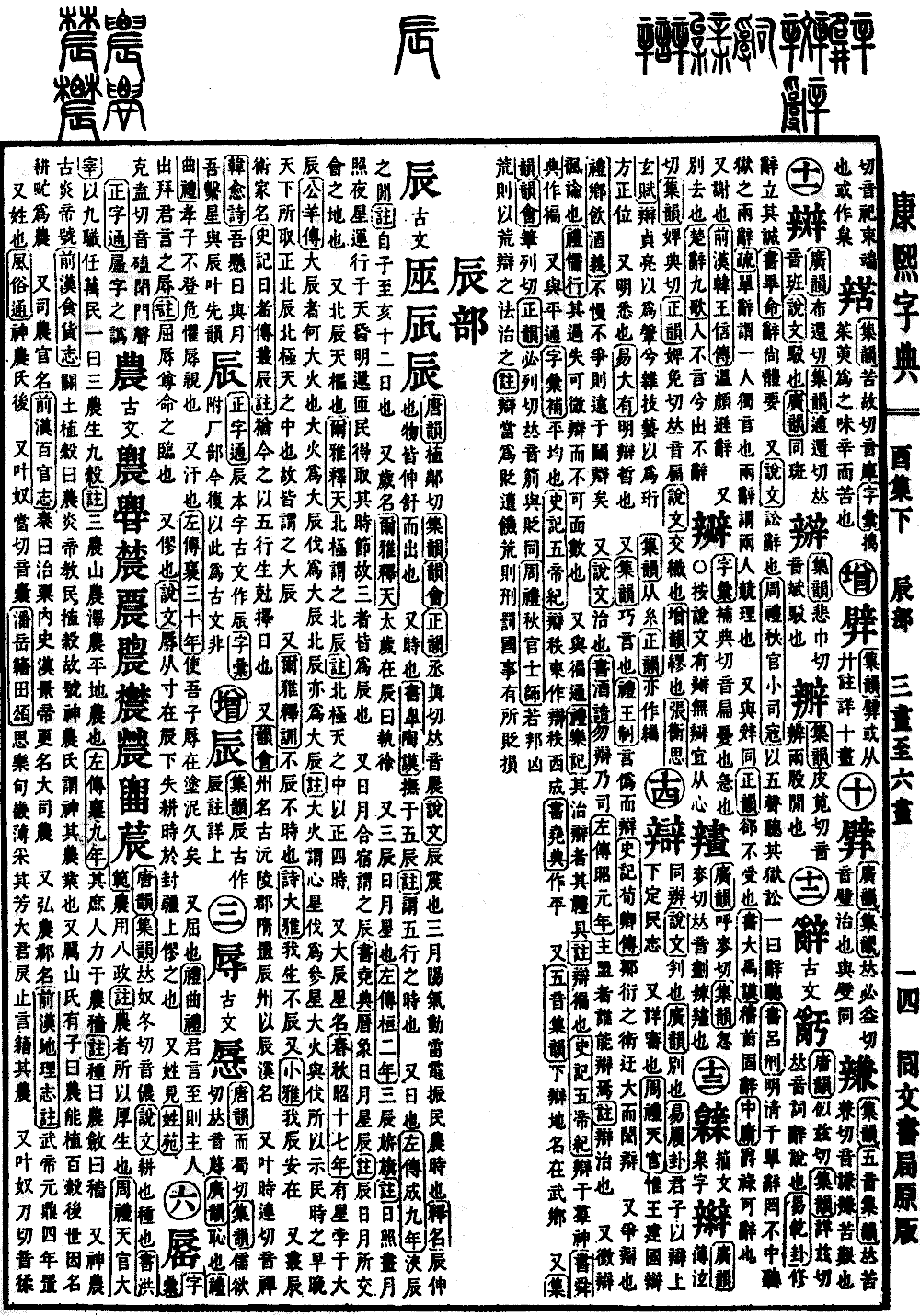
Page 1252, Entry 14
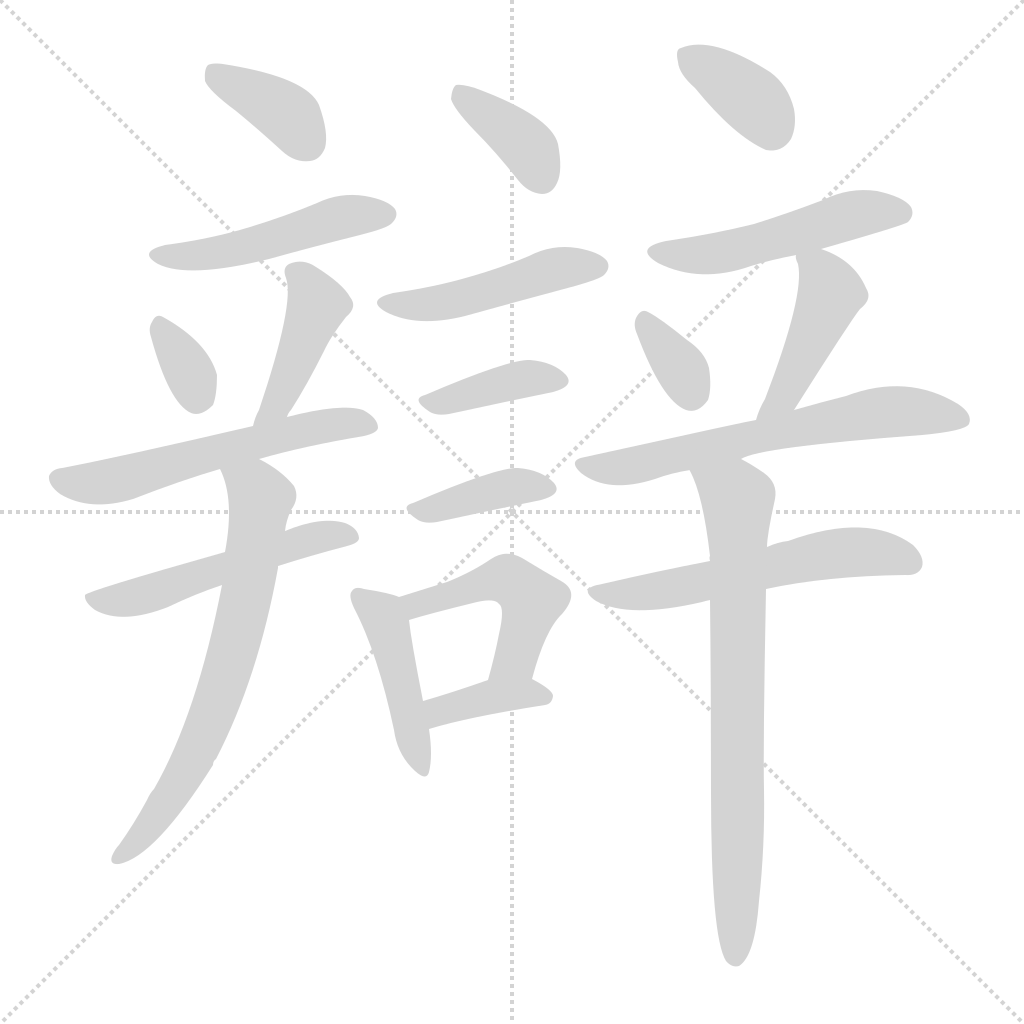
Identical to the character bian.
According to the Explaining Graphs and Analyzing Characters (Shuowen Jiezi): to judge.
According to the Extensive Rhymes (Guangyun): to distinguish.
Book of Changes (Yijing), Hexagram of Treading (Lü): The noble person distinguishes between high and low to settle the people's will.
It also means to examine in detail.
Rites of Zhou (Zhouli), Offices of Heaven (Tianguan): When the king establishes the state, he distinguishes the regions and settles the positions.
It also means to clearly understand.
Book of Changes (Yijing), Hexagram of Great Possession (Dayou): Clearly distinguishing and understanding.
According to the Collection of Rhymes (Jiyun): clever speech.
Book of Rites (Liji), Royal Regulations (Wangzhi): Words that are false yet eloquent.
Records of the Grand Historian (Shiji), Biography of Xun Qing: The techniques of Zou Yan are circuitous, vast, and grandly eloquent.
It also means to argue.
Book of Rites (Liji), Meaning of the Village Drinking Ceremony (Xiangyinjiuyi): By not being arrogant and not arguing, one is distanced from fighting and disputing.
According to the Explaining Graphs and Analyzing Characters (Shuowen Jiezi): to govern.
Book of Documents (Shangshu), Announcement on Alcohol (Jiugao): Do not neglect your duties.
Zuo Commentary (Zuozhuan), First Year of Duke Zhao: Who among the leaders of the alliance can govern this? Commentary: Bian means to govern.
It also refers to subtle persuasion or satire.
Book of Rites (Liji), Conduct of Scholars (Ruxing): Their faults may be subtly pointed out but should not be enumerated to their faces.
Also interchangeable with bian (all/everywhere).
Book of Rites (Liji), Record of Music (Yueji): When there is order and completeness, the rites are provided. Commentary: Bian means complete.
Records of the Grand Historian (Shiji), Annals of the Five Emperors: Thoroughly informed about all the spirits.
Book of Documents (Shangshu), Canon of Shun: Written as bian (all).
Also interchangeable with ping (level/equal).
Dictionary Supplement (Zihuibu): Equality.
Records of the Grand Historian (Shiji), Annals of the Five Emperors: Equitably arrange the spring work and equitably arrange the autumn harvest.
Book of Documents (Shangshu), Canon of Yao: Written as ping.
According to the Five Sounds Collection of Rhymes (Wuyinjiyun): Xiabian, a place name located in Wuxiang.
According to the Collection of Rhymes (Jiyun) and the Rhyme Assemblage (Yunhui), the pronunciation is listed as bi lie, and the Correct Rhymes (Zhengyun) lists it as bi lie. Pronounced bie. Same as bian (demote/reduce).
Rites of Zhou (Zhouli), Autumn Offices (Qiuguan), Minister of Justice (Shishi): In times of state famine, govern using the laws of relief for famine. Commentary: Bian should be bian (demote/reduce). When encountering famine, state affairs should be reduced or curtailed.