You Collection, Lower Volume
Radical: Foot (zú)
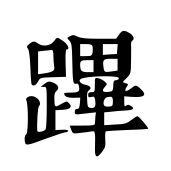
Character: bi
Kangxi Strokes: 18
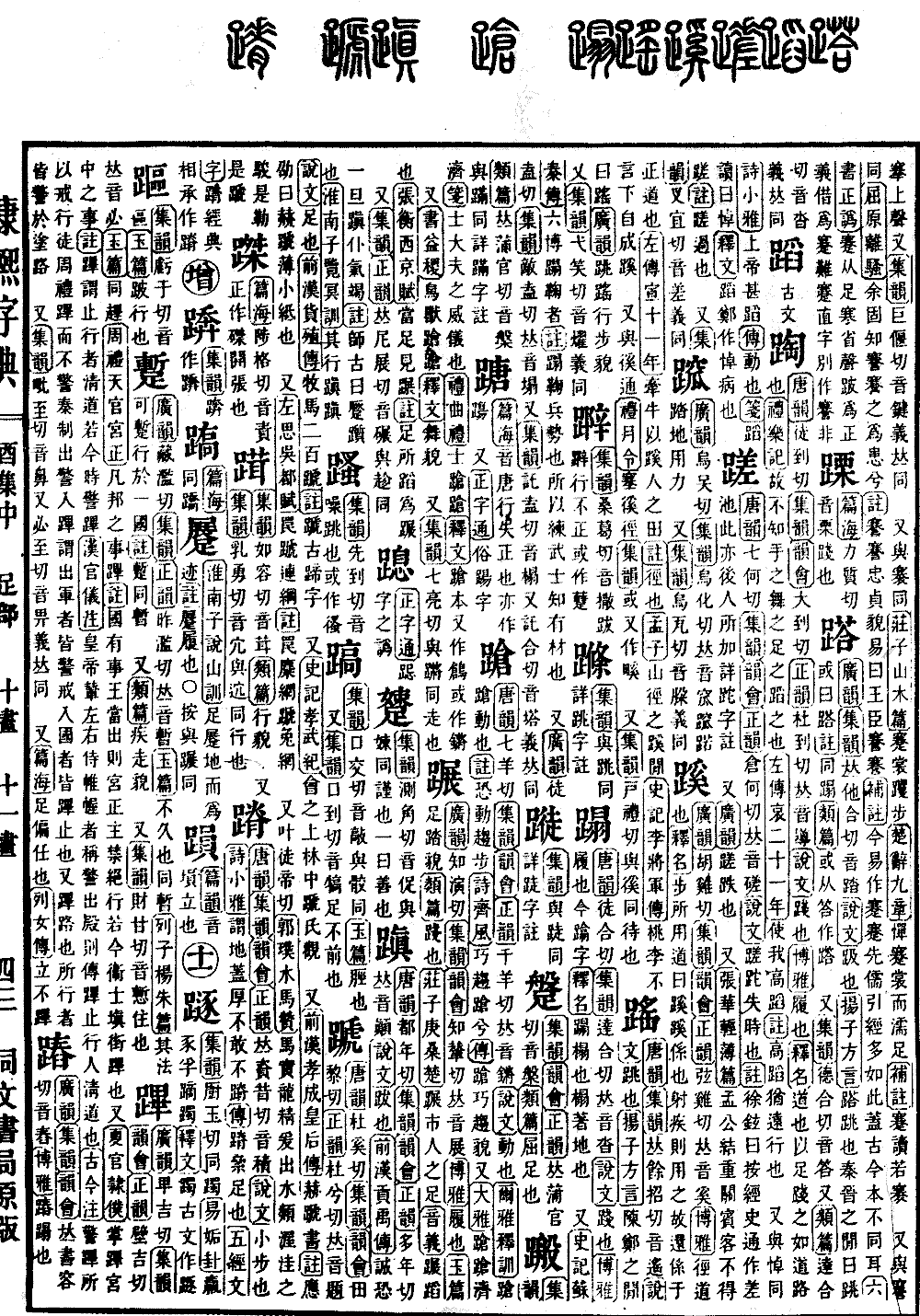
Page 1231, Entry 34
Guangyun: Pronounced bi. Jiyun, Yunhui, and Zhengyun: Pronounced bi.
Yupian: Same as the previous entry.
Rites of Zhou (Zhouli), Office of Heaven, Palace Administrator: Concerning all state affairs, bǐ (clearing the road for the sovereign). Commentary: When the state has major matters and the sovereign is to travel, the Palace Administrator is responsible for prohibiting passage, similar to how modern guards block streets to clear the way.
Also in Summer Office, Servants: In charge of bǐ within the palace. Commentary: Bǐ refers to stopping pedestrians to clear the road, similar to what is now called jǐngbì (police clearing of the way).
Hanguan Yizhu: The curtains and attendants accompanying the Emperor's carriage are called jǐng; when leaving the palace, orders are given to bǐ, prohibiting pedestrians to clear the way.
Gujin Zhu: Jǐngbì is used to warn pedestrians. The Rites of Zhou records only bǐ and not jǐng. The Qin dynasty regulations stipulated that leaving the palace is called jǐng, and entering the palace is called bǐ. This means one should be alert when departing, and prohibit passage when entering the capital. Also refers to the bǐ path, where the route traveled is guarded along the way.
Jiyun: Pronounced bi. Also pronounced bi. The meaning is the same.
Pianhai: The center of gravity leaning to one side while standing.
Biographies of Exemplary Women (Lienüzhuan): Standing with feet balanced and not leaning to one side.