Wu Collection, Lower Volume
Radical: Spirit (shì)
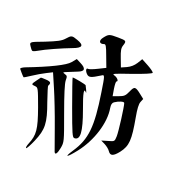
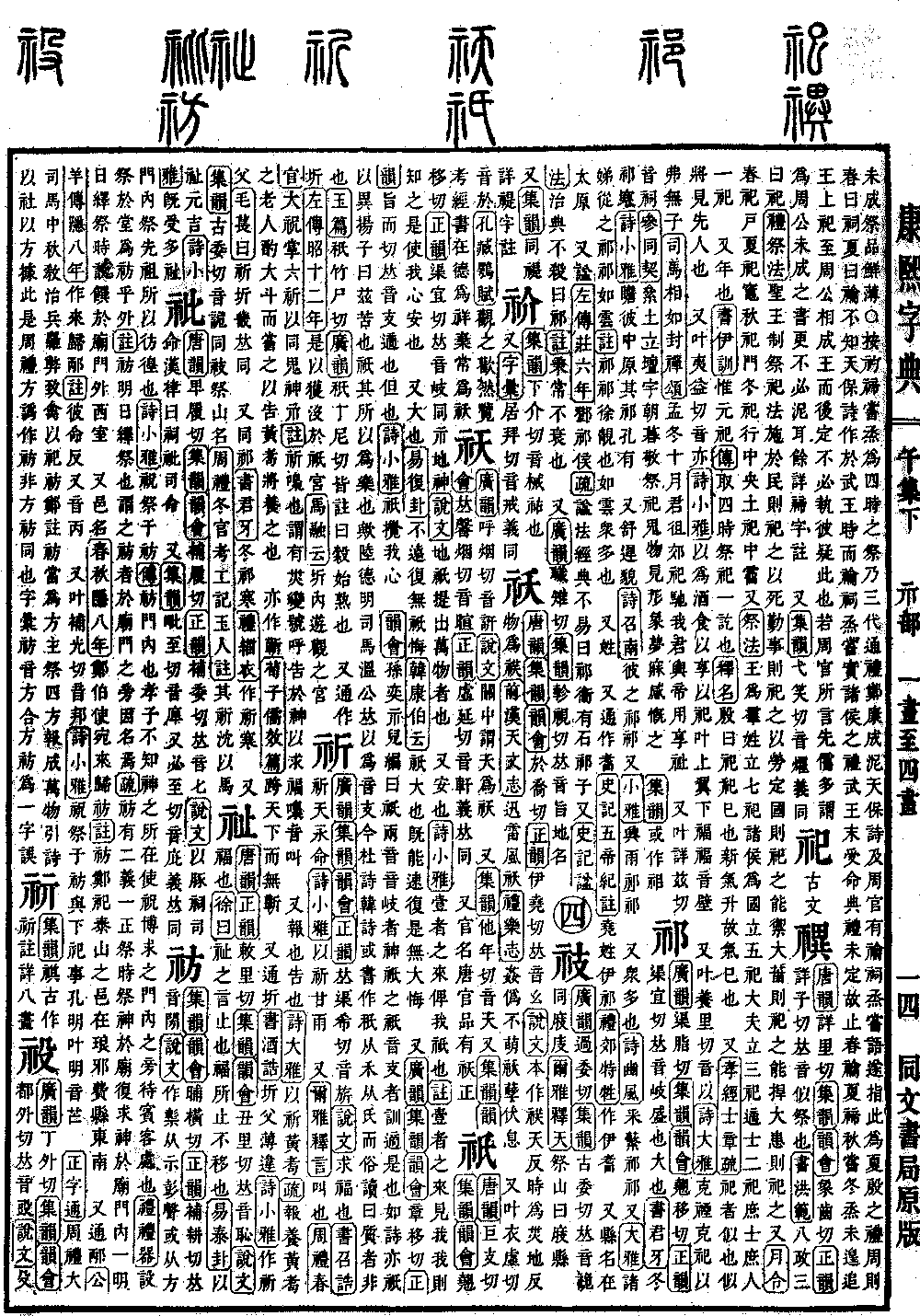
Beng. Kangxi strokes: 9. Page 840, Entry 12.
According to the Jiyun and the Yunhui, pronounced beng. According to the Zhengyun, pronounced beng.
According to the Shuowen Jiezi, written as a variant. Composed of the spirit radical and the phonetic component peng. Sometimes written with the square radical. To offer sacrifices to ancestors within the gate, signifying a place of hesitation or searching.
In the Book of Odes (Shijing), it is written: The prayer master sacrifices at the beng. The commentary states: The beng is inside the gate. The filial son, not knowing where the spirit resides, directs the prayer master to search for it by the side of the gate, where guests are received.
In the Book of Rites (Liji), it is written: Setting up the sacrifice in the hall, is there a beng outside? The commentary states: The beng is the yi sacrifice held the following day. It is called beng because it takes place beside the temple gate, and is named accordingly. The sub-commentary states: Beng has two meanings. First, during the main sacrifice, one sacrifices to the spirit in the temple, then searches for the spirit inside the temple gate. Second, during the yi sacrifice on the following day, one sets up food outside the western chamber of the temple gate.
Also the name of a town. In the Spring and Autumn Annals (Chunqiu), under the eighth year of Duke Yin: The Earl of Zheng sent Wan to return the beng territory. The commentary states: Beng was a town where Zheng sacrificed to Mount Tai, located southeast of Fei County in Langye.
Also interchangeable with the character bing. In the Gongyang Commentary to the Spring and Autumn Annals (Gongyang Zhuan), under the eighth year of Duke Yin, it is written as returning the bing territory. The commentary notes: Pronounced bing, and also pronounced bing.
Also rhymes with bang. In the Book of Odes (Shijing), in the line: The prayer master sacrifices at the beng, it rhymes with the following line, the sacrificial affairs are very bright. Ming is pronounced mang.
In the Zhengzitong, it is noted: In the Rites of Zhou (Zhouli), under the Office of the Grand Minister of War, it describes training troops in mid-autumn, arranging game, and sacrificing to the fang. The Zheng commentary notes: Beng here should be read as fang, referring to the sacrifice to the four cardinal directions to acknowledge the completion of all things. It cites the Book of Odes: Using the she and the fang. Based on this, the character in the Rites of Zhou was miswritten as beng, and it does not mean that fang and beng are the same. The Zihui claims beng is pronounced fang, conflating fang and beng into one character, which is an error.