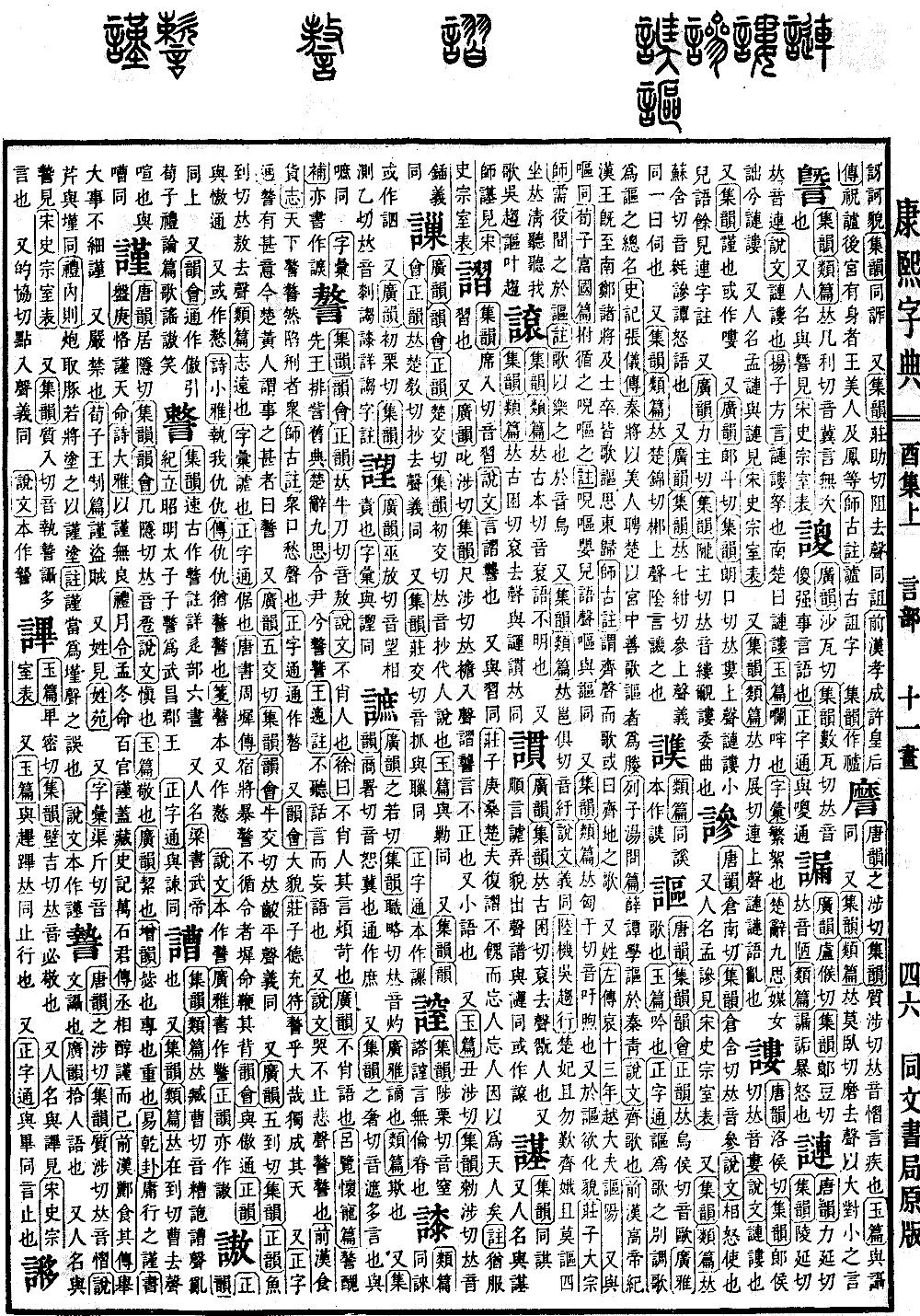
You Collection, Upper Volume
Radical: Speech (yán)
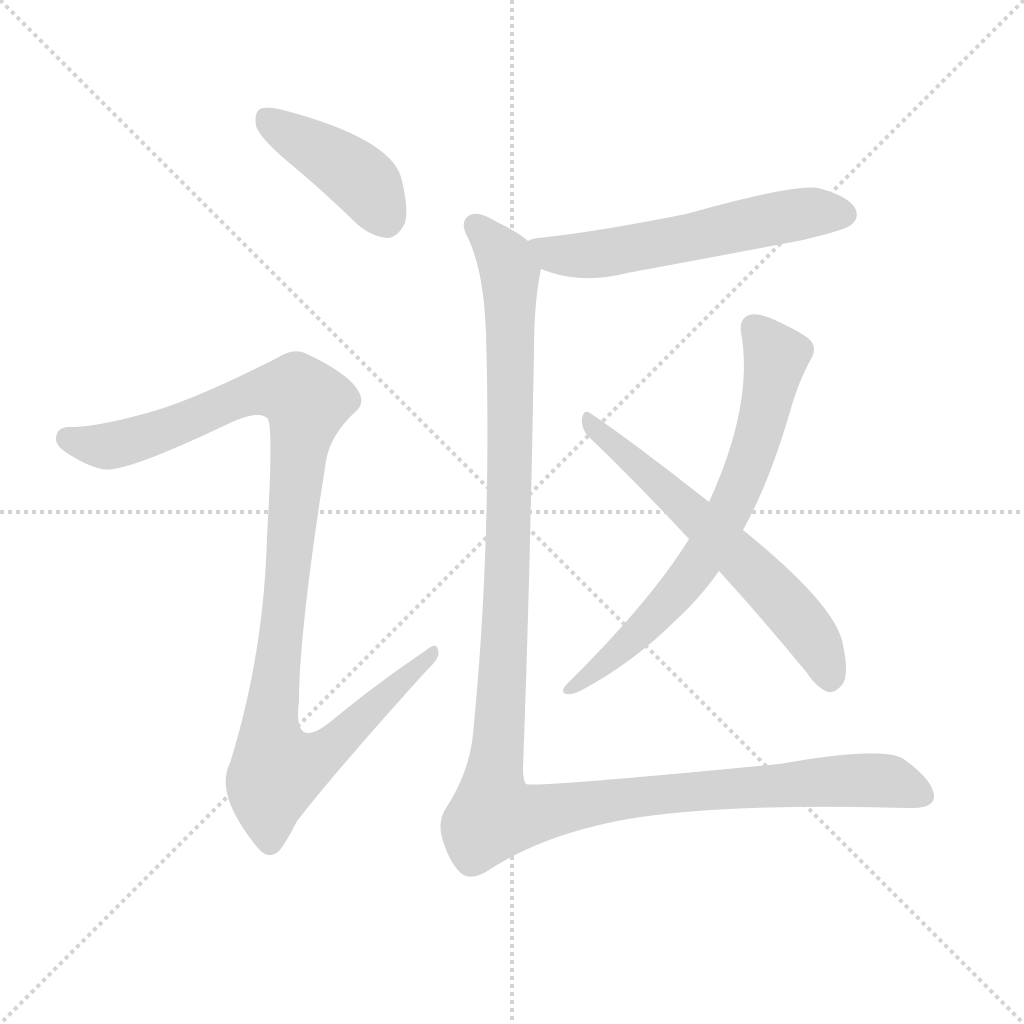
Ou
Kangxi stroke count: 18
Page 1178, Entry 01
Tang Rhymes (Tangyun), Collected Rhymes (Jiyun), Rhyme Meetings (Yunhui), Correct Rhymes (Zhengyun): Pronounced ou.
Guangya: To sing.
Yupian: To chant.
Zhengzitong: Ou is a variant form of ge (song); ge is the collective term for ou.
Records of the Grand Historian (Shiji): The State of Qin intended to marry a beauty to the King of Chu, sending those skilled in singing from the palace as attendants.
Liezi: Xue Tan studied singing under Qin Qing.
Shuowen: To sing in unison.
History of the Former Han (Qianhanji): When the King of Han arrived in Nanzheng, the generals and soldiers all sang in unison, longing to return to their eastern homeland.
Shigu Commentary: Refers to singing in unison. Others say it refers to the songs of the Qi region.
Also used as a surname.
Zuo Tradition (Zuozhuan): Ouyang, a grand master of the State of Yue.
Same as the character ou (to vomit/coo).
Xunzi: To soothe them, and to tease them with loving sounds.
Commentary: Er-ou refers to the babbling sounds made by infants. Ou and ou are the same.
Also Jiyun, Leipian: Pronounced xu. Meaning warm.
Also yu-ou, referring to the appearance of something about to grow or develop.
Zhuangzi: Xuyi heard of Yu-ou.
Commentary: To use singing to bring him joy. Yu is pronounced wu.
Also Jiyun, Leipian: Pronounced yu.
Shuowen: Meaning is the same.
Lu Ji, Wu Qu Xing: Lady of Chu, cease your sighing for a moment; Maiden of Qi, cease your singing for a moment. All those present, please listen in silence, and hear me sing the Wu region song, Wu Qu. Ou and qu rhyme.