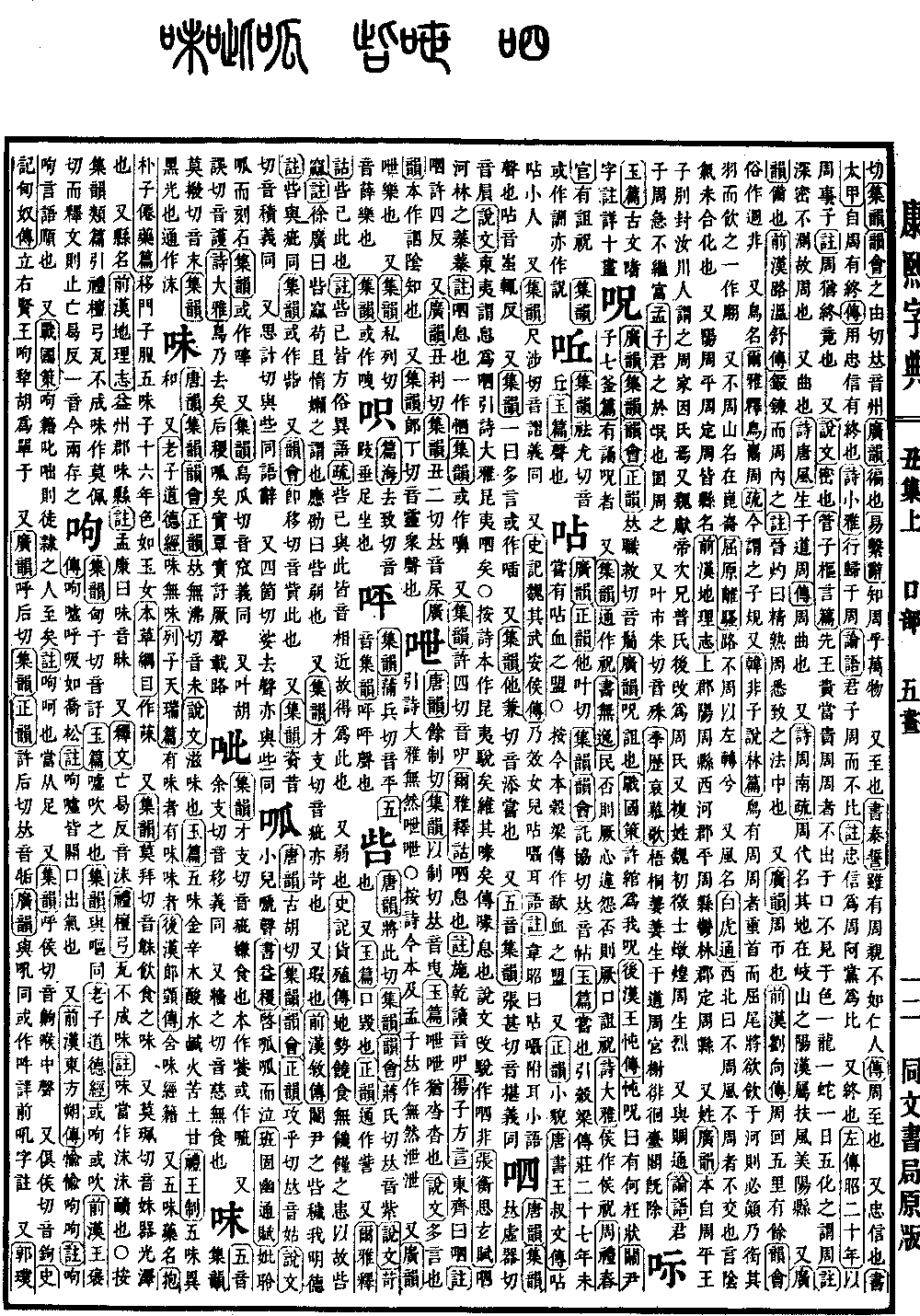
Chou Collection, Upper Volume
Radical: Mouth (kǒu)
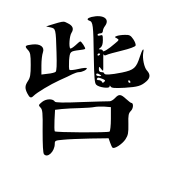
Character: zi
Kangxi brush strokes: 8
Page 182, Entry 09
Pronounced zi (rising tone).
Shuowen Jiezi (Explanation of Simple and Compound Characters): To be exacting or harsh.
Yupian (Jade Chapters): To slander or disparage with the mouth.
Zhengyun (Standard Rhymes): Used interchangeably with zi.
Erya (Approaching Elegance), Interpretation of Ancient Words: zi and yi mean this. Note: zi and yi are both regional dialect variants. Commentary: zi, yi, and this all have similar pronunciations, hence they may be used to mean this.
Also means weak. Shiji (Records of the Grand Historian), Biographies of Money-makers: The terrain produces abundant food, without the calamity of famine; therefore, people are zi yu (lazy and idle). Note: Xu Guang says: zi yu means to be careless, lazy, and indolent. Ying Shao says: zi means weak.
Pronounced ci. Also means to be exacting.
Also means a flaw or defect. Hanshu (Book of Han), Memoir of the Preface: The corruption of the eunuchs is a blemish on our brilliant virtue. Note: zi is the same as ci.
Jiyun (Collection of Rhymes): Sometimes written as zi.
Pronounced zi. Also means this.
Pronounced ji. Same meaning as above.
Pronounced si. The same as xie, a modal particle.
Pronounced suo (falling tone). Also the same as xie.