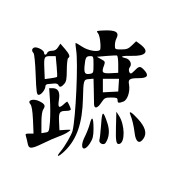
You Collection, Middle Volume. Radical: Foot (zú). Kangxi stroke count: 18. Page 1232, Entry 29. Ancient form.
According to the Tang Rhyme (Tangyun), Collected Rhymes (Jiyun), and Correct Rhymes (Zhengyun), the pronunciation is zhi (rising tone).
According to the Explaining Graphs and Analyzing Characters (Shuowen Jiezi), people in the Chu region refer to jumping as zhi. In the Dialects (Fangyan) by Yang Xiong, it is stated that the Chu region refers to it as zhi, while west of Hangu Pass, in the Qin and Jin regions, it is referred to as tiao.
According to the Expanded Rhyme (Guangyun), it refers to stepping or treading with the foot. In the Records of the Grand Historian (Shiji), Biography of Su Qin: Wearing sturdy armor and treading upon powerful crossbows. In the History of the Former Han (Qianhanshu), Biography of Yang Xiong: Following in the footsteps left by Peng Xian. Commentary: Zhi means to follow or comply with. In the Verses of Chu (Chu Ci), Nine Chapters: Distant and unknowing of where to set one's feet. Commentary: Zhi means to tread or trample.
According to the Huainanzi, Original Way Training: From non-existence to existence. Commentary: Zhi means to go towards.
According to the Jade Chapters (Yupian), it is the same as zhi. In the Strategies of the Warring States (Zhanguoce): With the soles of the feet worn through and knees exposed. Commentary: Zhi means the sole of the foot. In the Huainanzi, Training on the Art of Rulership: Then there are those as wicked as the thief Zhi. Commentary: The thief Zhi.
According to the Collected Rhymes (Jiyun), pronounced zhu (falling tone), with the same meaning. Also pronounced zhuo (entering tone), same as bao, meaning footprints.