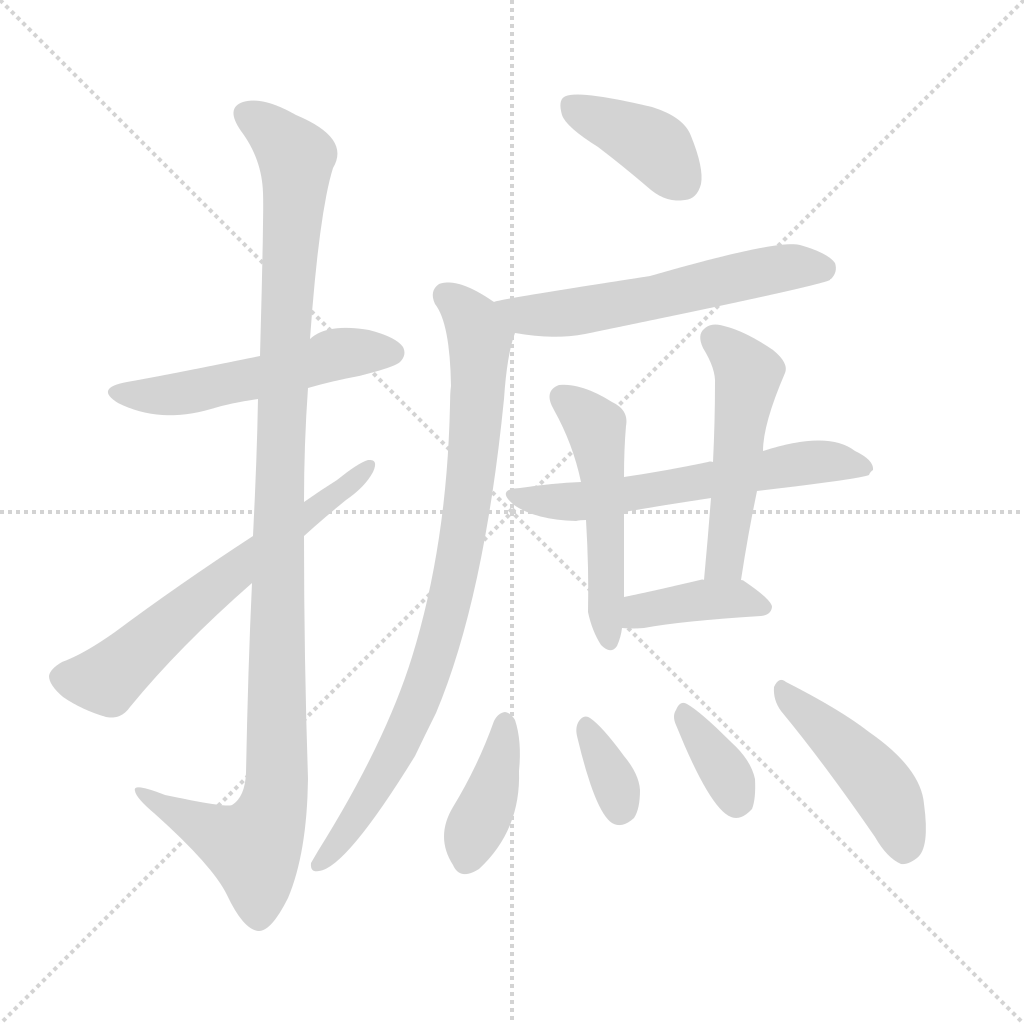
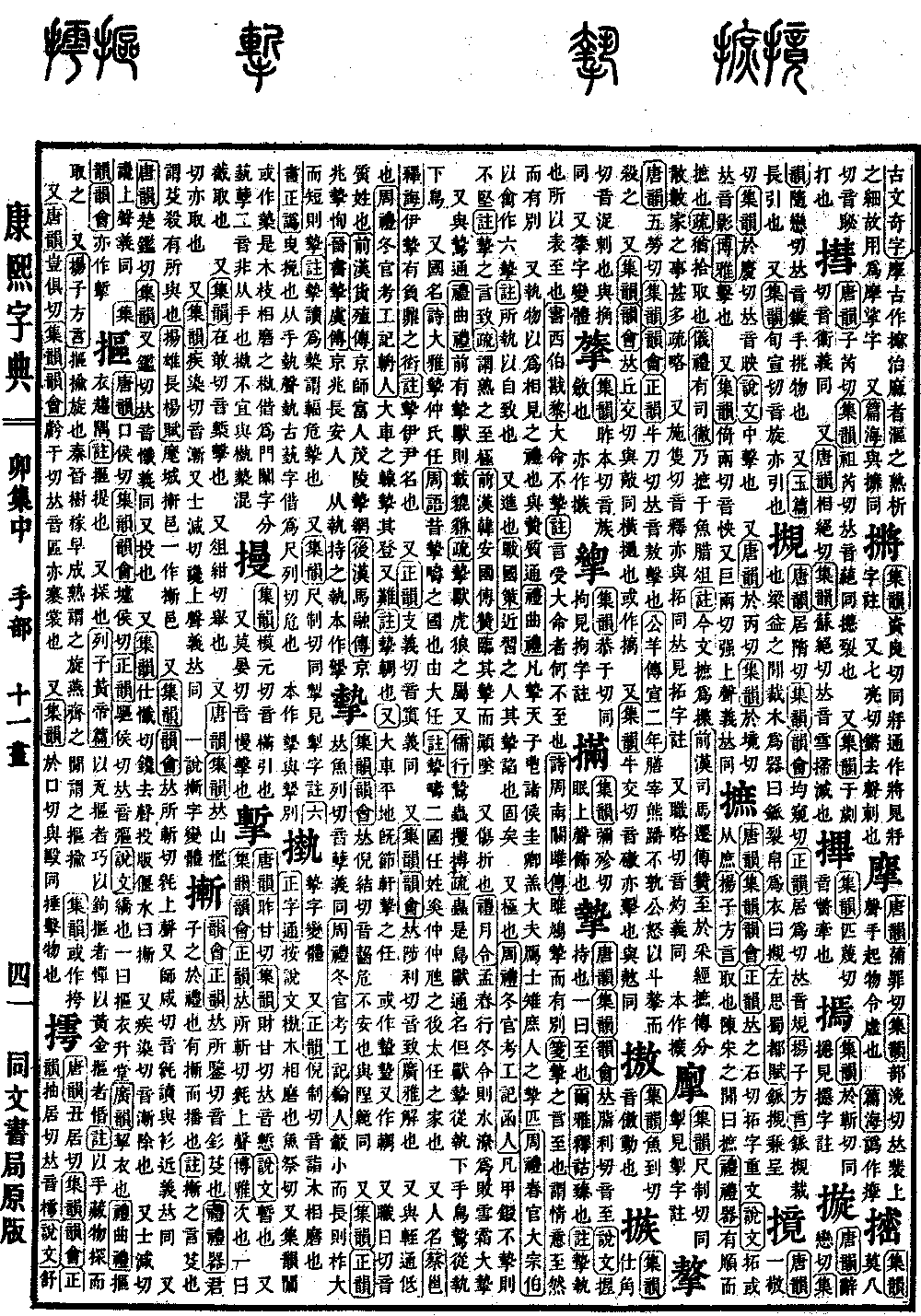
Mao Collection, Middle Volume
Radical: Hand (shǒu)
Kangxi stroke count: 15
Page 451, Entry 10
Tang Rhyme (Tangyun), Collection Rhyme (Jiyun), Rhyme Compilation (Yunhui), and Correct Rhymes (Zhengyun) state it is pronounced zhi. It is an alternative written form of the character to.
Explaining Graphs and Analyzing Characters (Shuowen Jiezi) states that the character to is sometimes written as zhi.
Master Yang's Dialect (Fangyan) defines it as to take, noting that in the dialect of the Song state, it is called zhi.
The Book of Rites (Liji), in the section on Ritual Vessels (Liqi), contains the phrase, with conformity and collecting. The commentary explains that the meaning is to pick up or collect.
The Book of Etiquette and Ceremonial (Yili), in the section on the Duties of Officers (Yousiche), records that one collects from the fish and dried meat serving mats. The commentary notes that in contemporary writing, zhi is written as die.
The History of the Former Han (Qian Hanshu), in the Biography of Sima Qian, mentions that as for gathering classics and collecting commentaries, dispersing the matters of several schools, there is much that is sparse and summary.
It is also pronounced shi, with the same sound as shi. It is also identical to the character to. See the detailed commentary under the character to.
It is also pronounced zhuo, with the same sound as zhuo. The meaning is the same. Originally it was written as zhi. The character zhi was originally written as a different form. It is the original written form of the character shu.