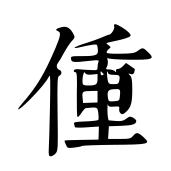
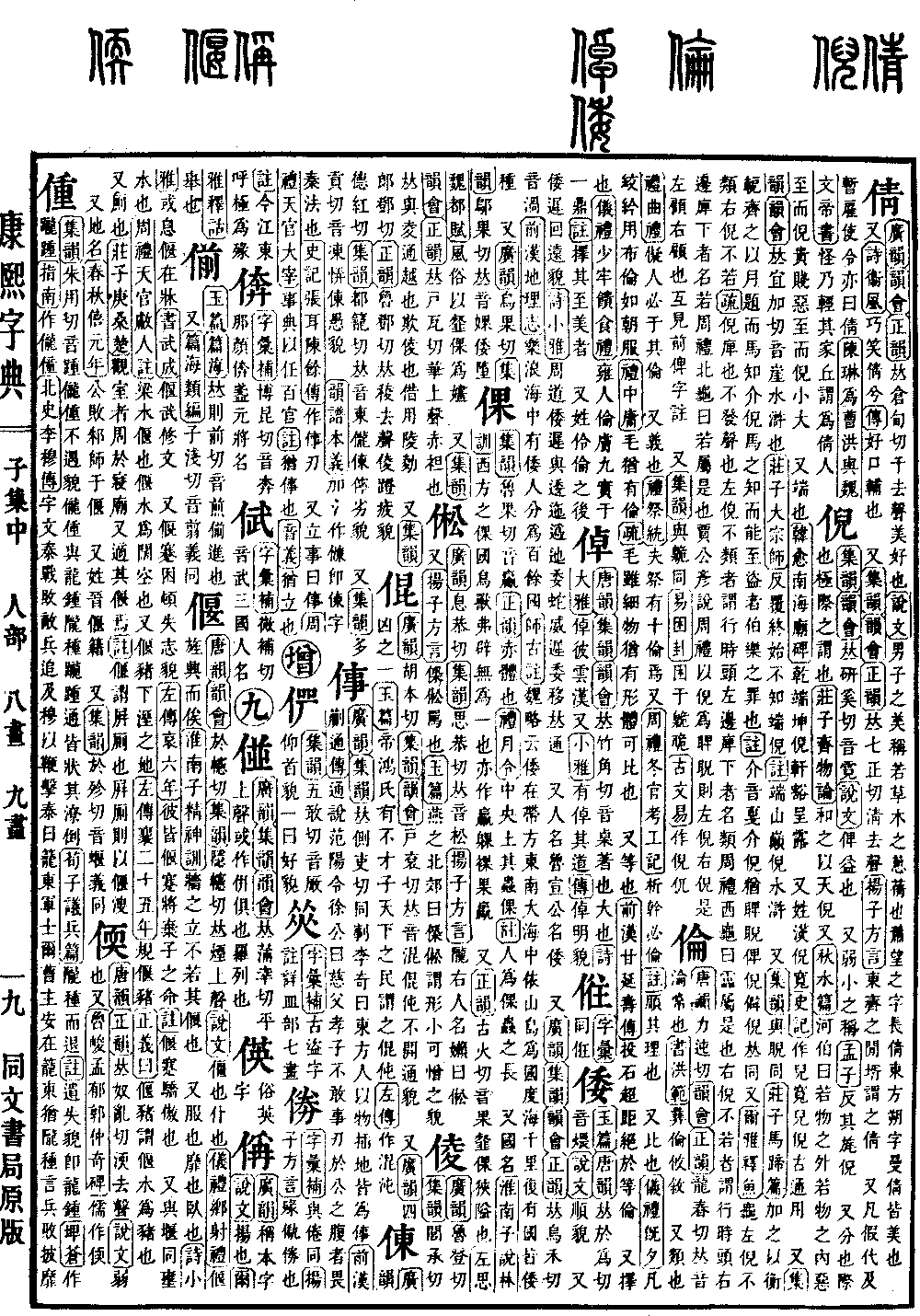
Zi Collection, Middle Volume. Radical: Person (rén). Character: zhòng. Kangxi Stroke Count: 11. Page 109, Number 24.
Collected Rhymes (Jiyun): The fanqie pronunciation is formed by the initial of zhū and the final of yòng, pronounced the same as zhǒng.
The term lǒngzhòng describes the appearance of someone who is frustrated or has failed to achieve their ambitions. The term lǒngzhòng is interchangeable with the variants lóngzhōng, lǒngzhòng, and lóngzhǒng, all of which describe a person in a state of being downcast and disappointed.
Retreating in a state of disarray — Xunzi (Xunzi), Chapter on the Discussion of Military Affairs (Yibingpian). Note: The appearance of being dazed and losing one's spirit is the same as the term lóngzhōng. In the Pi Cang (Picang), it is written as lóngzhǒng. In the Guide (Zhinan), it is written as lǒngtóng.
History of the Northern Dynasties (Beishi), Biography of Li Mu (Li Mu Zhuan): When Yuwen Tai was defeated and enemy troops pursued him, Li Mu whipped Yuwen Tai and shouted: You lóngdōng soldiers, where is your commander? Lóngdōng is the same as lǒngzhòng, referring to the state of a defeated and fleeing army. Although the characters used in these terms differ, the pronunciation and meaning are identical.
Also synonymous with the character chōng. In the Book of Changes (Yi), Hexagram Xian, the phrase coming and going in a state of agitation is written with the character zhòng in the version of the text by Jing Fang.
Also synonymous with the character tóng. On the Spirit Way Stele of Lord Zhang of the Han Dynasty (Han Zhang Gong Shendao): Riding a white deer and following the immortal youth.