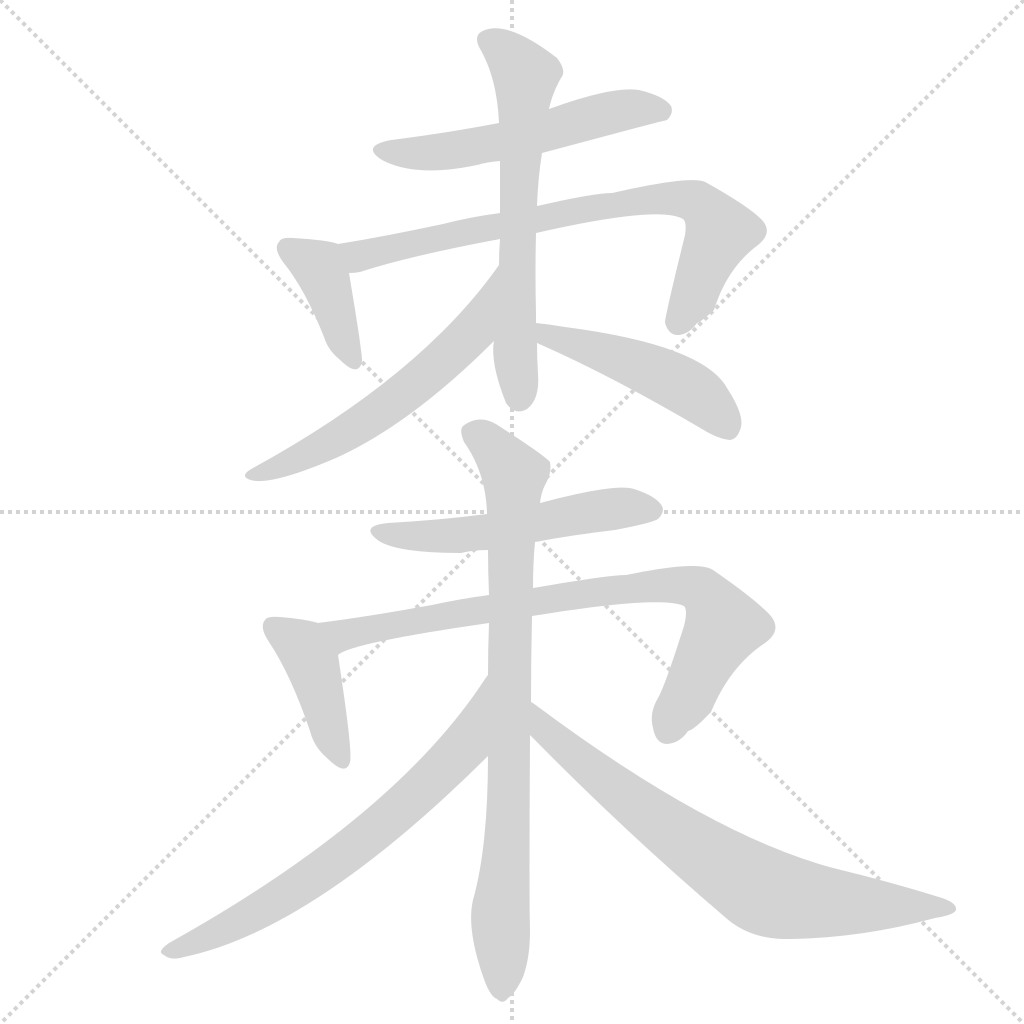
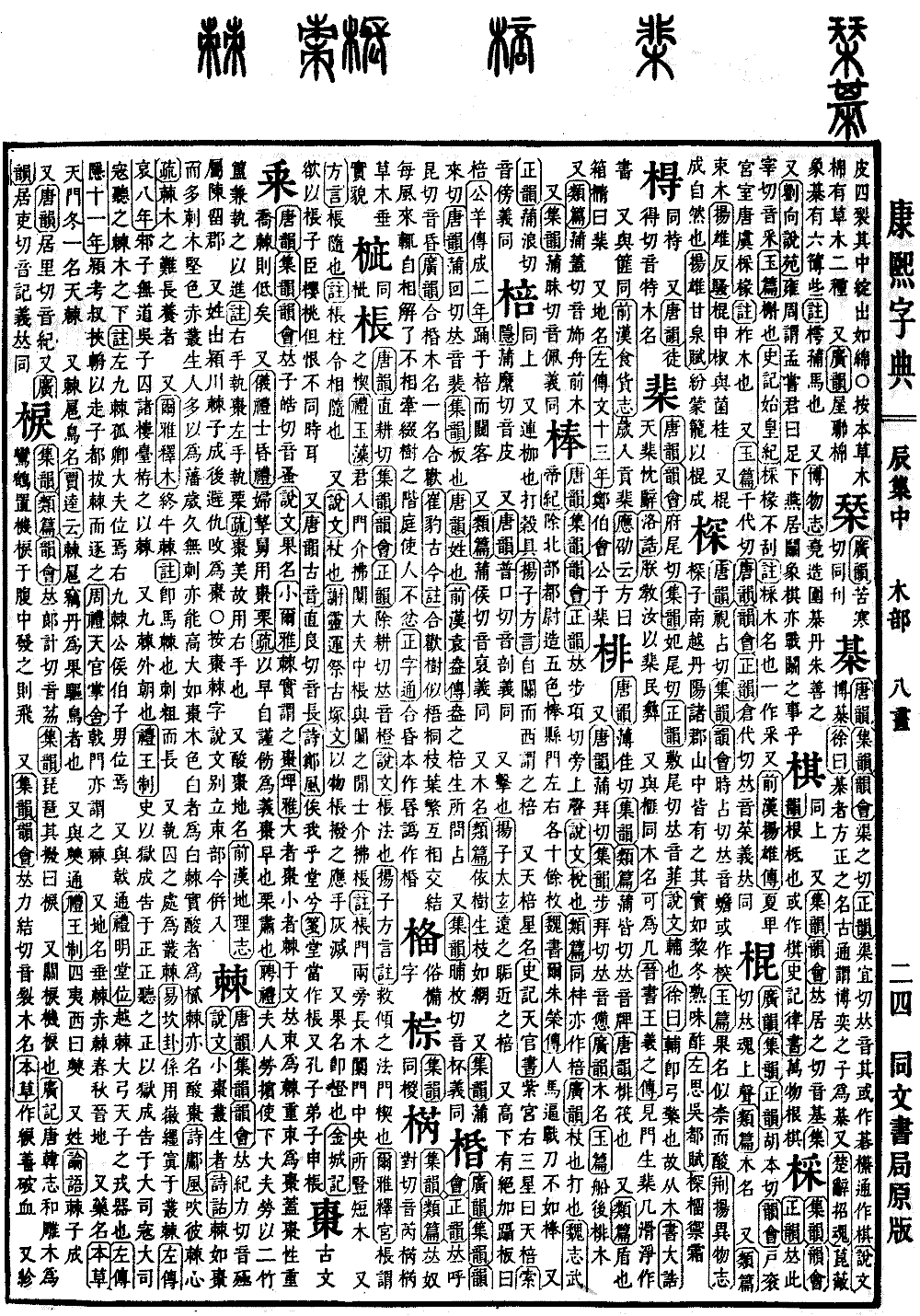
Chen Collection, Middle Volume
Radical: Tree (mù)
Kangxi strokes: 12
Page 532, Entry 18
Ancient texts record: Pronounced zǎo (falling tone), same sound as the character for flea. The Shuowen Jiezi (Explaining Graphs and Analyzing Characters) defines it as the name of a fruit. The Xiao Erya (Small Approaches to Elegance) states: The fruit of the thorn tree is called the jujube. The Piya (Amplification of the Erya) records: The large fruit is called the jujube, and the small one is called the thorn. Looking at the glyph, the character for thorn is the radical representing the jujube, and two thorns stacked together form the jujube character, because the branches of the jujube tree grow high and upright, whereas the branches of the thorn tree droop downward. Additionally, the Book of Etiquette and Ceremonial (Yili) mentions: When a new bride meets her father-in-law, she presents jujubes and chestnuts as a greeting gift. The commentary explains: This carries the meaning of being cautious and self-disciplined early on. The jujube symbolizes being early, and the chestnut symbolizes being respectful. The Book of Rites and Ceremonial (Pinli) records: When the ruler’s wife rewards an envoy, she sends a grand master to present gifts in two bamboo baskets, holding them with both hands. The notes state: The right hand holds the jujubes, and the left hand holds the chestnuts. The commentary explains: Because the jujube is more excellent, it is held in the right hand. There is also a place named Suanzao (Sour Jujube). The Book of Former Han: Treatise on Geography (Qianhan Dili Zhi) records it as belonging to Chenliu Commandery. Additionally, there are people with the surname Zao, descending from Jizichen of Yingchuan, who changed their surname to Zao to avoid enemies. Note: In the Shuowen Jiezi, the characters for jujube and thorn were originally placed under the thorn radical, but they are now merged into the tree radical.