Zi Collection, Middle Volume
Radical: Person (rén)
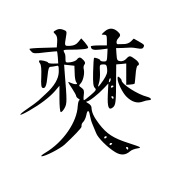
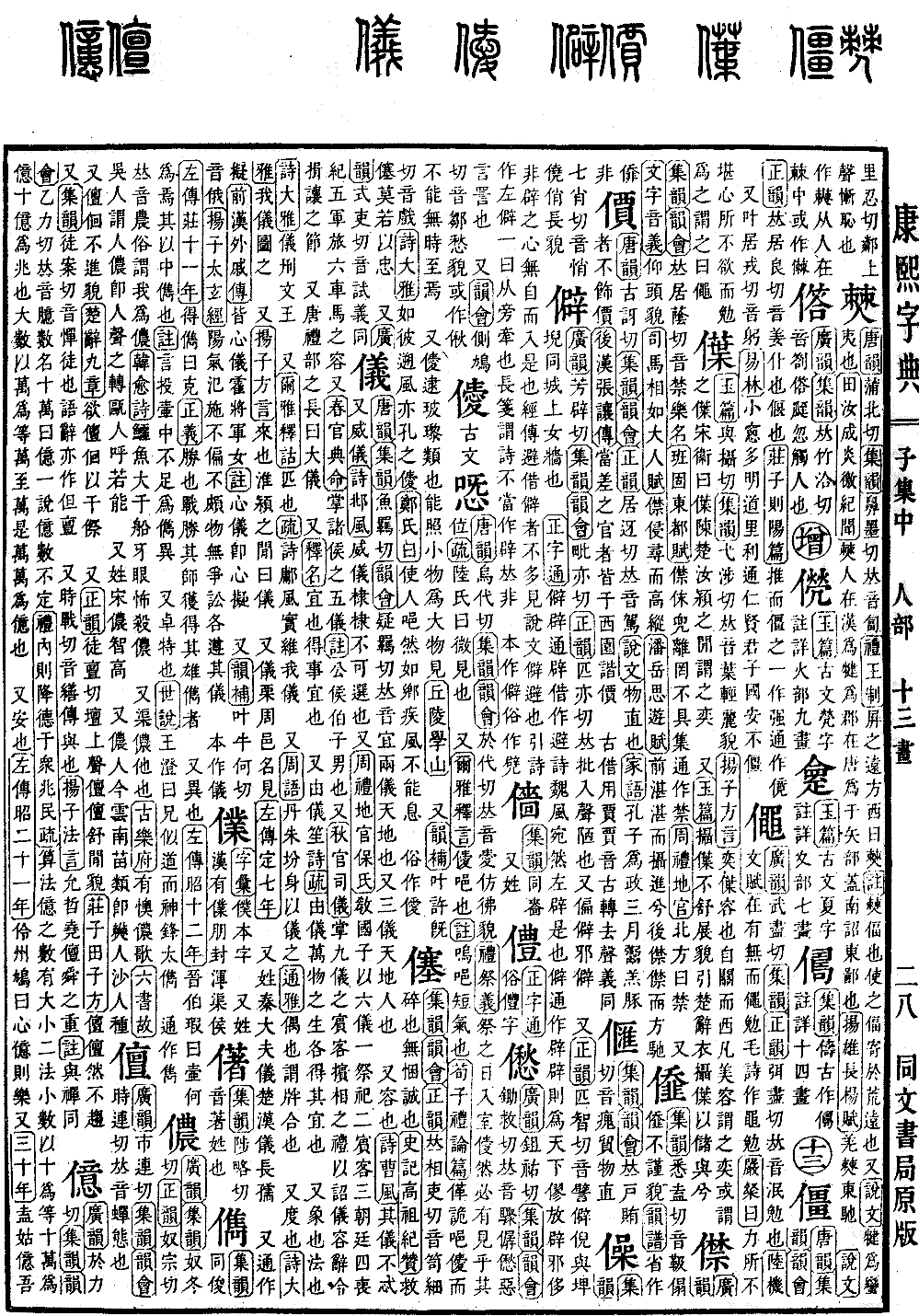
Bó; Kangxi stroke count: 14; Page number: Page 118, Entry 01
Tang rhyme: pú, běi. Collected rhymes: bí, mò. Pronounced as fú.
Book of Rites (Liji), Royal Regulations: Exiled to distant regions, those in the west are called Bó. Commentary: Bó means to force; it refers to compelling them to live in desolate, remote lands.
Also, from the Analytical Dictionary of Chinese Characters (Shuowen): Refers to the barbarian tribes of Jianwei.
Tian Rucheng, Record of the Southern Borders (Yanjiào Jìwén): The Bó people belonged to Jianwei Commandery during the Han Dynasty, and to the Yushi tribe during the Tang Dynasty; they resided in the eastern frontier regions of Nanzhao.
Yang Xiong, Rhapsody on Longyang (Chángyáng Fù): The Qiang and Bó people galloped eastward.
Analytical Dictionary of Chinese Characters (Shuowen) writes it as Bó, with the radical for person (rén) and the phonetic component jí. Sometimes written as a variant form.
Textual research:
Book of Rites (Liji), Royal Regulations: Exiled to distant regions, those in the west are called Bó. Following the original text, the word for region (fāng) has been added after the word for west (xī).
Analytical Dictionary of Chinese Characters (Shuowen) writes it as Bó, with the radical for person (rén) and the phonetic component jí. Following the original text, the description stating that it is within the component for thorns (jí) has been corrected to note the phonetic component jí.