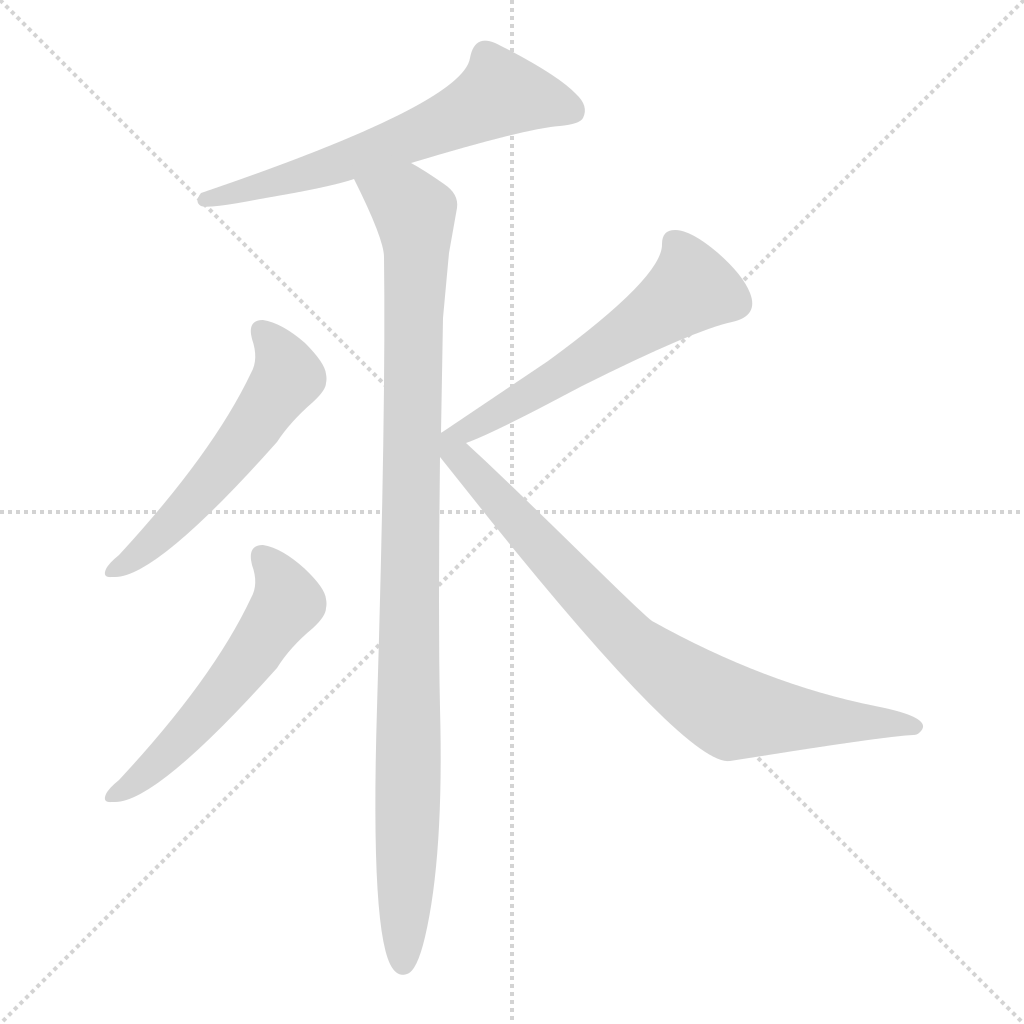
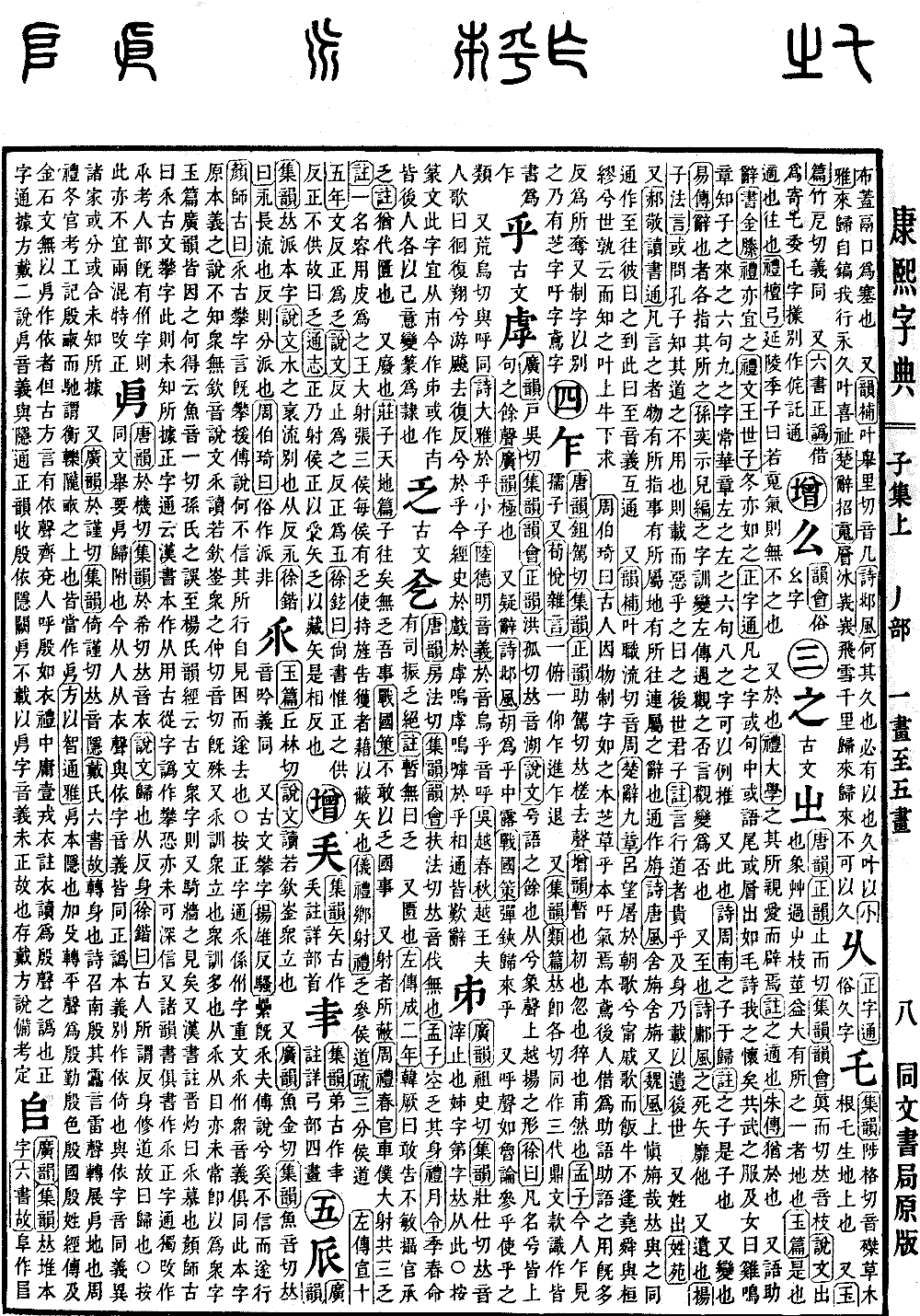
Zi Collection, Page Position: Upper. Radical: Slash (piě). 6 strokes. Page 82, Line 15.
Jade Chapters (Yupian) notes the pronunciation as the fanqie qiū lín.
Explaining Graphs and Analyzing Characters (Shuowen Jiezi) states the pronunciation is similar to qīn yín, meaning the appearance of a crowd of people standing.
It is also found in Expanded Rhymes (Guangyun) with the fanqie yú jīn, and in Collected Rhymes (Jiyun) with the fanqie yú yīn, sharing the same pronunciation as yín. The meaning is the same.
It is also the ancient form of the character pān.
Yang Xiong wrote in Refuting the Lament (Fan Li Sao): Having already clung to Fu Yue, why not trust him and proceed?
Yan Shigu's commentary says: This character is the ancient form of pān, meaning that since one has already clung to or sought the support of Fu Yue, why not trust his words and act accordingly, instead of leaving due to one's own hardships?
According to the Correct Character Mastery (Zhengzitong), this character is a variant of the character zhòng. It claims the pronunciation and meaning are the same based on the original character's meaning, yet it fails to recognize that the character zhòng does not have the pronunciation qīn. Explaining Graphs and Analyzing Characters says this character is pronounced like qīn yín. The fanqie for the character zhòng is zhī zhòng, so the two pronunciations are fundamentally different. Furthermore, this character is explained as a crowd standing, while the character zhòng is explained as many and is composed of this character and the radical for eye; they are not simply the same character. Both Jade Chapters and Expanded Rhymes follow this, so how can the fanqie yú yīn be considered an error by Master Sun? When Master Yang says it is the ancient form of the character zhòng, that is also an indecisive opinion.
Additionally, in the commentaries of the Book of Han (Hanshu), Jin Zhuo says the character means to admire. Yan Shigu says it is the ancient form of the character pān. It is unknown what these claims are based on.
Correct Character Mastery says the original text of the Book of Han was written as the ancient form of the character cóng, which was mistakenly transcribed as pān, but this is perhaps not to be fully trusted.
Furthermore, various rhyme dictionaries write the character with three components, but only Correct Character Mastery changes it to a form with one person radical above two others. Upon investigation, since the radical for person already contains a similar character, these two should not be confused, and this is hereby corrected. The character is written with three person components.