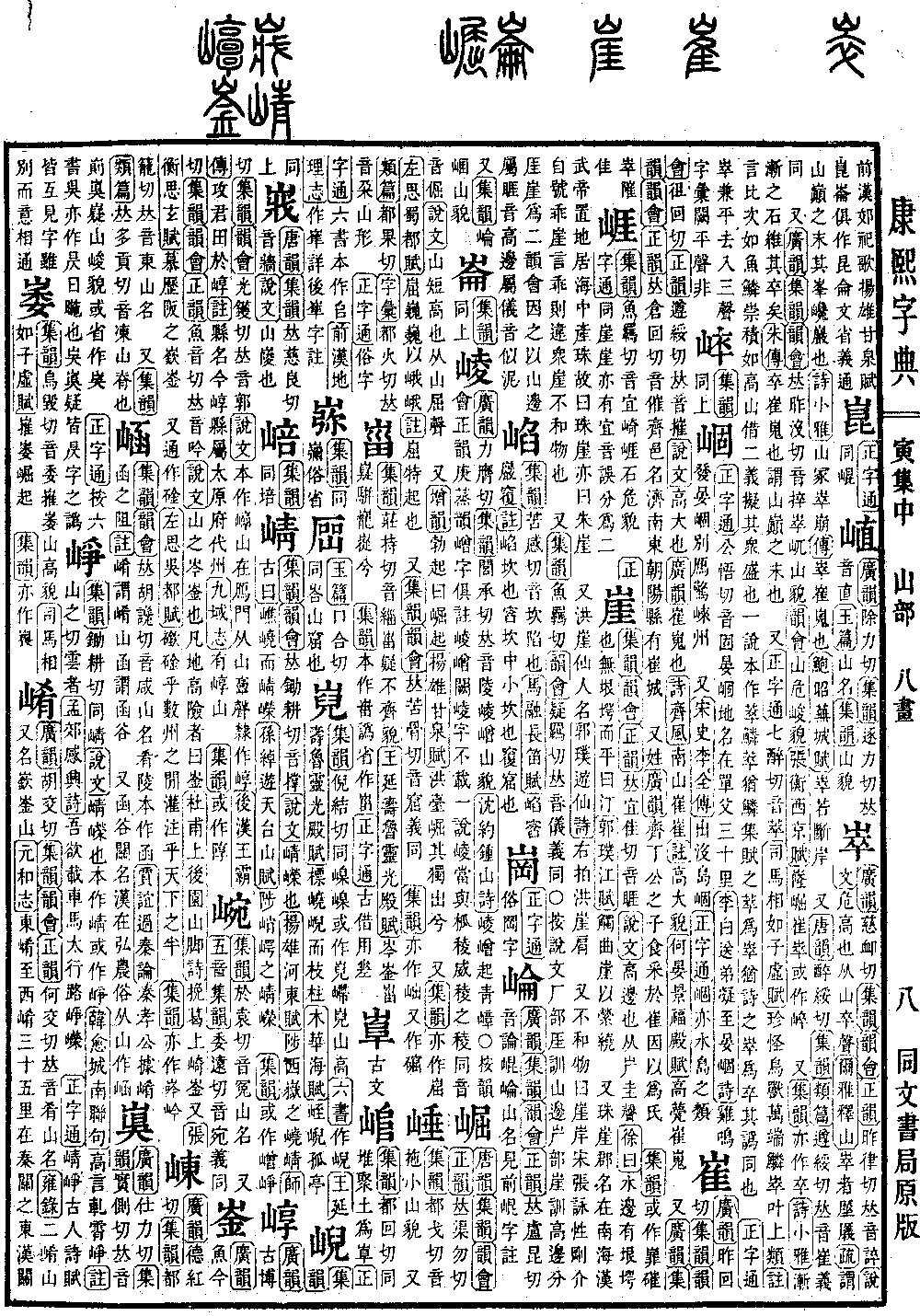
Yin Collection, Middle Volume. Radical: Mountain (shān). Kangxi strokes: 11. Page 314, Entry 08.
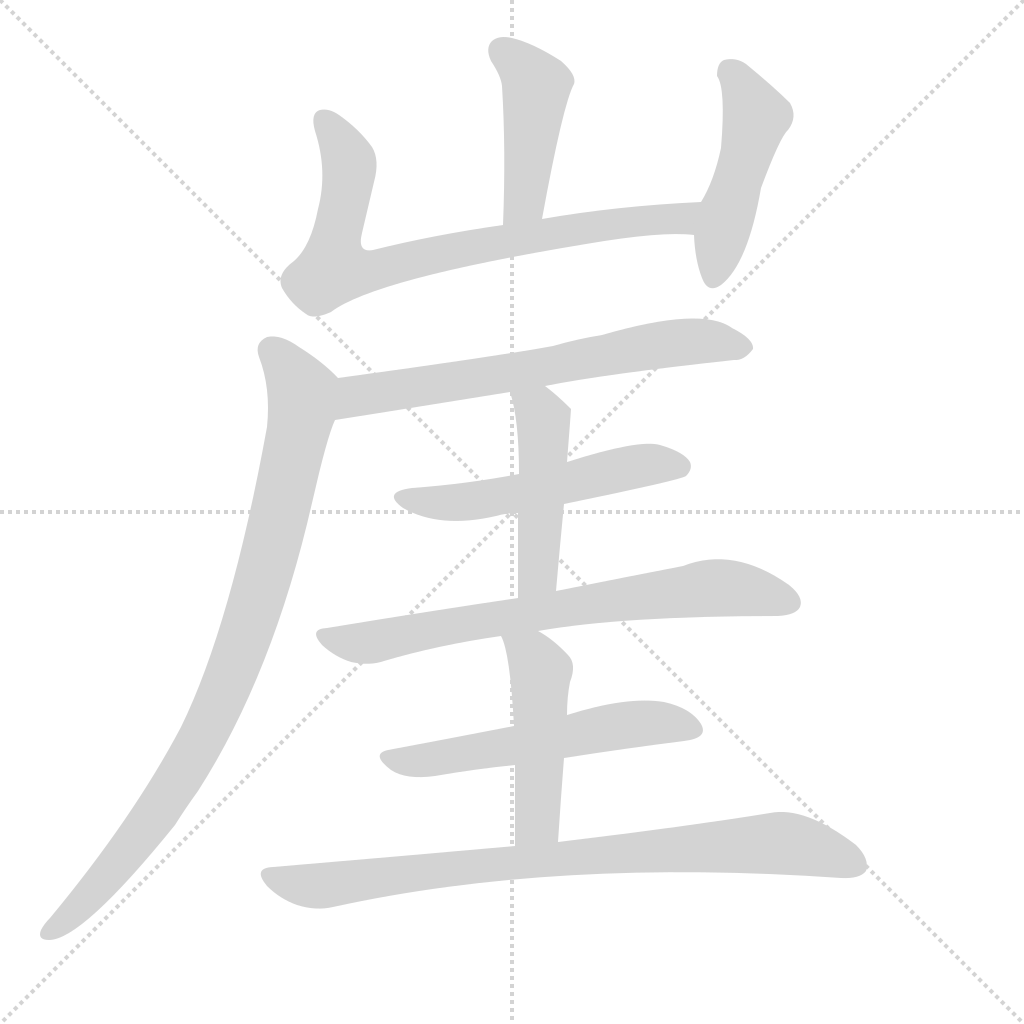
Collected Rhymes (Jiyun), Rhyme Meetings (Yunhui), and Rectified Rhymes (Zhengyun): Pronounced ya. Explaining Simple and Analyzing Compound Characters (Shuowen): A high edge. Derived from the radical for high cliff with a cliff sound. Xu says: An edge or boundary along water. A place that is flat without boundaries is called a sandbar. Guo Pu, Rhapsody on the River (Jiangfu): Touching the winding cliffs and circling back. Also, Zhuya, a name of a commandery. Located in the South Sea, established by Emperor Wu of the Han dynasty; it is situated within the sea and produces pearls, hence it is called Zhuya, also known as Zhuya. Also, Hongya, the name of an immortal. Guo Pu, Poems on Wandering Immortals (Youxian shi): Patting the shoulder of Hongya on the right. Also, to be incompatible with people or affairs is called cliff-shore. During the Song dynasty, Zhang Yong had a straightforward and upright personality and styled himself Guaiya, meaning that being eccentric goes against the masses, and cliff means being unharmonious with things. Also, Collected Rhymes (Jiyun): Pronounced yi. Rhyme Meetings (Yunhui): Pronounced yi. The meaning is the same. Note: Explaining Simple and Analyzing Compound Characters (Shuowen) defines the character with the factory radical as the edge of a mountain, and the character with the high cliff radical as a high edge, splitting them into two separate characters. Rhyme Meetings follows this theory, categorizing the edge of a mountain under the pronunciation ya and the high edge under the pronunciation yi, which seems somewhat overly rigid.