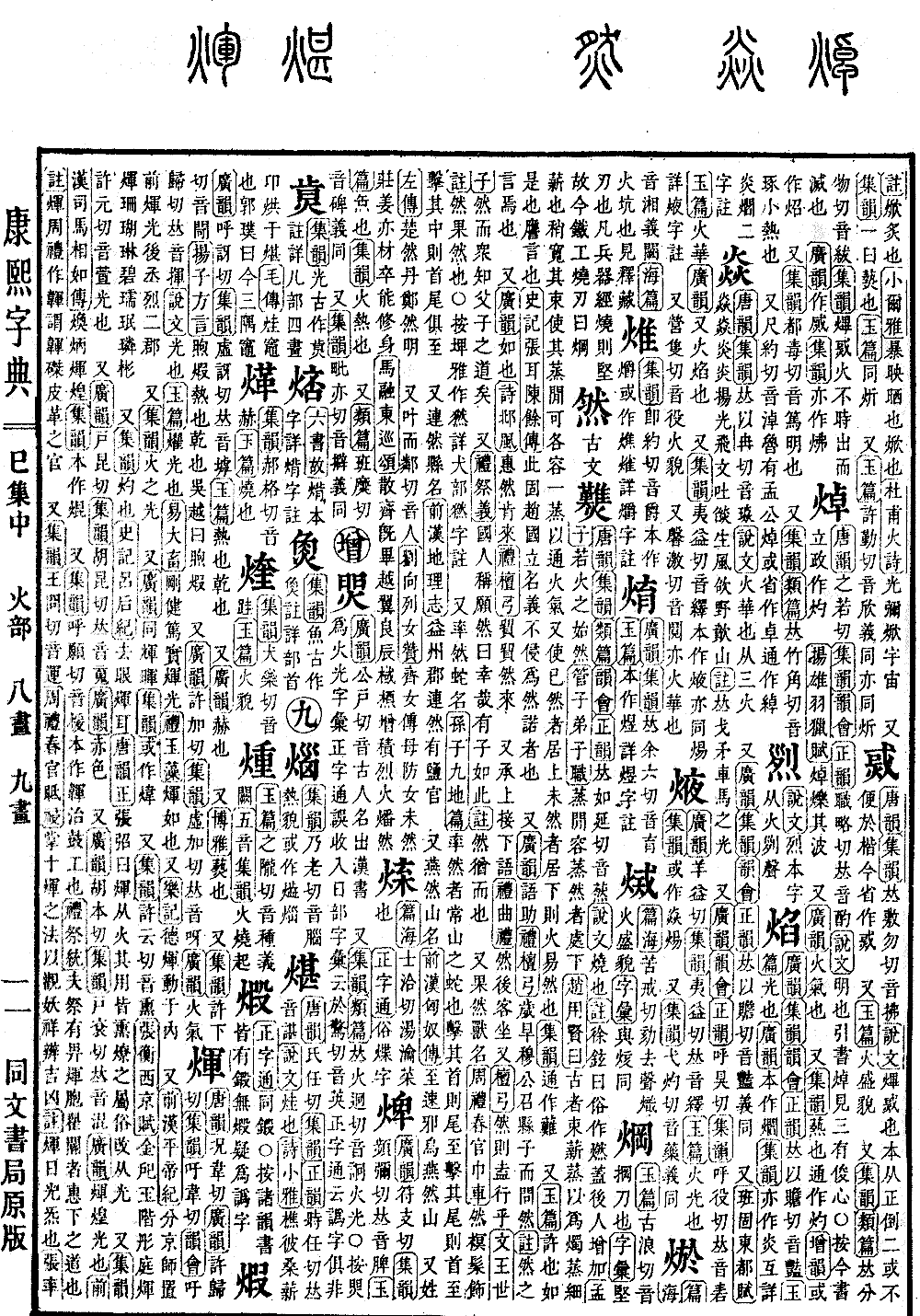
Si Collection, Middle Volume
Radical: Fire (huǒ)
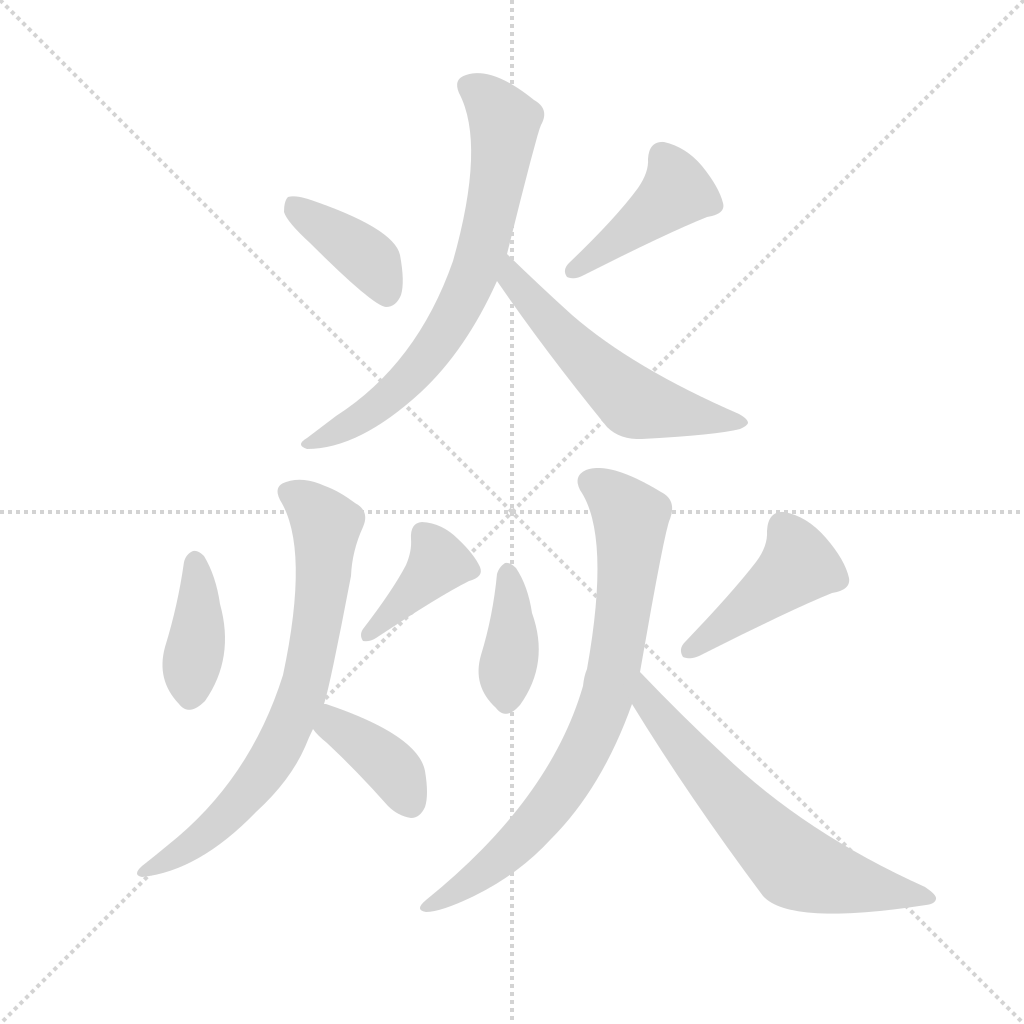
焱
Kangxi stroke count: 12
Page 675, Entry 05
Tang Rhyme (Tangyun) and Collected Rhymes (Jiyun): Pronounced yǎn (rising tone), similar to the pronunciation of yan (third tone). Explanation in Explaining Graphs and Analyzing Characters (Shuowen Jiezi): the brilliance of flames. The character shape is formed by three fire symbols.
Also, Broad Rhymes (Guangyun), Collected Rhymes (Jiyun), Rhyme Meetings (Yunhui), and Orthodox Rhymes (Zhengyun): Pronounced yàn (falling tone). The meaning is the same.
Also, cited in Pan Gu's Eastern Capital Rhapsody (Dongdu Fu): "Sparkling and blazing, scattering light and flying patterns, exhaling flames and creating wind, swallowing the plains and erupting over the mountains." Note: This refers to the light reflected from spears, lances, chariots, and horses.
Also, Broad Rhymes (Guangyun), Rhyme Meetings (Yunhui), and Orthodox Rhymes (Zhengyun): Pronounced huā; Collected Rhymes (Jiyun): Pronounced huā. Jade Chapters (Yupian) explains this as the brilliance of flames. Broad Rhymes (Guangyun) also refers to flames.
Also, Collected Rhymes (Jiyun): Pronounced yì. The original character is written as yi. It is also the same as the character yang. See the commentary under the entry for yi for details.
Also, pronounced yì. Refers to the appearance of flames.
Also, pronounced xì. It also refers to the brilliance of flames. The character yan was originally erroneously written using the structure of yan.