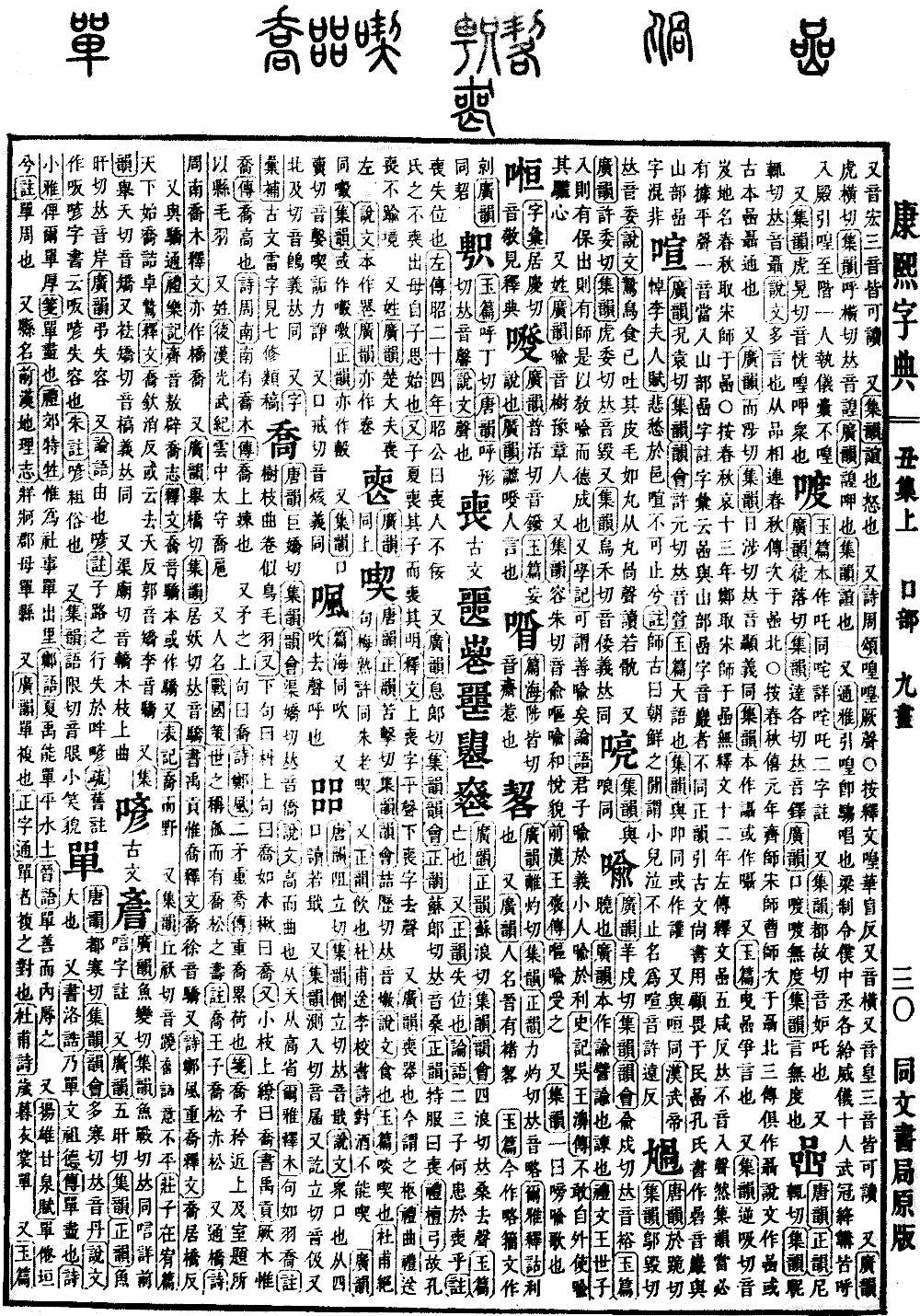
Chou Collection, Upper Volume
Radical: Mouth (kǒu)
Yan; Kangxi stroke count: 12; Page 200, Entry 23
According to the Broad Rhymes (Guangyun), pronounced yan (falling-rising tone). According to the Collected Rhymes (Jiyun), pronounced yan (falling-rising tone). This character is identical to the character yan (to lament). For a detailed explanation, refer to the commentary for the character yan previously provided.
Another pronunciation: According to the Broad Rhymes (Guangyun), pronounced an (falling tone). According to the Collected Rhymes (Jiyun) and the Correct Rhymes (Zhengyun), pronounced an (falling tone), sharing the same sound as the character an (shore). The Broad Rhymes (Guangyun) defines this as a loss of composure during mourning.
Also appears in the Analects (Lunyu): You ye yan. The commentary explains: The character of Zilu was lacking in refinement, being too rough and fierce. The sub-commentary notes that the original text was written with the character yan. Lexicons state: Yan, a loss of proper demeanor. The Zhu commentary defines it as vulgar.
Another pronunciation: According to the Collected Rhymes (Jiyun), pronounced yan (falling-rising tone), sharing the same sound as the character yan (eye). It means the appearance of smiling.
Textual research: In the Analects (Lunyu), the phrase You ye yan. The commentary explains: The character of Zilu was lacking in refinement, being too tianyan. We respectfully note that the original text has been corrected from tianyan to panyan.