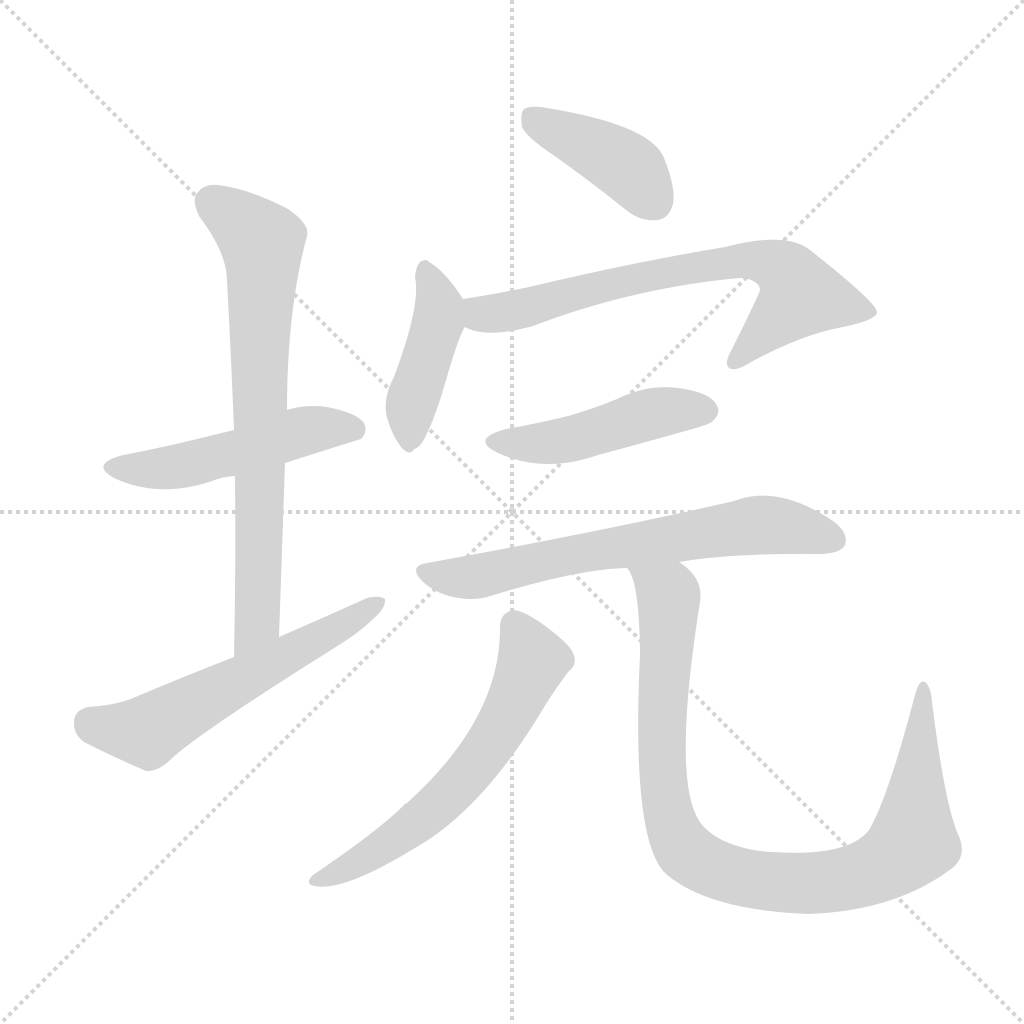
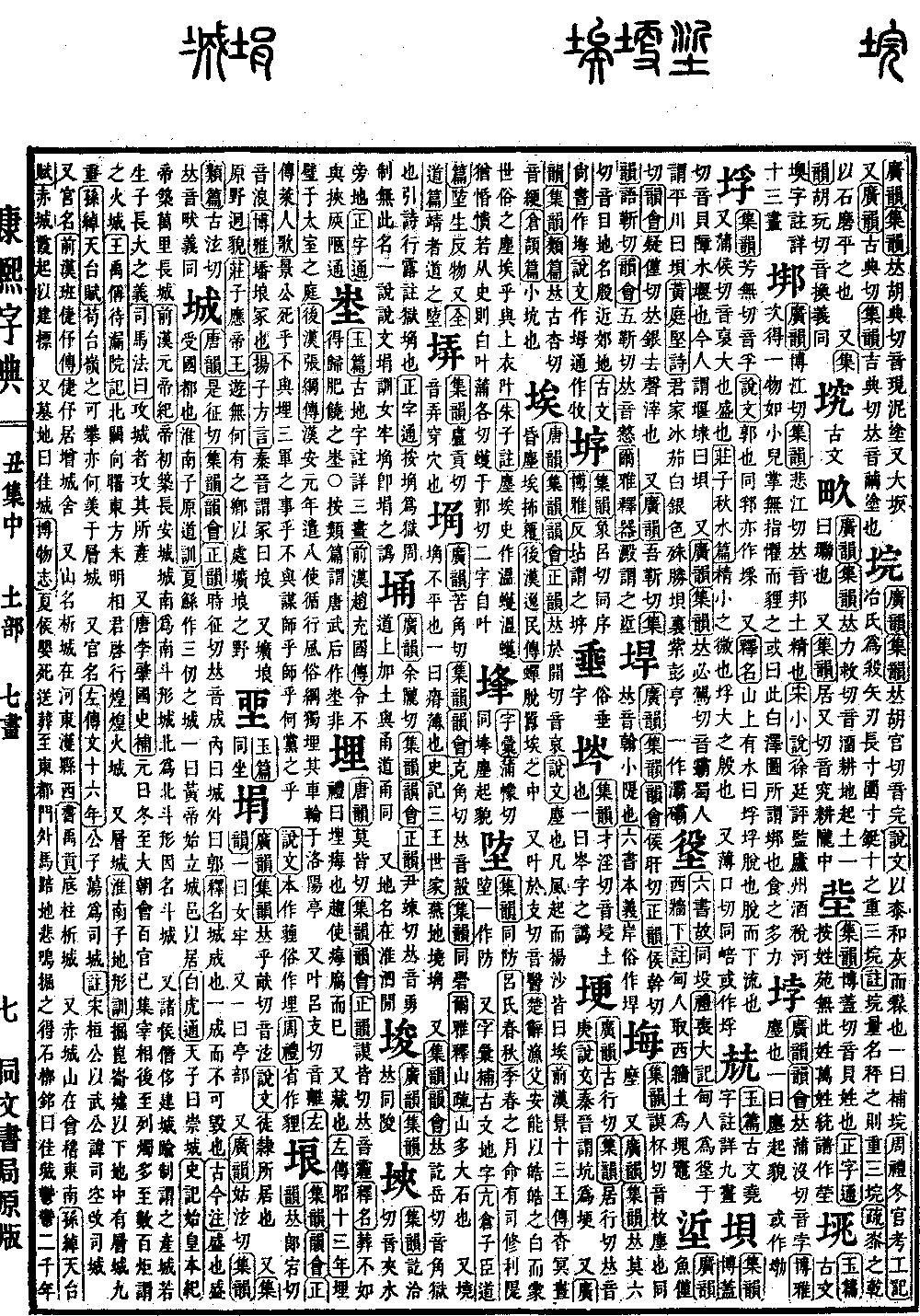
Chou Collection, Middle Volume. Radical: Earth (tǔ).
Kangxi strokes: 10. Page 229, Entry 01.
Guangyun (Guangyun) and Jiyun (Jiyun) state it is pronounced wan. Shuowen Jiezi (Shuowen) defines it as using lacquer mixed with ash to plaster surfaces. Another theory suggests it refers to repairing or plastering. In the Rites of Zhou (Zhouli), Book of Winter Officials, Record of Trades (Kaogongji), it is noted that the metalworker crafts killing arrows with a blade one inch long, a circumference of one inch, and a tang ten times the length of the blade, weighing three wan. Commentary states that wan is the name of a measurement tool, pronounced the same as wan (pill). The sub-commentary clarifies that this wan is a unit of weight, not a capacity measure like the hu or dou. Furthermore, Jiyun (Jiyun) states it is pronounced huan. The meaning is the same.
Textual research: Shuowen (Shuowen) defines it as using lacquer mixed with ash for decoration. Following the original text, the term for decoration has been changed to plastering. Regarding the commentary that wan is a measure of weight, meaning three wan in weight, and the sub-commentary suggesting it is ground smooth with stone after the lacquer dries: there is no such text in the commentary and sub-commentary of the Rites of Zhou (Zhouli) metalworker section. Per the original text, it has been amended to: Commentary: Wan is the name of a measurement tool, pronounced the same as wan (pill). Sub-commentary: This wan is a unit of weight, not a capacity measure like the hu or dou.