You Collection, Upper Volume
Radical: Speech (yán)
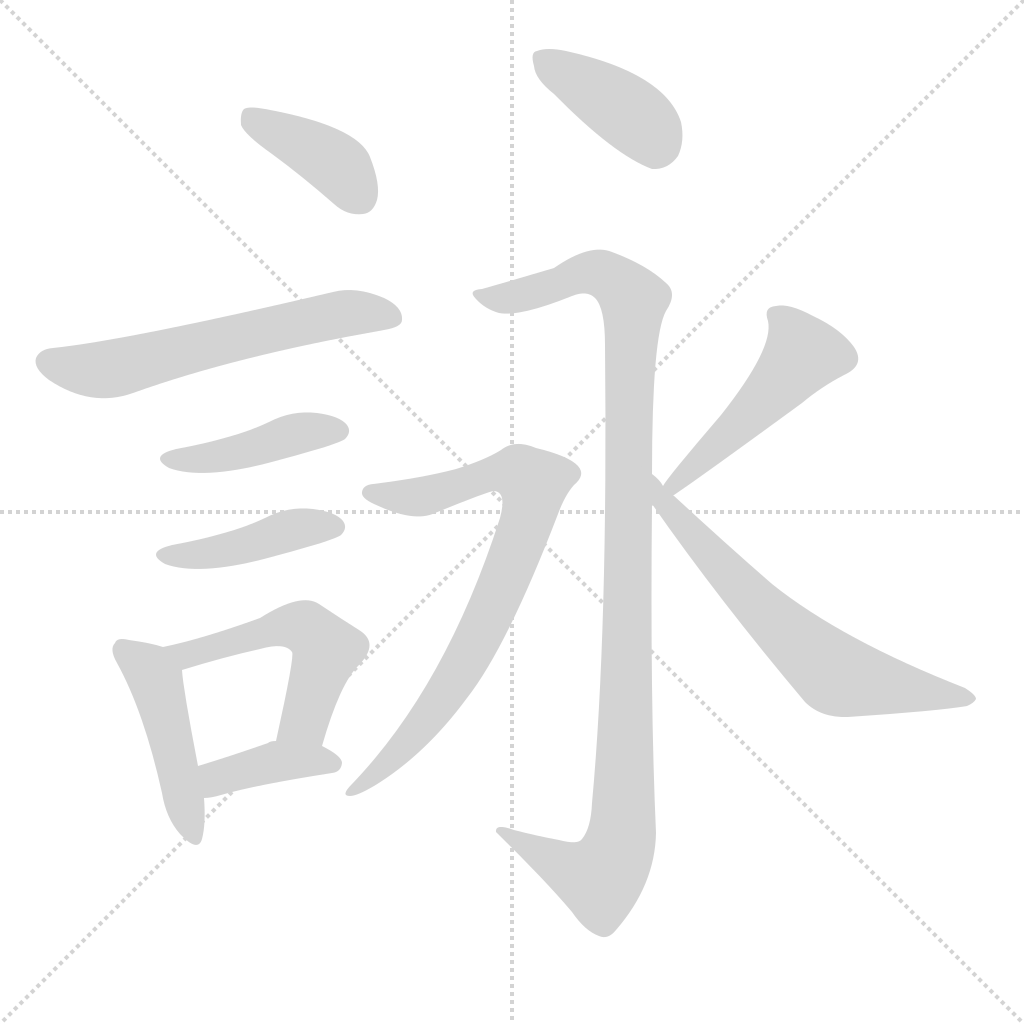
詠
Kangxi stroke count: 13
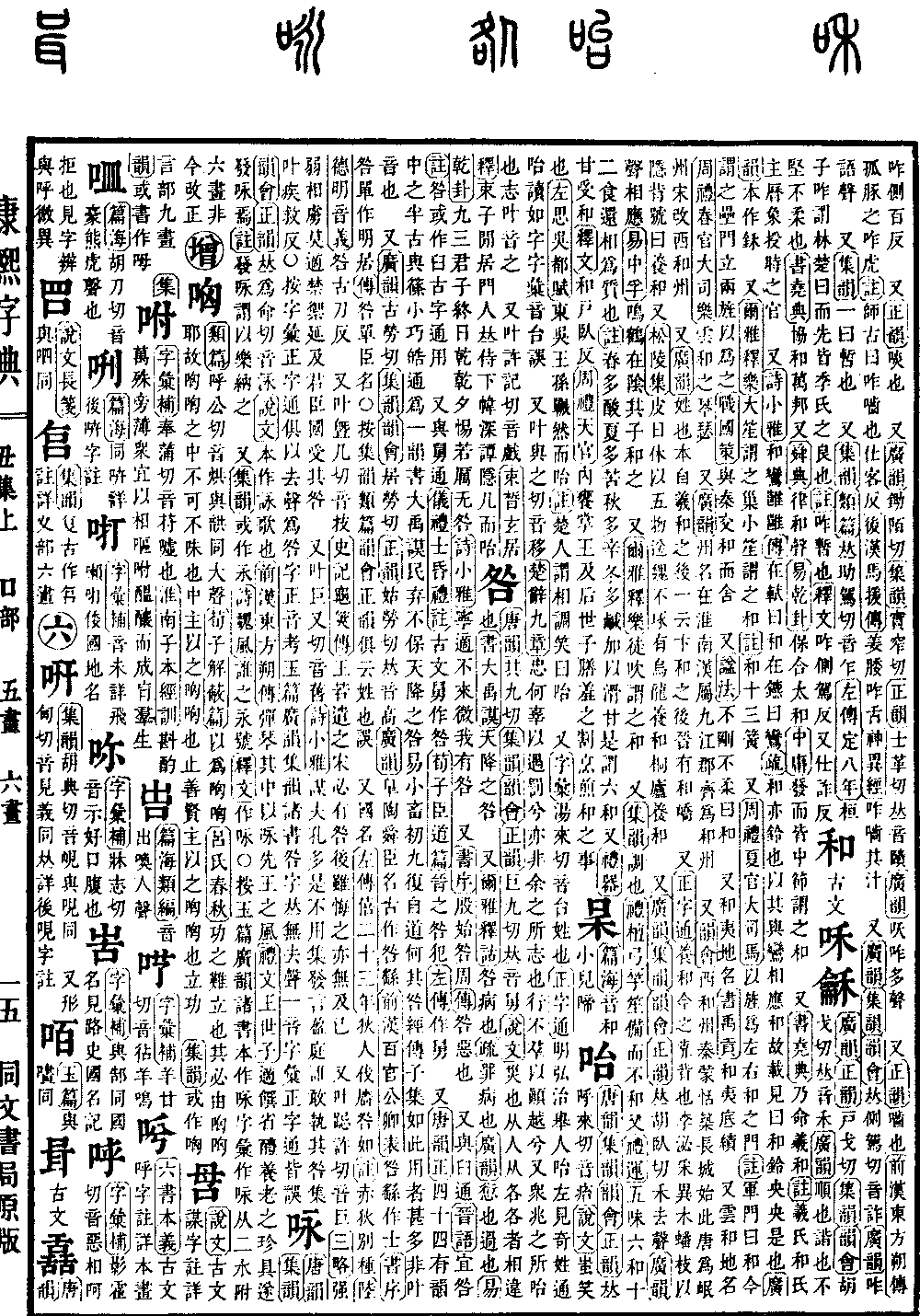
Page 185, Entry 01
Tang Rhymes (Tangyun), Collected Rhymes (Jiyun), Dictionary of Rhymes (Yunhui), and Correct Rhymes (Zhengyun) all give the pronunciation as yong (level tone), the same as the character for swim.
Shuowen Jiezi (Shuowen): To sing.
Jade Chapters (Yupian): To speak with a drawn-out voice.
Expanded Rhymes (Zengyun): To sing, chant, or recite.
Book of Documents (Shujing), section Benefits of Agriculture (Yiji): To strike the jade chime and play the zither and lute to accompany singing.
Commentary: The sound used to accompany singing.
Preface to the Erya (Erya xu): To narrate the ways in which poets are moved by things and express them through chanting.
Sub-commentary: To chant is to speak with a drawn-out voice.
History of the Former Han (Qianhan shu), Treatise on Literature and Arts (Yiwenzhi): To chant its sound is called singing. It also refers to the singing of birds, which is also called chanting.
Lu Ji, Song of Sadness (Beizai xing): With ears listening sadly to the seasonal cries of birds.
Annotation: The sounds of birds change according to the seasons.
Also used interchangeably with the character for chant.
Records of the Grand Historian (Shiji), Treatise on Music (Yueshu): To sing its sound.
Book of Rites (Liji), Record of Music (Yueji): Written as song and chant.
Shuowen Longjian (Shuowen changjian): Simplified as the character for eternal.
Book of Documents (Shujing), Canon of Shun (Shundian): Poetry expresses the intent, and singing prolongs the sound to chant it.