Chou Collection, Lower Volume
Radical: Evening (xī)
Kangxi Strokes: 14
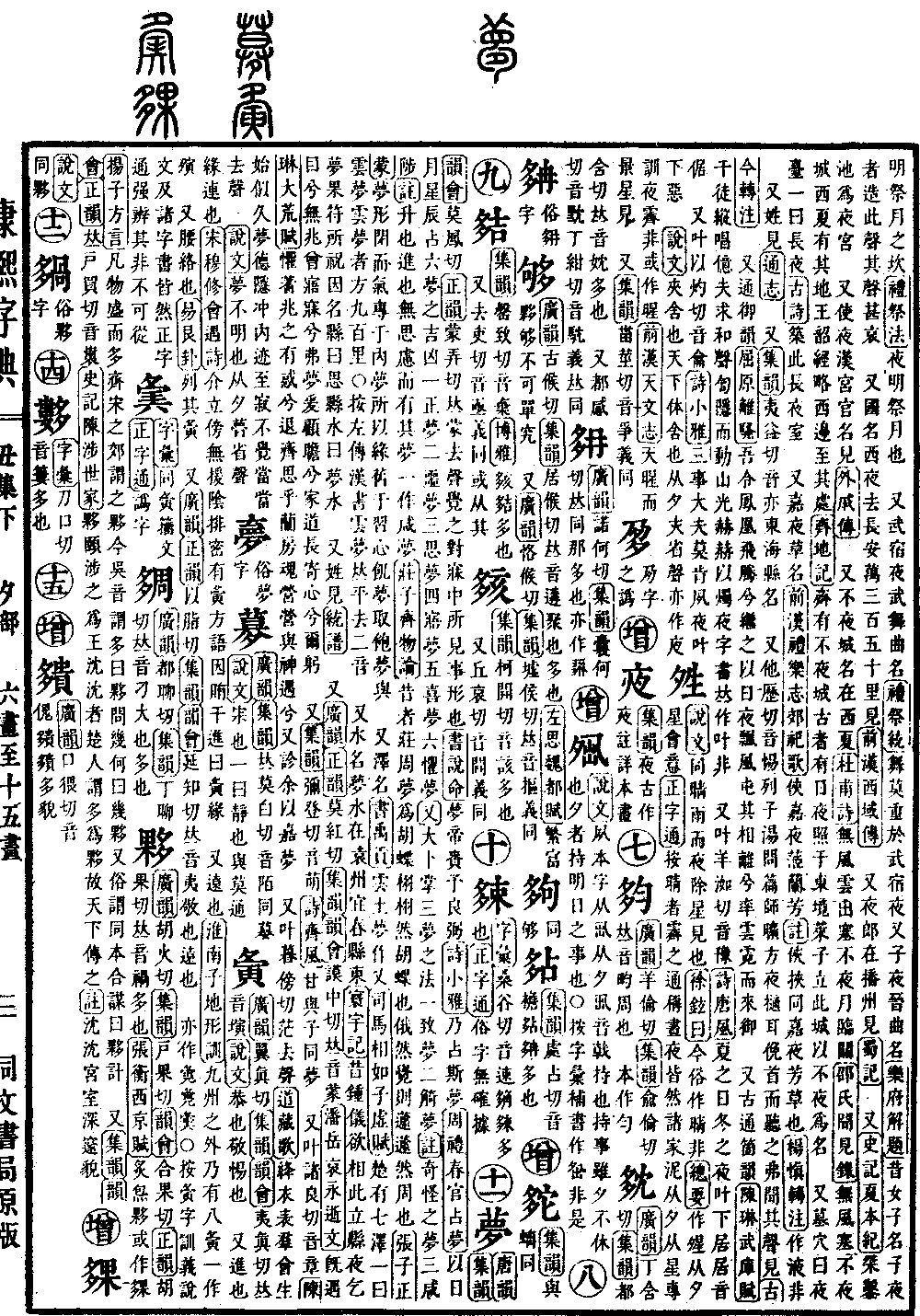
Page 247, Entry 19
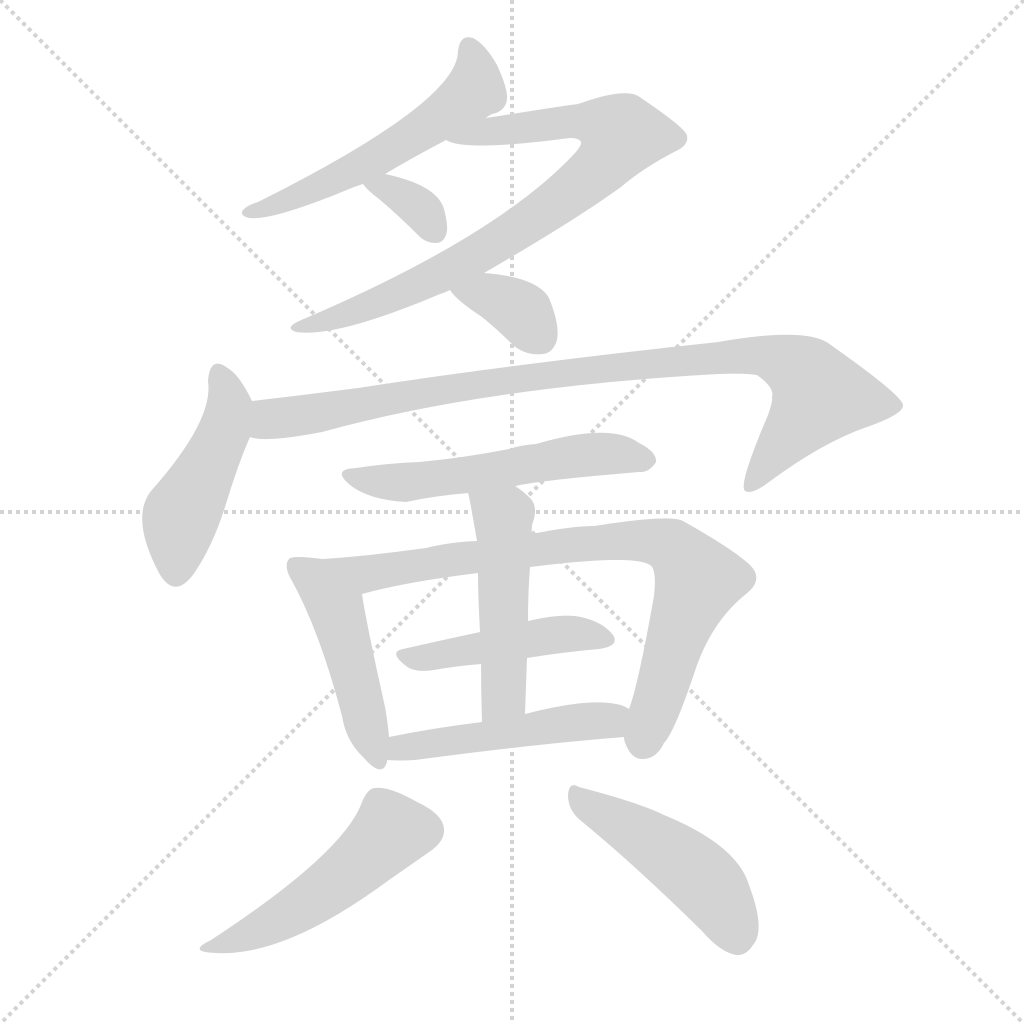
Pronounced yin. According to the Analytical Dictionary of Characters (Shuowen Jiezi), it signifies respect, reverence, and vigilance. It also refers to advancing, climbing, or attaching oneself to others. As cited in Meeting Poems (Huiyu Shi) by Mu Xiu of the Song dynasty: Standing alone without support, being subtly squeezed out in the dark, secretly having an connection. In local dialect, seeking advancement through bribery is called clinging (yinyuan).
It also refers to being remote or far away. As cited in Topographical Training (Dixing Xun) of the Masters of Huainan (Huainanzi): Beyond the nine provinces, there are the eight remote regions, also written as a variant form (yi).
It further refers to the veins or muscles of the waist. As cited in the Book of Changes (Yijing), section on the Mountain hexagram: The muscles along the spine.
Pronounced yi. It also signifies respect and remoteness. It is also written in a variant form (qi).
Note: Regarding the definitions of the character yin, the Analytical Dictionary of Characters (Shuowen Jiezi) and various other dictionaries are consistent; the arguments made in the Correction of Characters (Zhengzitong) are erroneous and should not be followed.