You Collection, Lower Volume
Radical: Walk (chuò)
Kangxi stroke count: 19
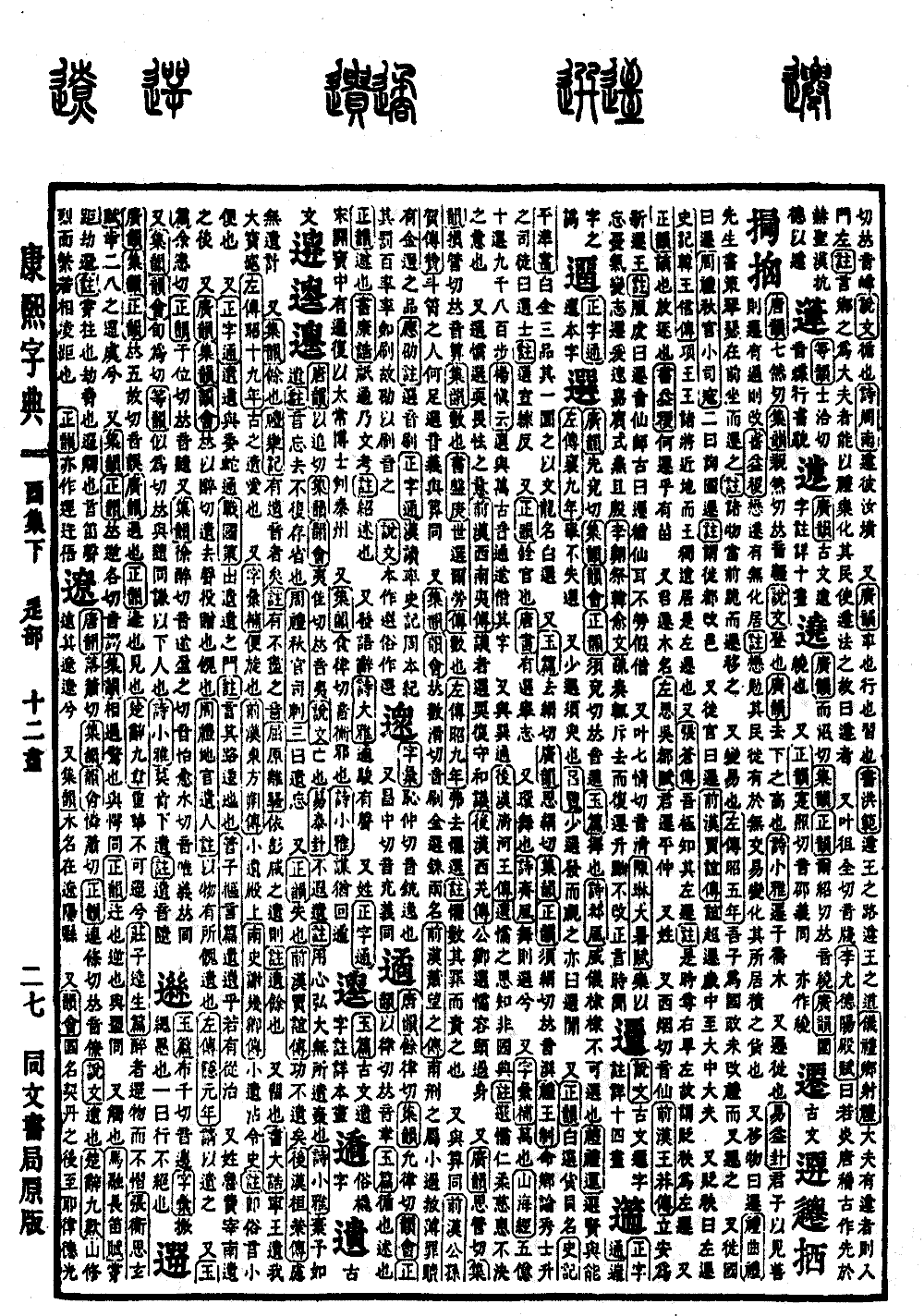
Page 1265, Entry 18
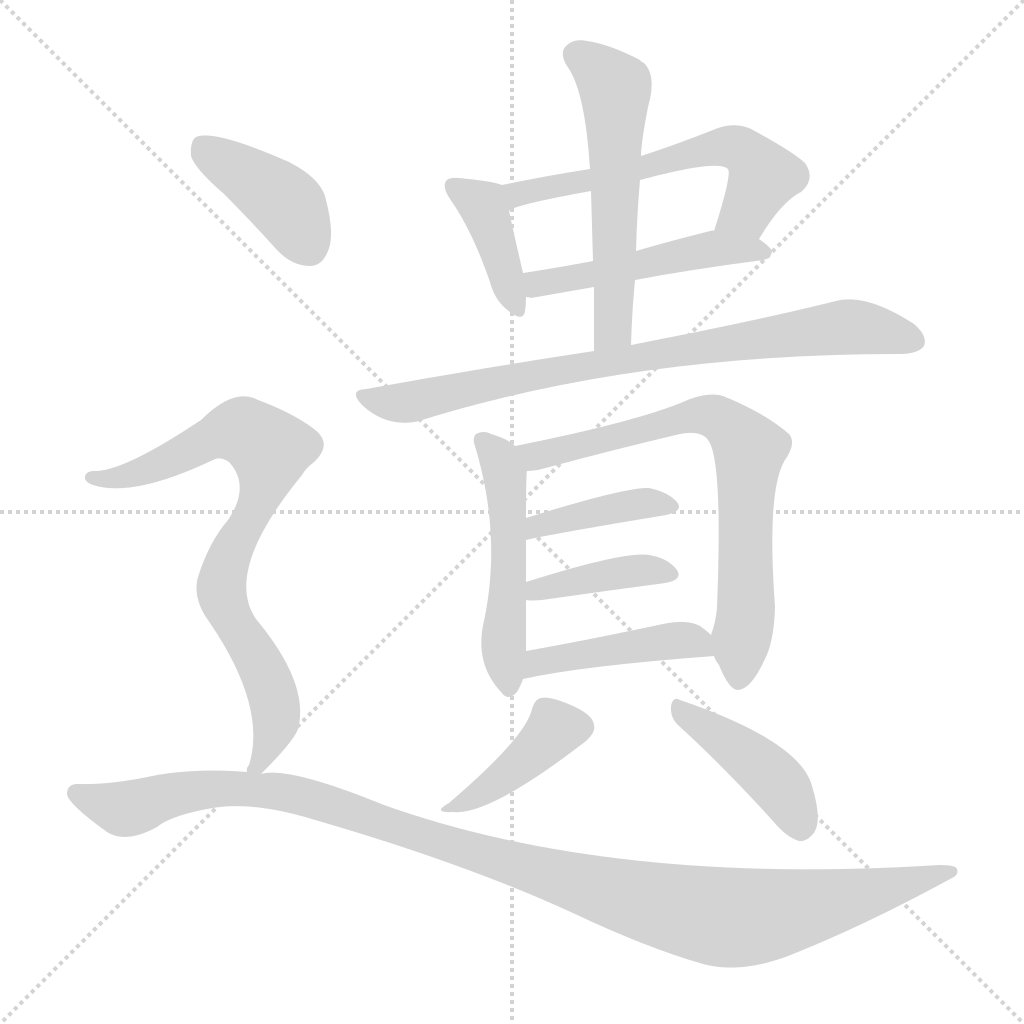
Ancient form. Pronounced yi. According to the Shuowen Jiezi (Shuowen), it means to lose or to pass away. In the Book of Changes (Yijing), Tai Hexagram, it is written: Do not leave anything to the distant. The commentary states: One whose intentions are vast and great leaves nothing behind or abandoned. In the Book of Odes (Shijing), Lesser Odes, it is written: Casting me aside as if I were something discarded. The commentary states: This refers to forgetting someone and no longer preserving or observing them. In the Rites of Zhou (Zhouli), Autumn Offices, Superintendent of Punishments, the third category is: Remissness or forgetfulness. Also, according to the Zheng Yun dictionary, it means to lose. In the History of the Former Han (Qian Hanshu), Biography of Jia Yi, it is written: Merit is not lost. In the History of the Later Han (Hou Hanshu), Biography of Huan Rong, it is written: There were no abandoned strategies in his plans. Also, according to the Jiyun dictionary, it means remainder. In the Book of Rites (Liji), Record of Music, it is written: There are sounds that remain. The commentary states: This refers to sounds that are not yet exhausted. In Qu Yuan's Li Sao, it is written: Relying on the remaining standards of Peng Xian. The commentary states: Yi means a remainder. Also, it means to leave behind. In the Book of Documents (Shujing), Great Announcement, it is written: The tranquil king left me the great precious tortoise. In the Zuo Tradition (Zuozhuan), 19th year of Duke Zhao, it is written: The remaining love of the ancients. Also, according to the Zihui Bu dictionary, it refers to urinating. In the History of the Former Han (Qian Hanshu), Biography of Dongfang Shuo, it is written: He urinated briefly on the palace hall. In the History of the Southern Dynasties (Nan Shi), Biography of Xie Jiqing, it is written: He urinated slightly and stained the official scribe. The commentary states: This refers to what is colloquially called urination. Also, according to the Zhengzitong dictionary, the form yi-yi is synonymous with wei-yi (winding and curving). In the Strategies of the Warring States (Zhan Guo Ce), it is written: Emerging from the winding gates. The commentary states: This describes a road that is winding. In the Guanzi, Pivotal Words chapter, it is written: Winding and curving, as if there is something being governed. Also, a surname. Descendants of Nan Yi, who was the steward of Fei in the State of Lu.
Pronounced yi (falling tone). It means to present a gift or to bestow. In the Rites of Zhou (Zhouli), Earth Offices, Note on the Official of Bestowals, it is written: To present something to another as a gift. In the Zuo Tradition (Zuozhuan), 1st year of Duke Yin, it is written: Please bestow it upon him.
Also, pronounced wei. Also, pronounced sui. Also, pronounced yi. Also, pronounced wei. The meaning is the same as above. Also, synonymous with sui (to follow). To humble oneself before others. In the Book of Odes (Shijing), Lesser Odes, it is written: None are willing to condescend. The commentary states: Yi is pronounced sui.