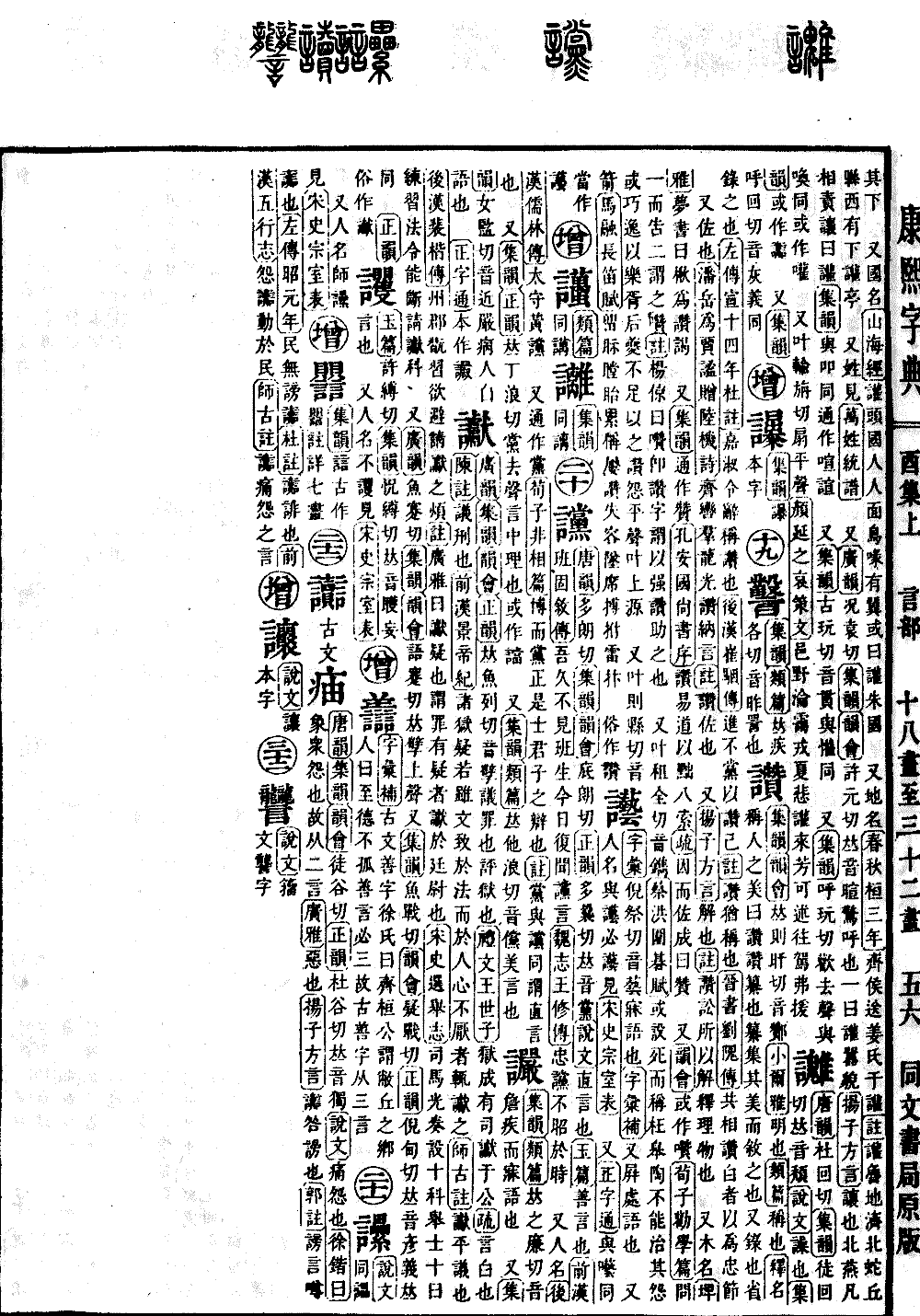
You Collection, Upper Volume
Radical: Speech (yán)
Kangxi Strokes: 27
Page 1188, Entry 18
Broad Rhymes (Guangyun), Collected Rhymes (Jiyun), Rhyme Compendium (Yunhui), Correct Rhymes (Zhengyun): Pronounced yè.
Refers to evaluating and determining guilt. Specifically, the trial and sentencing of cases.
Book of Rites (Liji), Records of the Crown Prince Wen: When a case trial is concluded, the responsible official reports the proposed sentencing to the Duke.
Commentary: This means to report and explain.
Note: This means to deliberate.
History of the Former Han (Qian Han Shu), Annals of Emperor Jing: If there are doubts regarding various cases, even if they can be sentenced according to the statutes, if the public feels it is inappropriate, then perform a review and deliberation.
Shigu Note: This term signifies fair deliberation.
History of the Later Han (Hou Han Shu), Biography of Pei Kai: Officials in the provinces and commanderies were negligent and wanted to avoid the trouble of requesting a review from superiors.
Note: The Erya (Guangya) states: This term refers to cases with doubts. It indicates cases where the nature of the crime is uncertain, which are then reported to the Commandant of Justice (Tingwei) for review.
History of Song (Song Shi), Treatise on Selection and Appointment: Sima Guang memorialized to establish ten categories for selecting talent; the tenth category was for those who understood laws and were skilled at deciding doubtful cases.
Also: Broad Rhymes (Guangyun): Pronounced yǎn; Collected Rhymes (Jiyun) and Rhyme Compendium (Yunhui): Pronounced yǎn. The tone is the same as the rising tone of yè.
Also: Collected Rhymes (Jiyun): Pronounced yàn; Rhyme Compendium (Yunhui): Pronounced yàn; Correct Rhymes (Zhengyun): Pronounced yàn. The pronunciation is the same as yàn. The meaning remains the same.
Correct Rhymes (Zhengyun): A common variant form (yàn) is used.