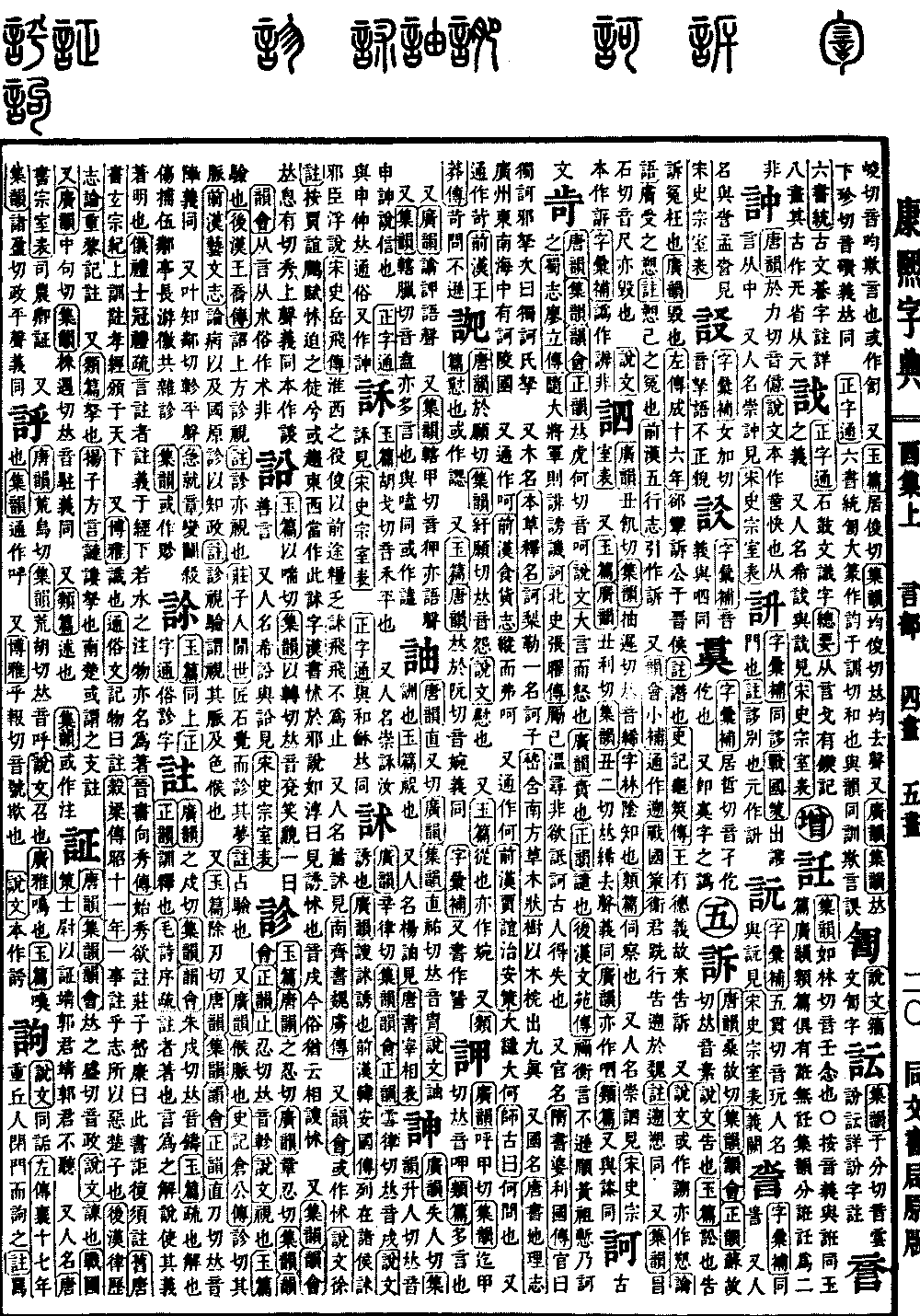
You Collection, Upper Volume
Radical: Speech (yán)
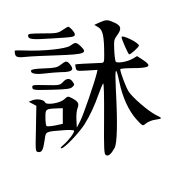
訹
Kangxi Stroke Count: 12
Page 1152, Entry 22
Pronounced xu.
In the Explanation of Graphs (Shuowen), it means to entice.
In the Extensive Rhymes (Guangyun), it means to entice or seduce.
In the Biography of Han Anguo from the History of the Former Han (Qianhan Shu): Listed among the feudal lords who were enticed by the floating arguments of evil ministers.
In the Biography of Yue Fei from the History of the Song (Songshi): During the Huai-Xi campaign, Jun enticed Fei to stop by claiming the supplies for the path ahead were insufficient, but Fei did not stop.
Also a personal name: Xiao Xu, found in the Biography of the Wei Barbarians from the History of the Southern Qi (Nanqi Shu).
In the Rhyme Anthology (Yunhui), it is sometimes written as a variant form (chu).
According to the Xu annotations on the Explanation of Graphs (Shuowen): In the Owl Rhapsody (Fu) by Jia Yi, it refers to those who are lured or compelled; it should be written as this character, Xu. In the Book of Han (Hanshu), it says lured by evil arguments. Ru Chun commented that it means to be seen as enticed or intimidated. Pronounced xu. Nowadays, it is still commonly said to entice or intimidate one another.
Pronounced xiu (rising tone). Meaning is the same. Originally written as a variant form. According to the Rhyme Anthology (Yunhui), it is composed of the radicals for speech and arts. The common form using the character for arts is incorrect.