Wu Collection, Middle Volume
Radical: Eye (mù)
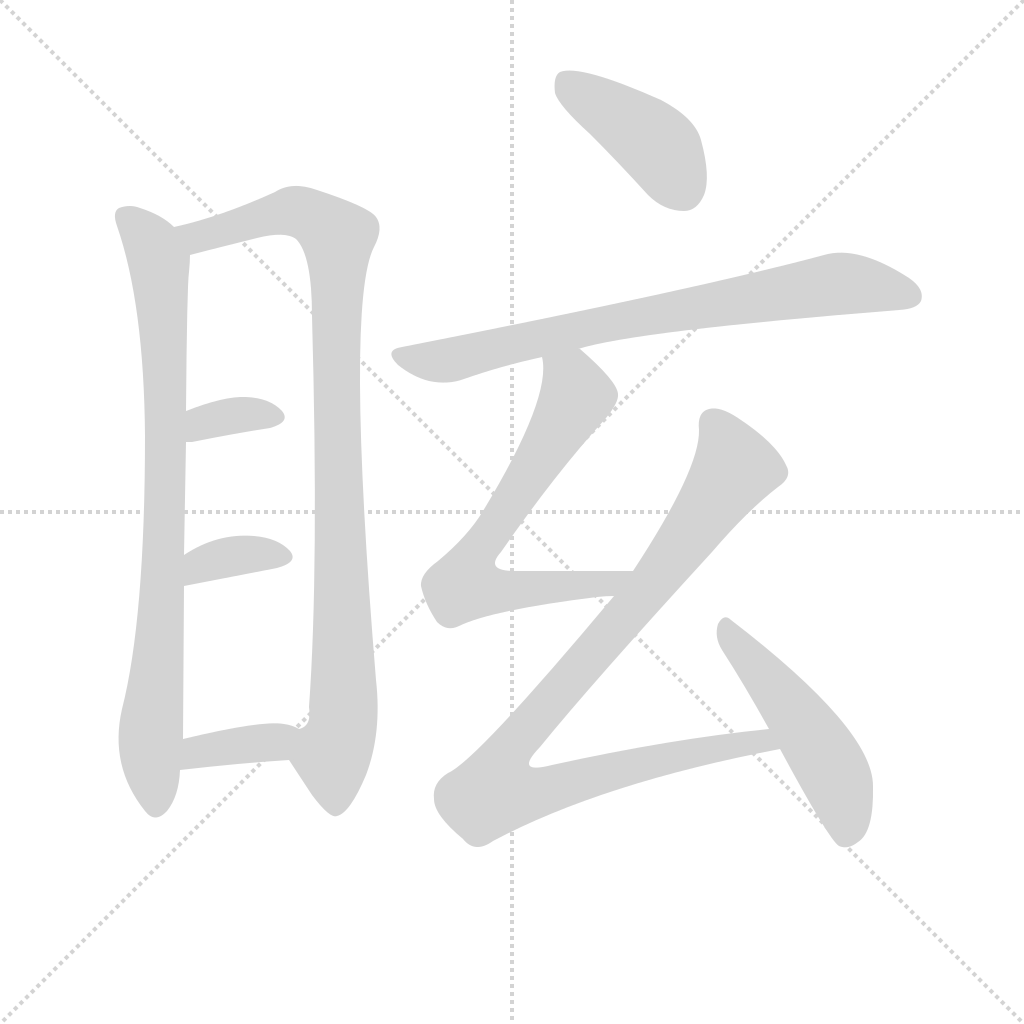
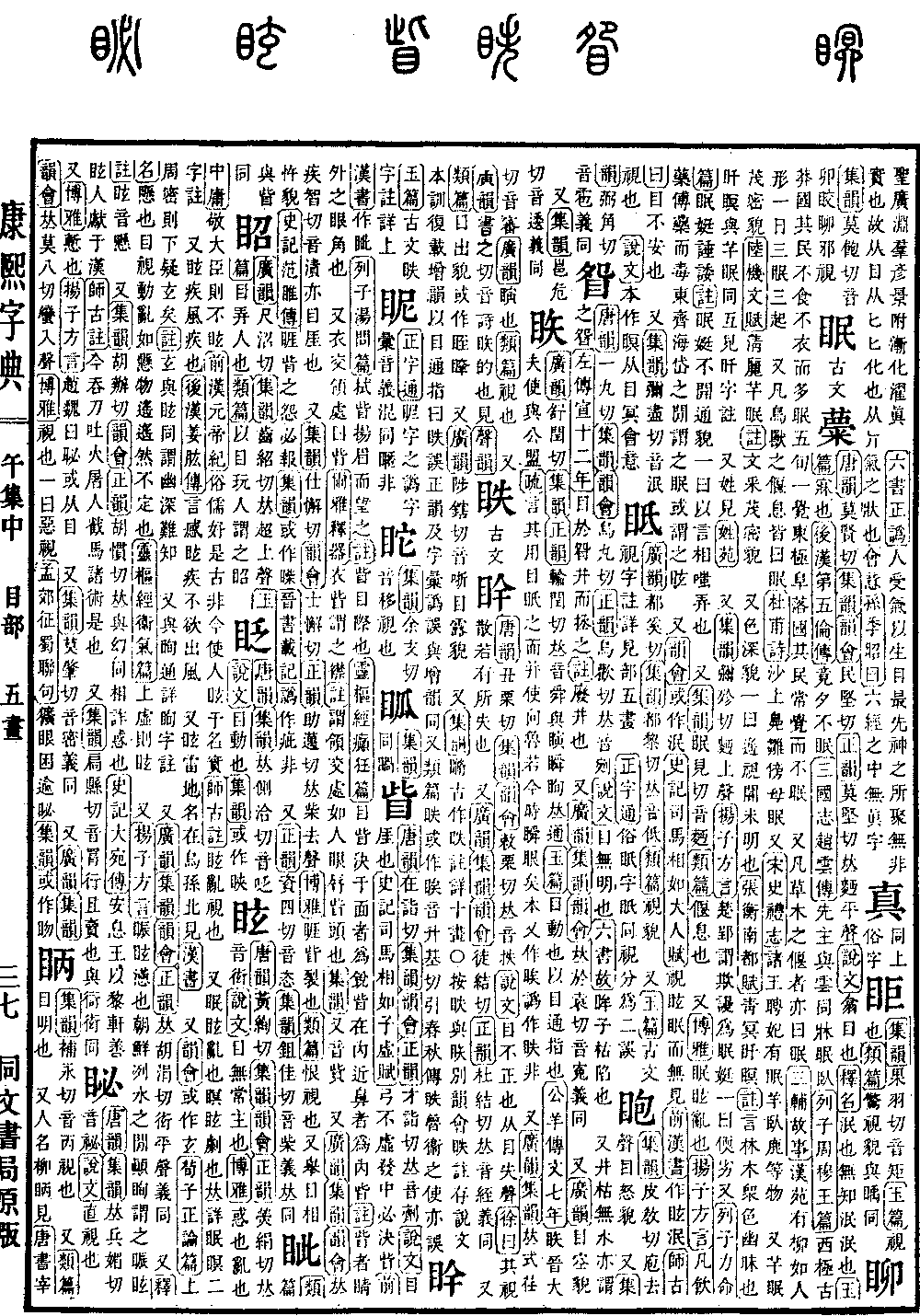
眩
Kangxi stroke count: 10
Page 805, Entry 20
Pronounced xuàn.
As defined in the Analytical Dictionary of Characters (Shuowen): The eyes have no fixed point of focus.
As defined in the Guangya: To be confused; disordered.
In the Doctrine of the Mean (Zhongyong): To respect high officials is to avoid confusion.
In the History of the Former Han (Qianhan), Annals of Emperor Yuan: Common scholars prefer to affirm the past while denying the present, causing people to feel confused between names and reality.
Annotation by Shigu: Xuàn means visual confusion.
Also, mián xuàn means confused. Míng xuàn means severe. See the entries for mián and míng for further details.
Also, xuàn jí refers to a wind-related illness.
In the History of the Later Han (Houhan), Biography of Jiang Gong: It is said to be an illness characterized by dizziness; the patient does not wish to be exposed to wind.
Also, Xuànléi, a place name. Located north of Wusun. See the History of the Han (Hanshu).
Also, as noted in the Dictionary of Rhymes (Yunhui), sometimes written as a variant form.
In the Xunzi, Rectification of Names chapter: If the above is too dense, the below will be suspicious.
Annotation: Same as xuàn, meaning deep and difficult to understand.
Also, interchangeable with the character xuàn. See the entry for xuàn for further details.
Also, pronounced xuàn (level tone). The meaning is the same.
Also, as defined in the Explanations of Names (Shiming): It means to hang. When the eyes look at things, they move and are disordered, like a hanging object swinging back and forth in the distance.
In the Spiritual Pivot Classic (Lingshu Jing), Chapter on Defensive Qi: If the upper region of energy is deficient, it results in dizziness.
Also, in the Dialects (Fangyan) by Yangzi: Xuàn means to be vexed or troubled. Between the Lie River and the Choson region, being dizzy is called xuàn.
Annotation: Pronounced xuán.
Also, interchangeable with the character huàn (illusion). Mutual deception and confusion.
In the Records of the Grand Historian (Shiji), Biography of Dayuan: The King of Anxi presented people skilled in illusionary arts to the Han dynasty.
Annotation by Shigu: This refers to the various magic tricks practiced today, such as swallowing swords, spitting fire, or dismembering horses and people.
Also, pronounced juàn. To walk while selling wares. Interchangeable with the character xuàn (to display/sell).