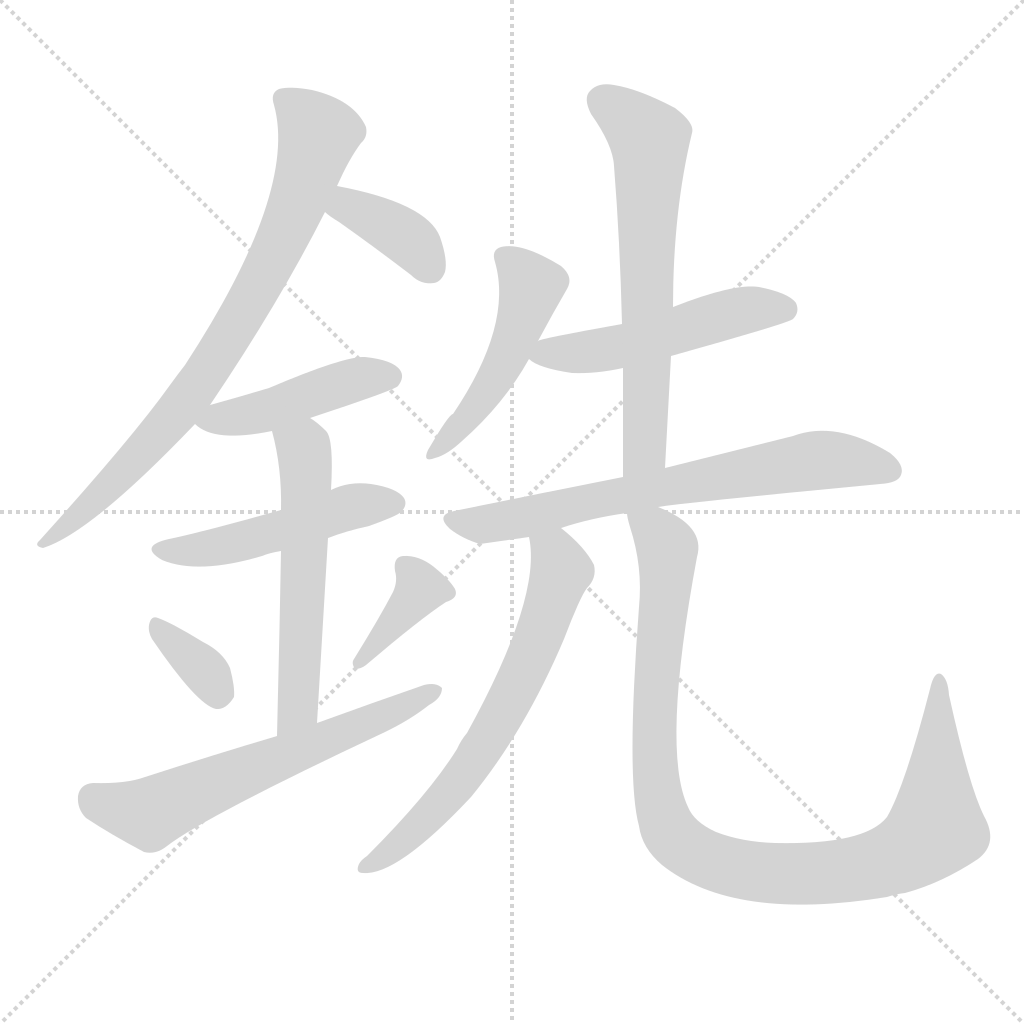
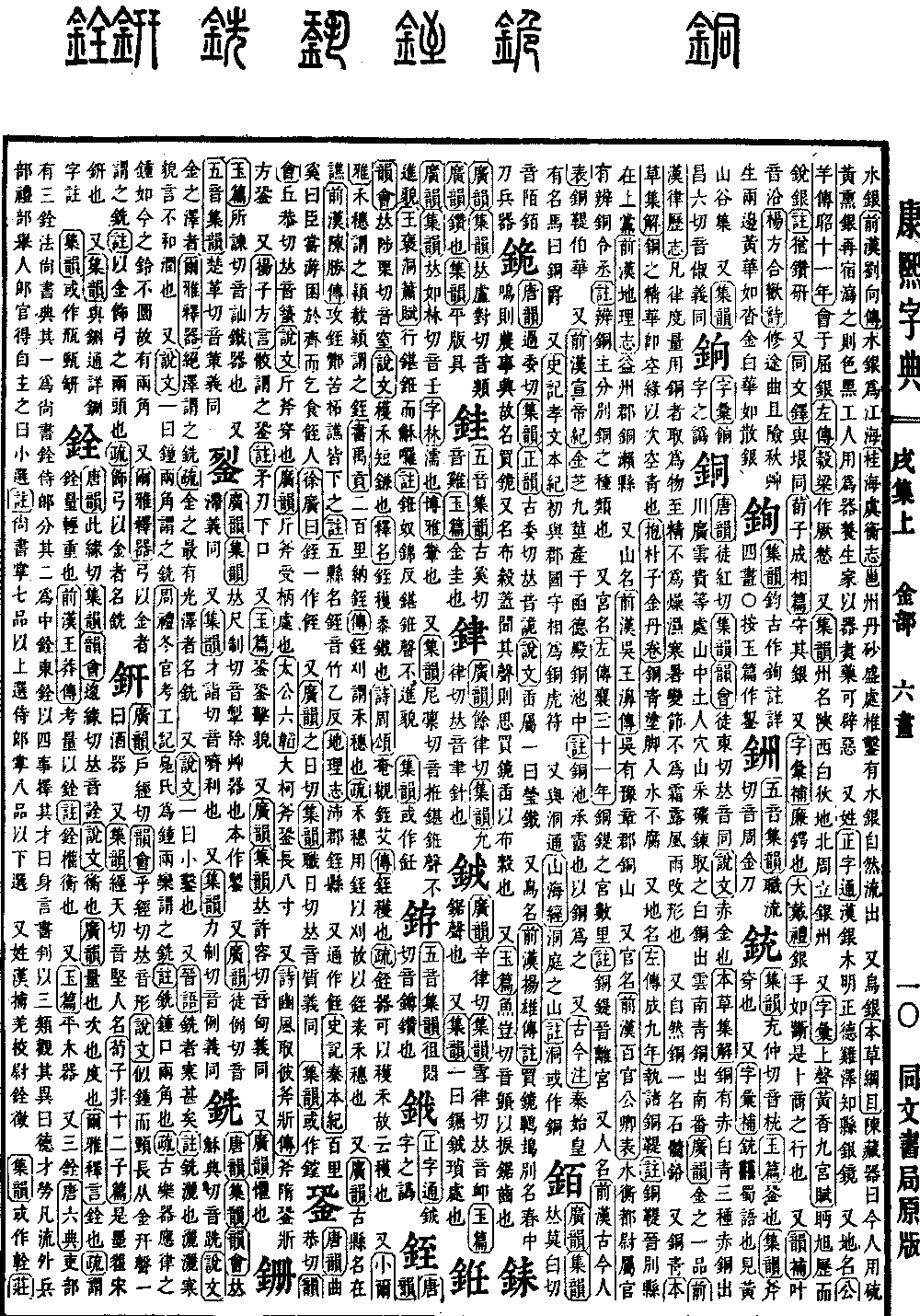
Xu Collection, Upper Volume
Radical: Metal (jīn)
Kangxi Strokes: 14
Page 1304, Entry 19
Pronounced xiǎn.
According to the Explaining Graphs and Analyzing Characters (Shuowen jiezi), it refers to the most lustrous type of metal. According to the Approaching Elegance (Erya), specifically the section on vessels, that which is extremely lustrous is called xian. The commentary states that the most lustrous metal is named xian.
It also means a small chisel, according to one interpretation in the Explaining Graphs and Analyzing Characters (Shuowen jiezi).
According to the Discourses of the States (Jinyu), xian refers to extreme cold. The commentary notes that xian describes a cold appearance; it implies a state of being cold and harsh, rather than warm or moist.
According to one interpretation in the Explaining Graphs and Analyzing Characters (Shuowen jiezi), the two corners of a bell are called xian. According to the Rites of Zhou (Zhouli), specifically the section on the winter officials and the record of artificers, when the Fu clan crafts a bell, the two corners are called xian. The commentary notes that xian refers to the two corners of the bell's mouth. The sub-commentary explains that in ancient musical instruments, bells that harmonize with the pitch were not round like modern bells, and therefore they possessed two corners.
According to the Approaching Elegance (Erya), specifically the section on vessels, a bow decorated with metal is called xian. The commentary notes this refers to decorating the two ends of a bow with metal. The sub-commentary explains that a bow decorated with metal is named xian.