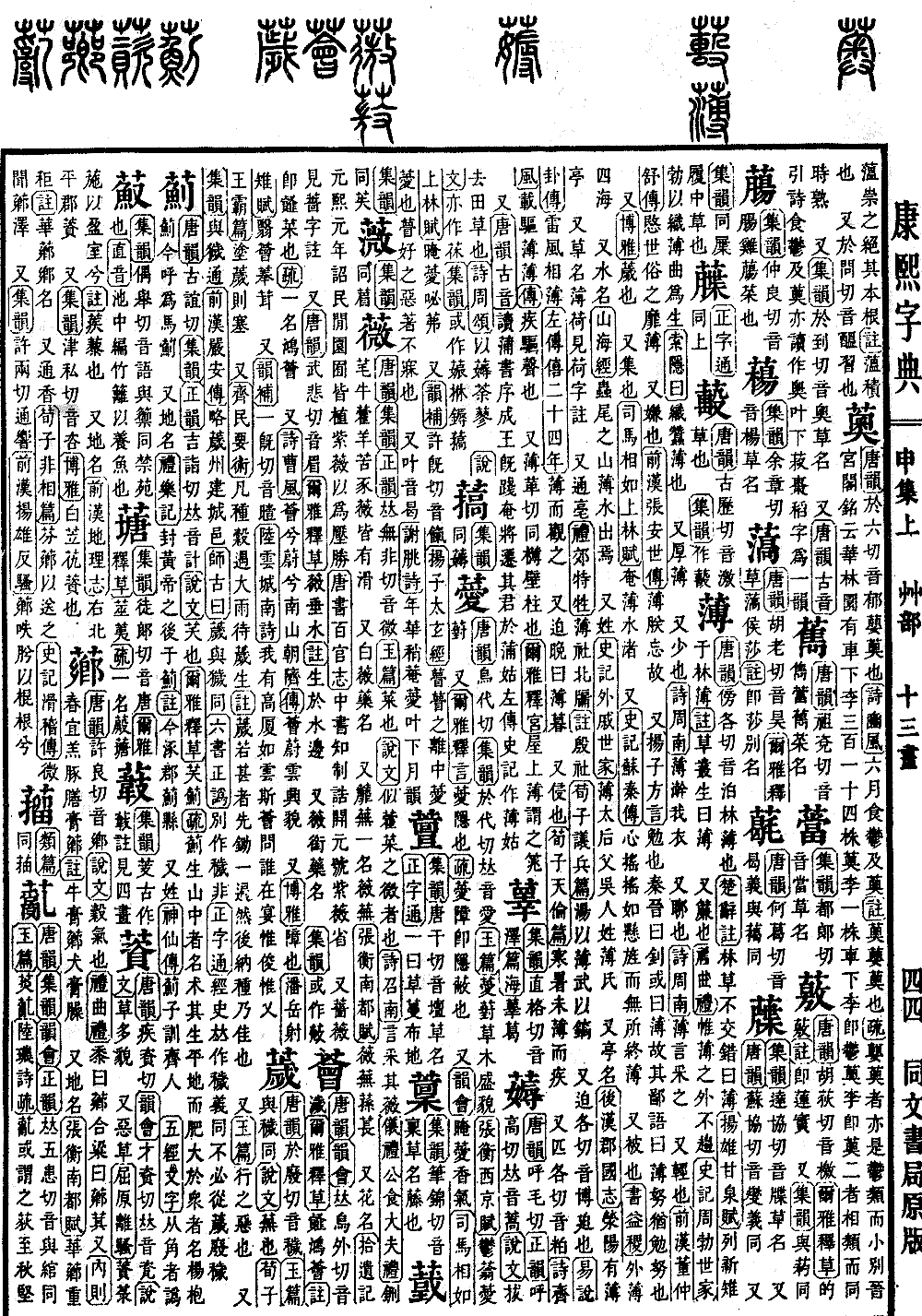
Shen Collection, Upper Volume
Radical: Grass (cǎo)
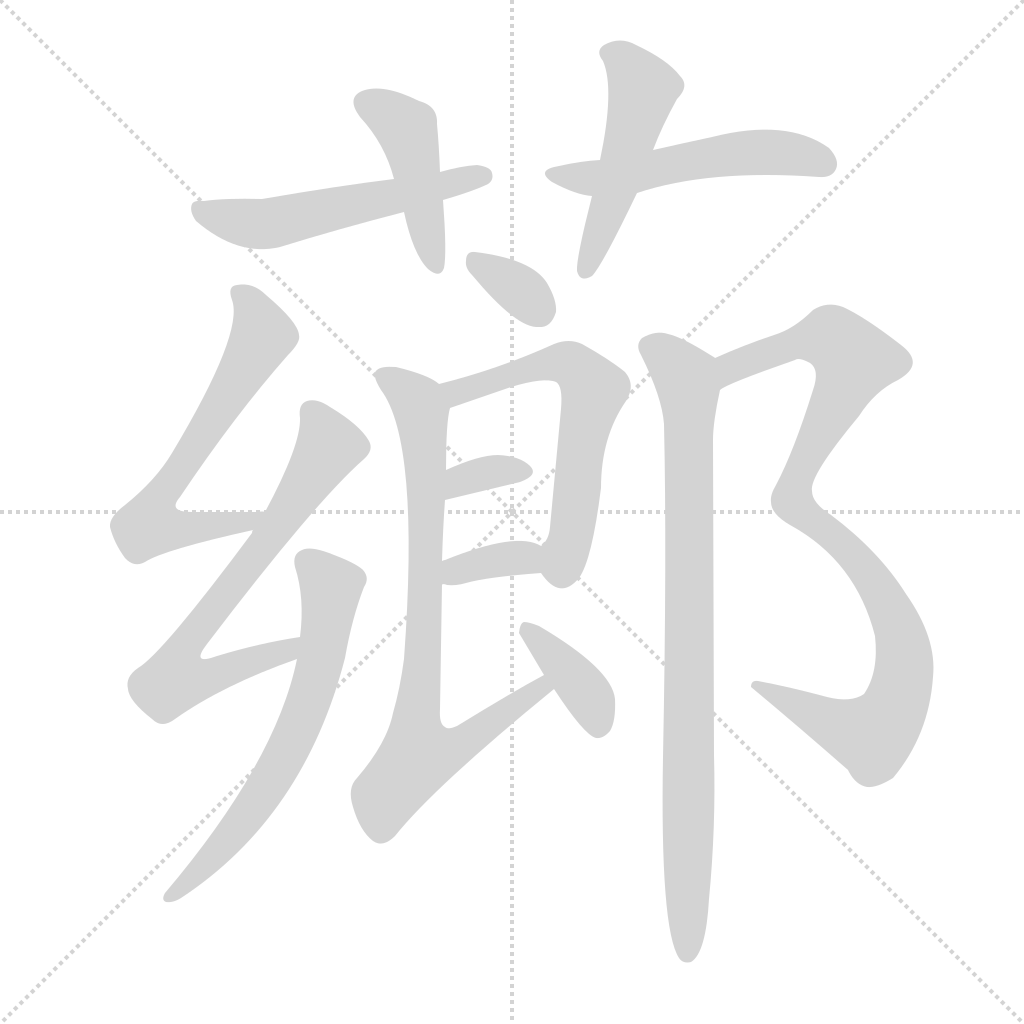
Xiang
Kangxi Stroke Count: 19
Page 1060, Entry 29
Pronounced xiāng
According to the Explanation of Graphs and Analysis of Characters (Shuowen Jiezi), it refers to the scent of grain.
In the Book of Rites (Liji), specifically the Qu Li section, it is stated that broomcorn millet is called xianghe, and foxtail millet is called xiangqi.
Also in the Nei Ze section: in spring, it is appropriate to serve suckling pig or lamb prepared with fragrant fats.
Commentary: The fat of cattle is fragrant, while the fat of dogs has a rank odor.
Also a place name. In Zhang Heng’s Southern Capital Rhapsody (Nandu Fu), it mentions Hua Xiang and heavy black millet.
Commentary: Hua Xiang is the name of a place.
Also used interchangeably with fragrant. In the Xunzi, specifically the Fei Xiang section: sending them off with fragrance.
In the Records of the Grand Historian (Shiji), specifically the Biographies of the Jesters: a faint scent of fragrance was heard.
Also, according to the Collected Rhymes (Jiyun), pronounced xiǎng; used interchangeably with echo.
In the Book of Han (Hanshu), specifically the Biography of Yang Xiong: the scent wafts and spreads.
Textual Research: In the Book of Han, specifically the Fan Sao section by Yang Xiong, the text reads: the scent wafts and spreads. Corrected in accordance with the original text to read: Book of Han, Biography of Yang Xiong.