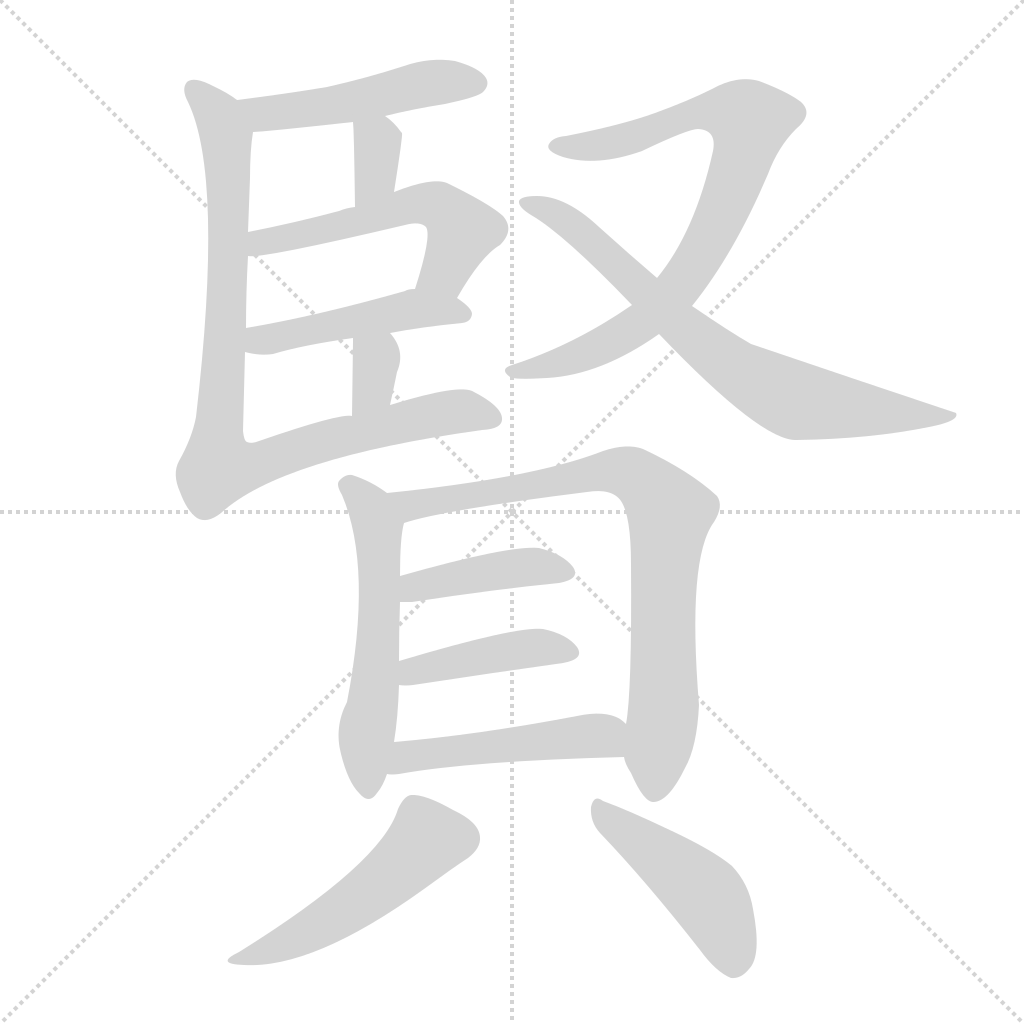
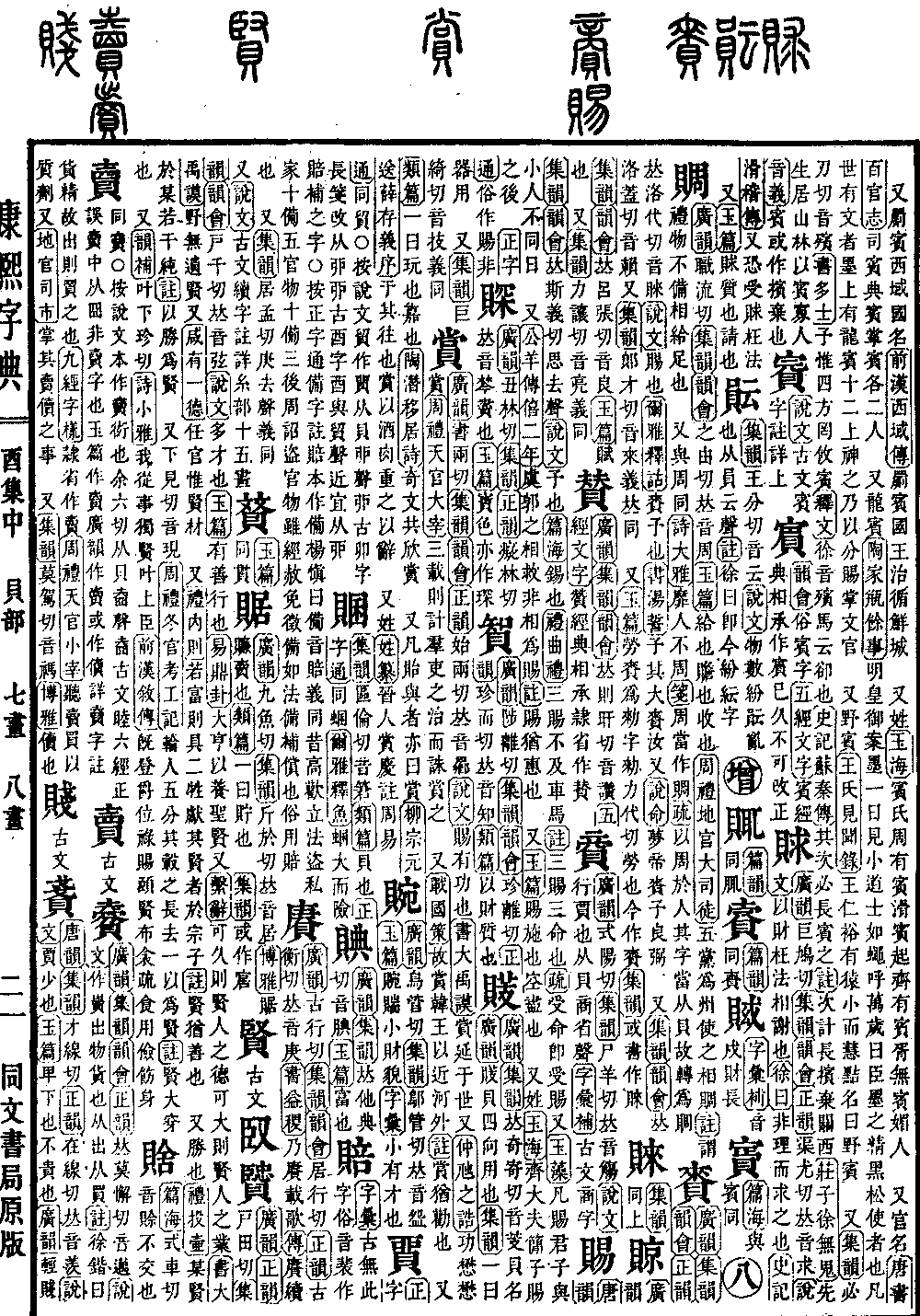
You Collection, Middle Volume
Radical: Shell (bèi)
Xian; Kangxi strokes: 15; Page 1209, Entry 28
Archaic forms: qian, xian
According to Broad Rhymes (Guangyun) and Correct Rhymes (Zhengyun), the pronunciation is hu tian; according to Collected Rhymes (Jiyun) and Rhyme Compendium (Yunhui), the pronunciation is hu qian. Pronounced xian.
As defined in Explaining and Analyzing Characters (Shuowen), it means having many talents.
According to Jade Chapters (Yupian), it means possessing virtuous conduct.
Book of Changes (Yijing), Hexagram of the Cauldron: Great success, used to nurture sages and the virtuous.
Also, in the Appended Statements (Xici): That which can endure is the virtue of the virtuous, that which can grow great is the work of the virtuous.
Book of Documents (Shujing), Counsels of the Great Yu: In the wilderness, there are no overlooked virtuous people.
Also, in Possessing One Virtue: Appoint officials only based on virtuous talent.
Book of Rites (Liji), Inner Chapters: If one is wealthy, prepare two sacrificial animals and present the best of them to the head of the clan. Commentary: Xian means good.
Also, it means to surpass.
Book of Rites (Liji), Pitch-Pot: So-and-so surpasses so-and-so by a certain amount of silk lengths. Commentary: Xian signifies surpassing.
Also, pronounced xian.
Rites of Zhou (Zhouli), Winter Bureau, Artificers Record, Wheelwright: Divide the length of the hub into five parts, remove one to determine the size of the hole. Commentary: Xian means a large opening.
Also, in Rhyme Supplements (Yunbu), rhyming with xia zhen.
Book of Odes (Shijing), Lesser Odes: I pursue my affairs alone and worthy. Rhyming with shang chen.
History of the Former Han Dynasty (Qian Hanshu), Narrative Biography: Once one has ascended to a position of nobility, the emoluments and gifts nourish the virtuous, while coarse quilts and simple food are used to discipline the self through frugality.