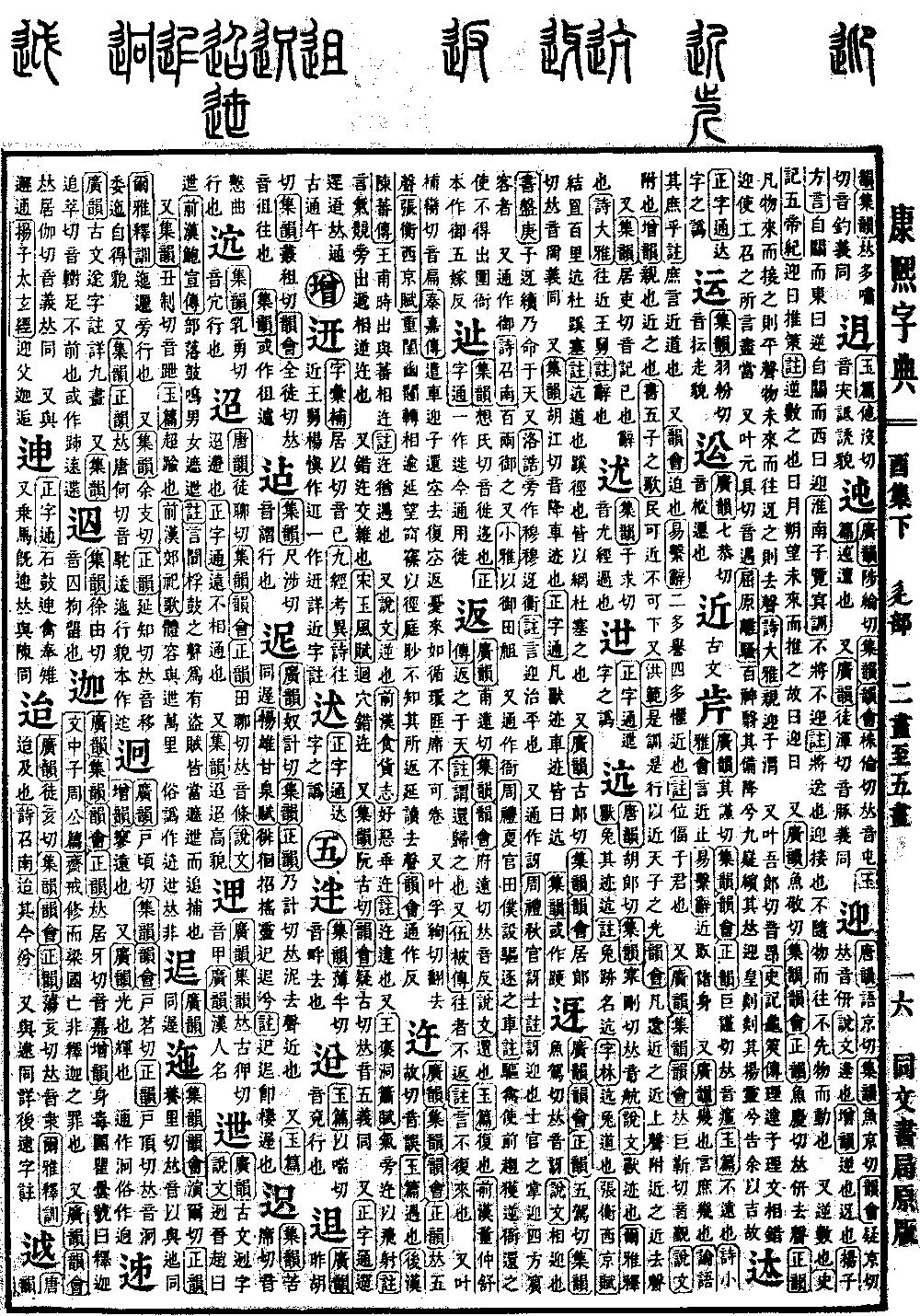
You Collection, Lower Volume
Radical: Walk (chuò)
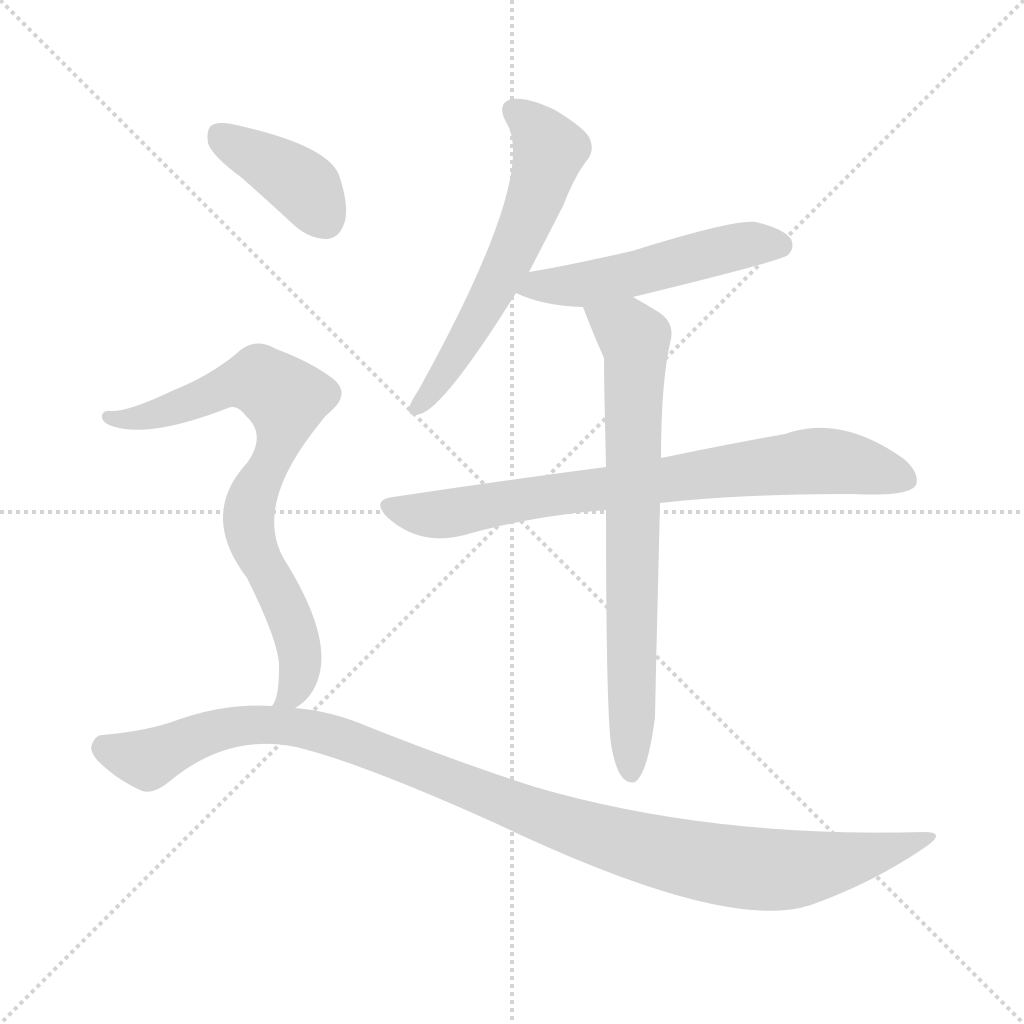
Character: Wu
Kangxi Stroke Count: 11
Page 1254, Entry 15
According to the Extensive Rhyme (Guangyun), Collected Rhymes (Jiyun), Dictionary of Rhymes (Yunhui), and Orthodox Rhymes (Zhengyun), it is pronounced wu.
According to the Jade Chapters (Yupian), it means to meet or encounter.
In the History of the Later Han (Hou Hanshu), Biography of Fan, it is written: Wang Fu went out and happened to encounter Fan. The commentary notes that this signifies meeting.
According to the Explaining Graphs and Analyzing Characters (Shuowen), it means to go against or oppose.
In the History of the Former Han (Qian Hanshu), Treatise on Food and Money, it is written: Preferences and aversions are contrary. The commentary notes that this signifies violating or going against.
In Wang Bao's Rhapsody on the Bamboo Flute (Dongxiao Fu), it is written: The breath flows and scatters in conflicting ways. The commentary notes that this means the breath erupts from the sides, clashing and colliding with one another.
It also means to be crossed or mixed, as in interlaced and jumbled. In Song Yu's Rhapsody on the Wind (Feng Fu), it is written: Swirling and jumbled.
According to the Collected Rhymes (Jiyun) and the Dictionary of Rhymes (Yunhui), it is also pronounced wu (rising tone). The meaning remains the same.
According to the Correct Meaning Through (Zhengzitong), it is interchangeable with the character meaning to meet. In ancient times, it was also interchangeable with the character for noon (wu).