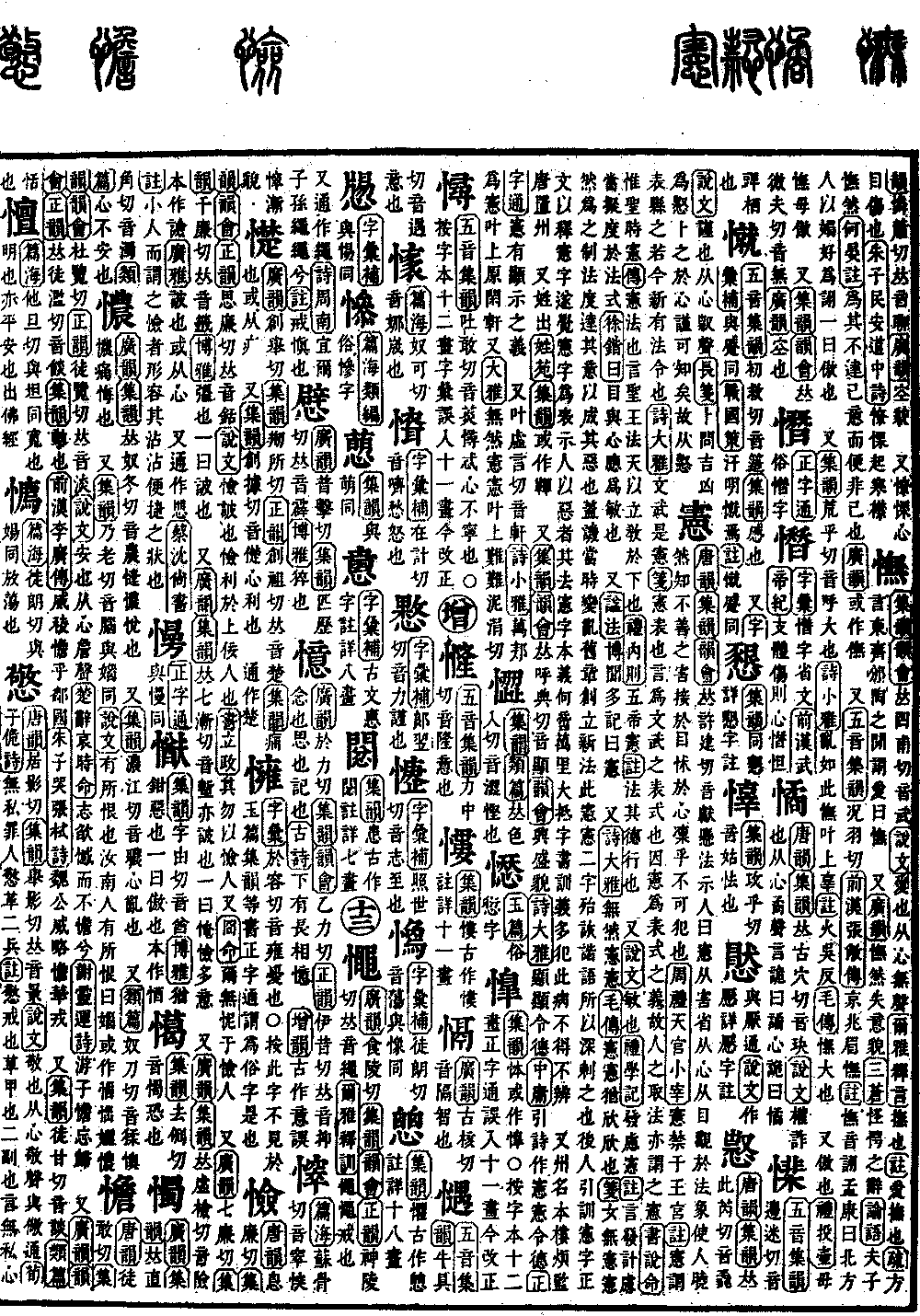
Mao Collection, Upper Volume
Radical: Heart (xīn)
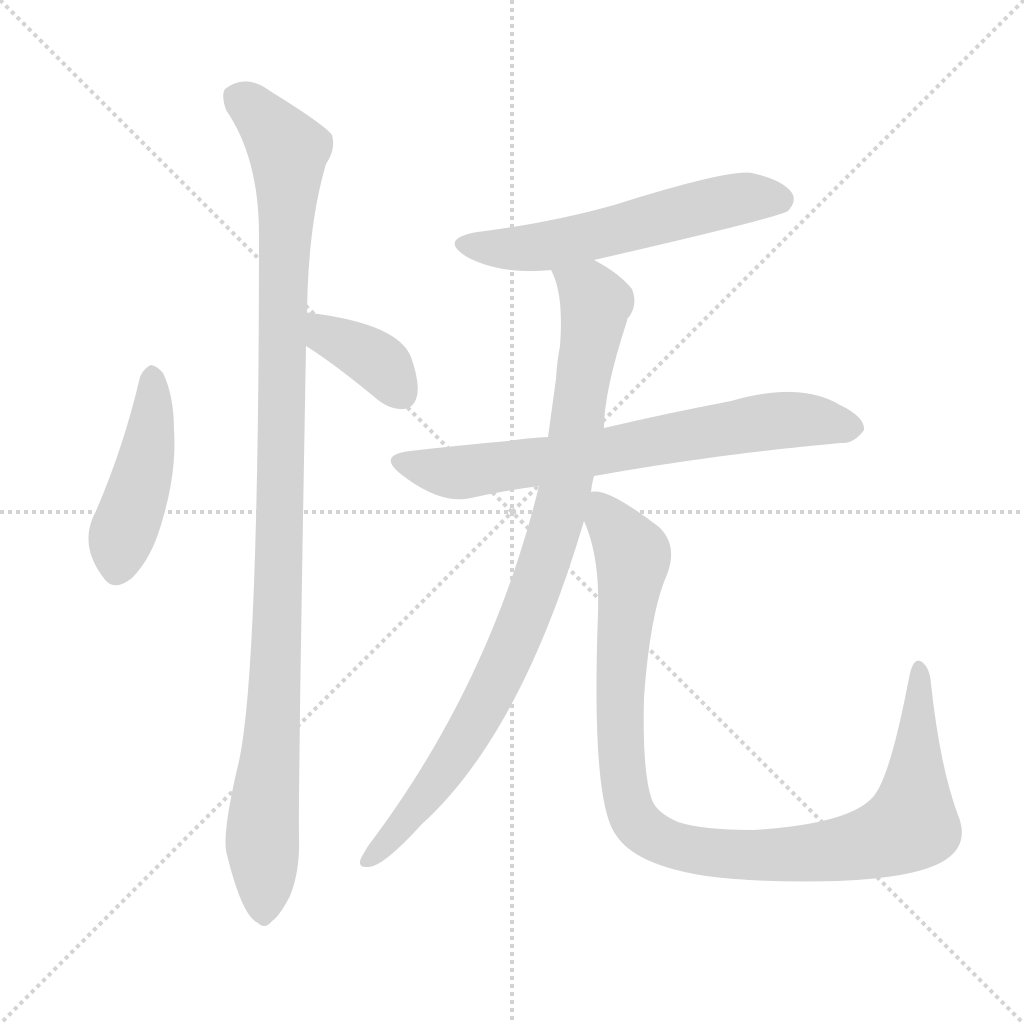
Character: Wu
Kangxi stroke count: 16
Page 404, Entry 01
According to Compilation of Rhymes (Jiyun) and Treasury of Rhymes (Yunhui), the pronunciation is wu.
According to Explanation of Writing (Shuowen), it means to love. It is formed from the Heart radical with a phonetic component suggesting nothingness.
According to Approaches to Erya (Erya Shiyan), it means to comfort. The commentary explains this as to love and comfort. The sub-commentary notes that in the regional dialect of the Eastern Qi and Bintao areas, to love is called wu.
According to Broad Rhymes (Guangyun), wu-ran describes the appearance of being dispirited or losing one's will.
According to Three Blue Classics (Sancang), it is an expression of astonishment or surprise.
In the Analects of Confucius (Lunyu), it is written that the Master was wu-ran. He Yan's commentary states this refers to the feeling when one is not understood by others and is instead criticized by them.
According to Broad Rhymes, it is sometimes written in a variant form.
According to Five Sounds Compilation of Rhymes (Wuyin Jiyun), the pronunciation is xu.
In the History of the Former Han Dynasty (Qianhanshu), Biography of Zhang Chang, it is mentioned that the Prefect of the Capital had eyebrows described as wu. The commentary states that wu is pronounced xu. Meng Kang notes that people in the north use the term xu to describe a charming or seductive appearance. Another interpretation is that it means arrogant.
According to Compilation of Rhymes (Jiyun), the pronunciation is hu, meaning great.
In the Book of Odes (Shijing), Lesser Odes, it is written: Disorder has reached this magnitude (wu), rhyming with the word gu in the previous line. The commentary provides the pronunciation as hu. Mao's commentary states that wu means great. It also means arrogant.
In the Book of Rites (Liji), Throwing Pots (Touhu), it is written: Do not be arrogant (wu), do not be prideful.
According to Compilation of Rhymes (Jiyun) and Treasury of Rhymes (Yunhui), the pronunciation is wu.
According to Broad Rhymes (Guangyun), it means empty.