Mao Collection, Upper Volume
Radical: Heart (xīn)
Kangxi stroke count: 8
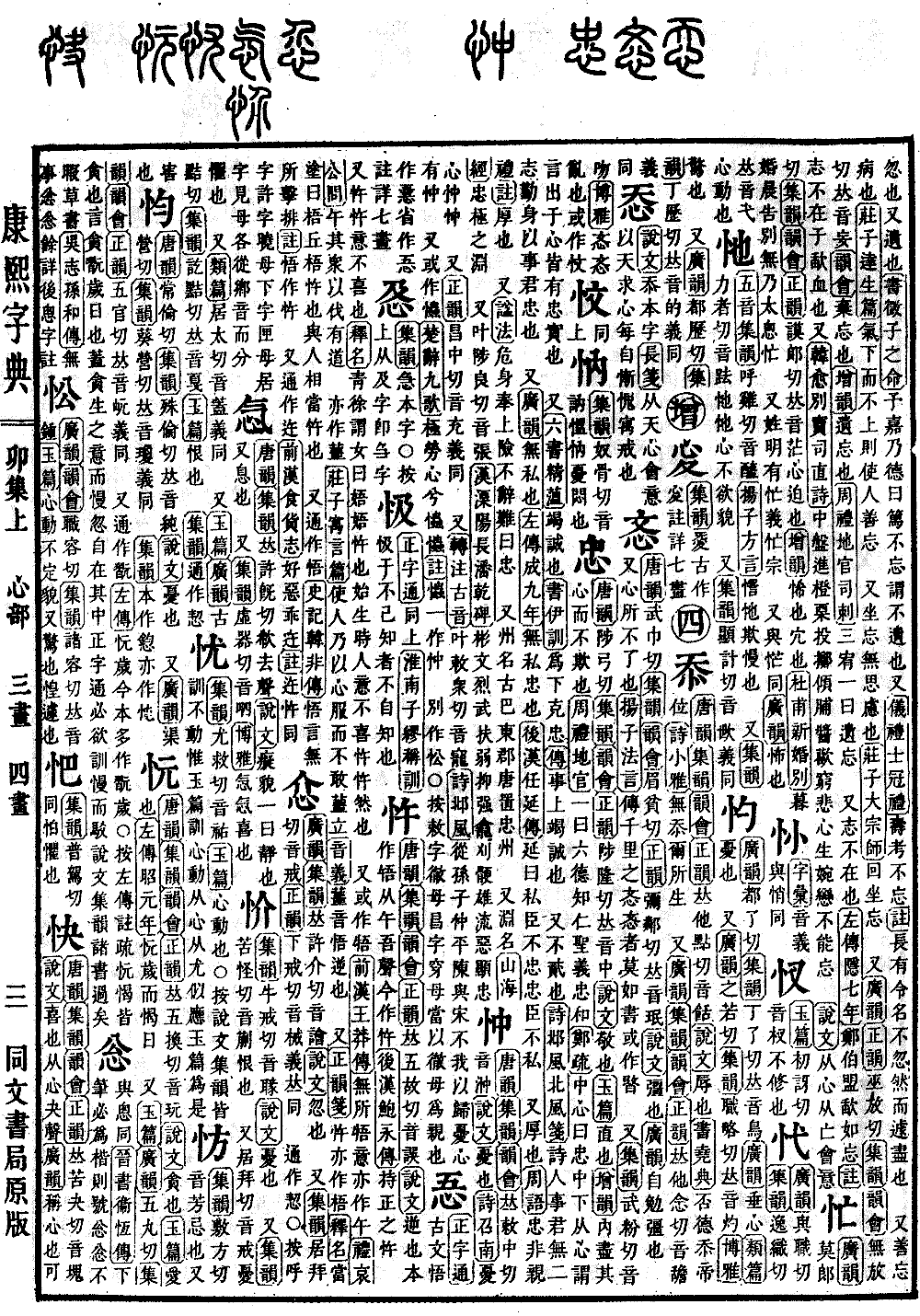
Page 377, Entry 18
Tang Rhymes (Tangyun), Collection Rhymes (Jiyun), Dictionary of Rhymes (Yunhui), and Correct Rhymes (Zhengyun) state it is pronounced wu (falling tone).
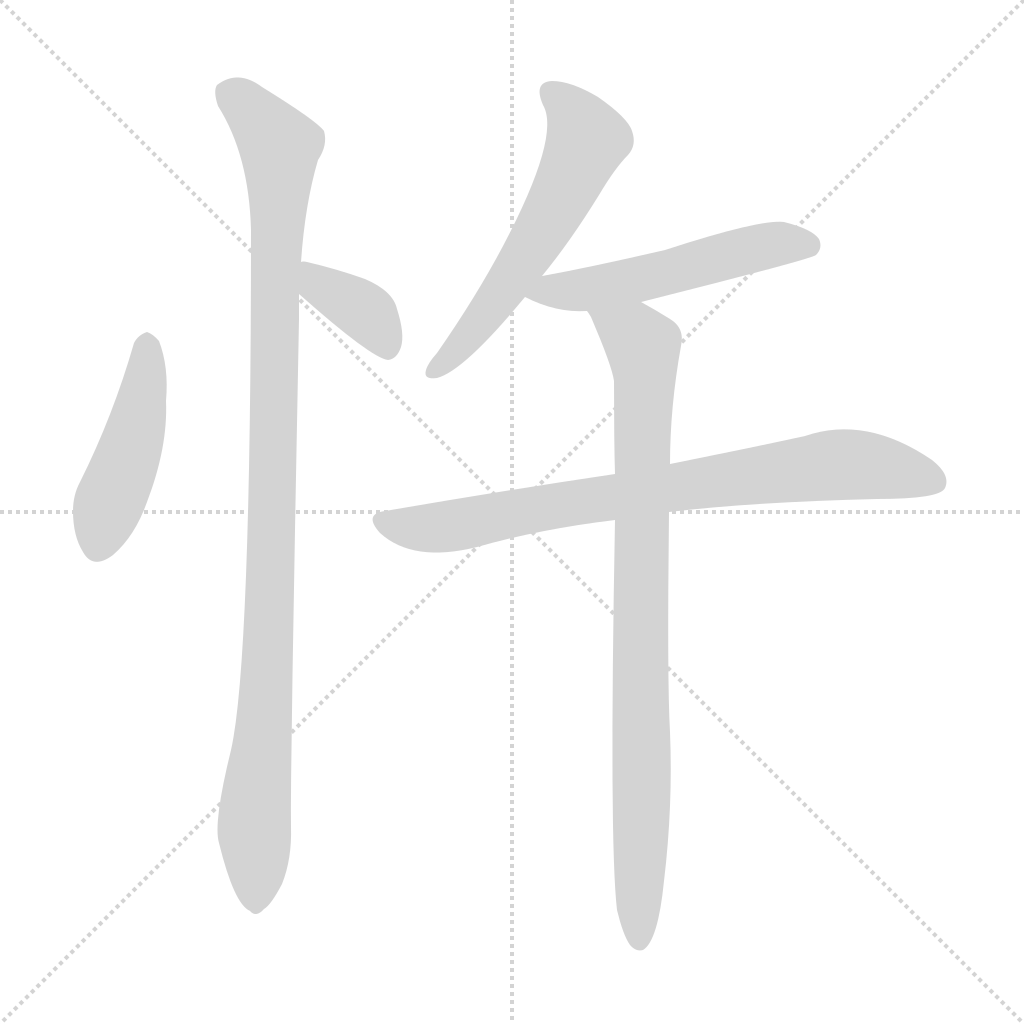
Explanation of Graphs (Shuowen): To act against or resist. Originally written with the mouth radical. It is formed by the radical for the seventh earthly branch, with wu acting as the phonetic indicator. It is now written as wu.
Biography of Bao Yong in the History of the Later Han (Hou Hanshu): To hold onto one's integrity is to be contrary.
Also, the reduplicated form wu-wu means to be displeased or unhappy in mind.
Explication of Names (Shiming): In the regions of Qing and Xu, a daughter is called wu. Wu means to resist or go against. When a girl is first born, people may be displeased, hence the term.
It is also written as wu (using the cow radical).
Biography of Wang Mang in the History of the Former Han (Hanshu): To not resist or oppose someone's intentions.
It is also written as wu (using the seventh earthly branch character).
Book of Rites (Liji), Inquiry of Duke Ai: To resist the masses in order to attack those who possess the Way.
It is also written as wu (using the grass radical).
Zhuangzi, Allegories: To make people submit in their hearts, not daring to stand in opposition.
Phonetic and Semantic Commentary (Yinyi): The character is pronounced wu, meaning to resist.
Orthography Annotations (Zhengyun jian): The character wu is also written as wu (using the wood radical).
Explication of Names (Shiming): A place facing a road is called a wu hill. Wu means to resist, as it stands in opposition to people.
It is also used interchangeably with wu (meaning to realize or awaken).
Biography of Han Fei in the Records of the Grand Historian (Shiji): To speak in opposition without attacking or pushing aside.
Commentary: The character meaning to realize is used here for the character meaning to resist.
It is also used interchangeably with wu (using the movement radical).
Treatise on Food and Money in the History of the Former Han (Hanshu): Likes and dislikes are in conflict and opposition.
Commentary: The character meaning to move and the character meaning to resist are the same.