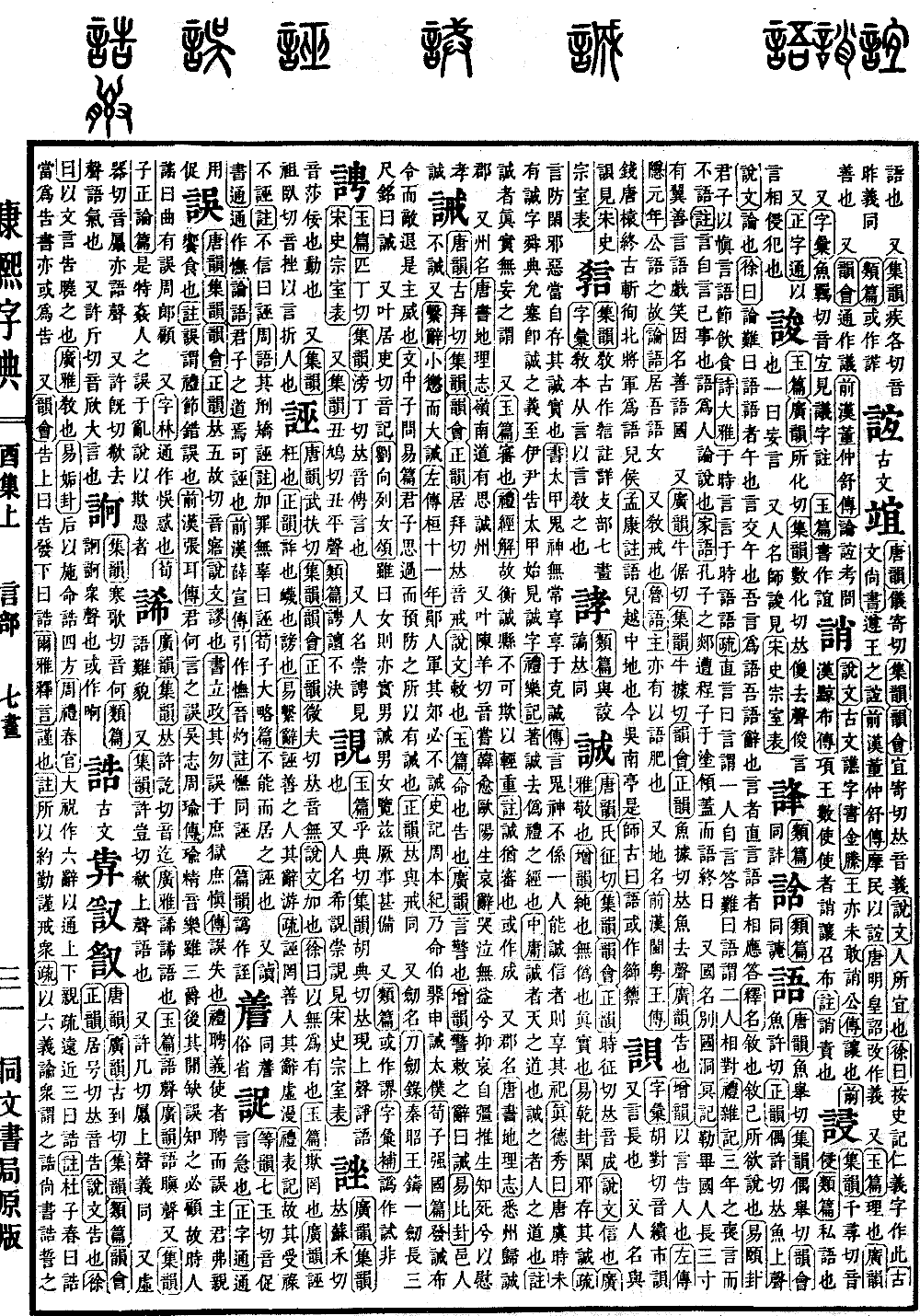
You Collection, Upper Volume
Radical: Speech (yán)
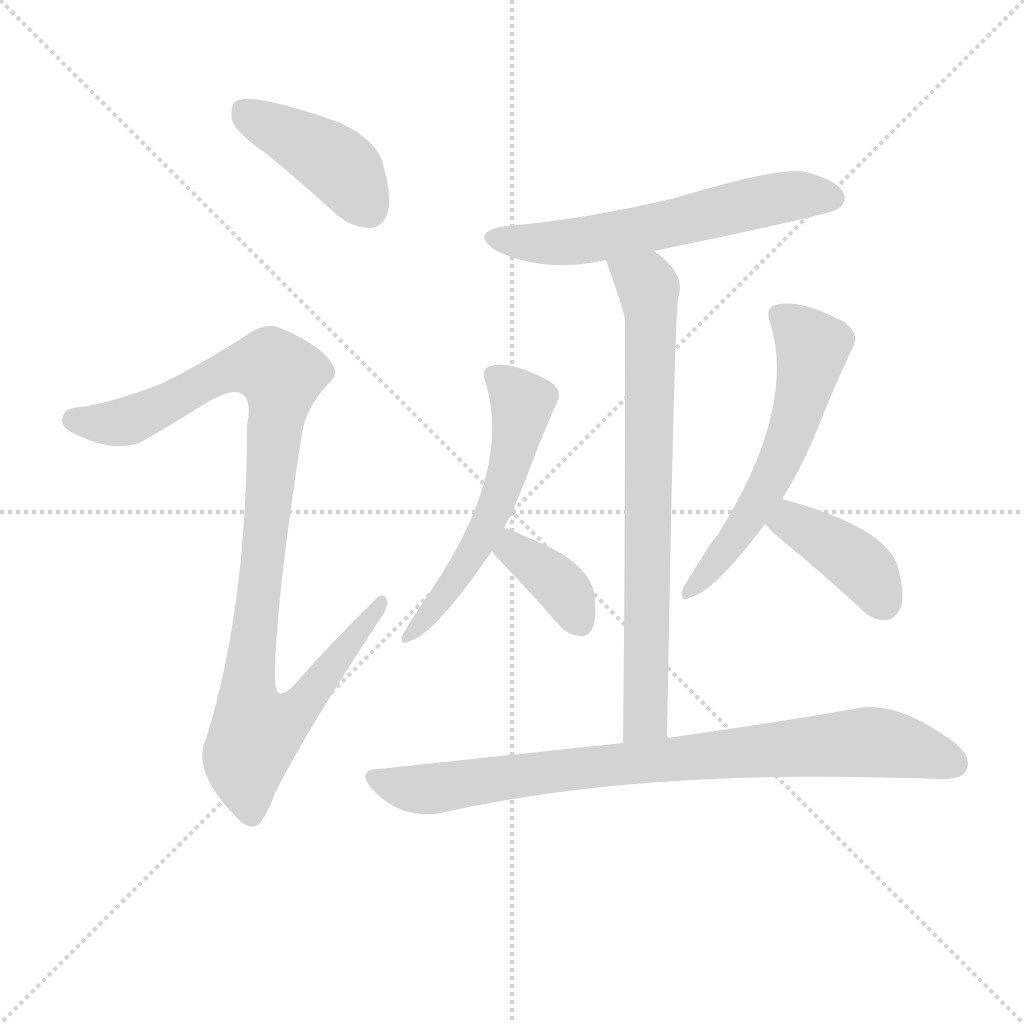
诬
Kangxi strokes: 14
Page 1163, Entry 07
Tang Dynasty Rhyme (Tangyun): Pronounced wu. Collected Rhymes (Jiyun), Rhyme Compendium (Yunhui), and Correct Rhymes (Zhengyun): Pronounced wu.
Shuowen Jiezi (Shuowen): To add.
Xu says: To treat that which does not exist as if it does exist.
Yupian: To deceive or act dishonestly.
Guangyun: Wu means to act unjustly.
Zhengyun: To swindle, to vilify, to slander.
Book of Changes (Yijing), Commentary on the Appended Phrases (Xici): Those who slander good people have words that wander.
Commentary (Shu): To slander or deceive good people; their words are empty and rambling.
Book of Rites (Liji), Record of Examples (Biaoji): Therefore, the salaries they receive are not obtained through deception.
Commentary (Zhu): Not believing is called wu.
Discourses of Zhou (Zhouyu): Their pretense and deception.
Commentary (Zhu): To impose guilt upon the innocent is called wu.
Xunzi, General Principles (Dalue pian): To lack an ability yet claim to possess it is deception (wu).
Also, in Reading Through (Dushutong): Commonly written as the variant form wu.
Analects (Lunyu): How can the way of the gentleman be deceived?
History of the Former Han (Qianhan), Biography of Xue Xuan: Quotes this as wu.
Jin Zhuo Commentary: Wu is the same as wu.
Pianyun: Erroneously written as the variant form wu.