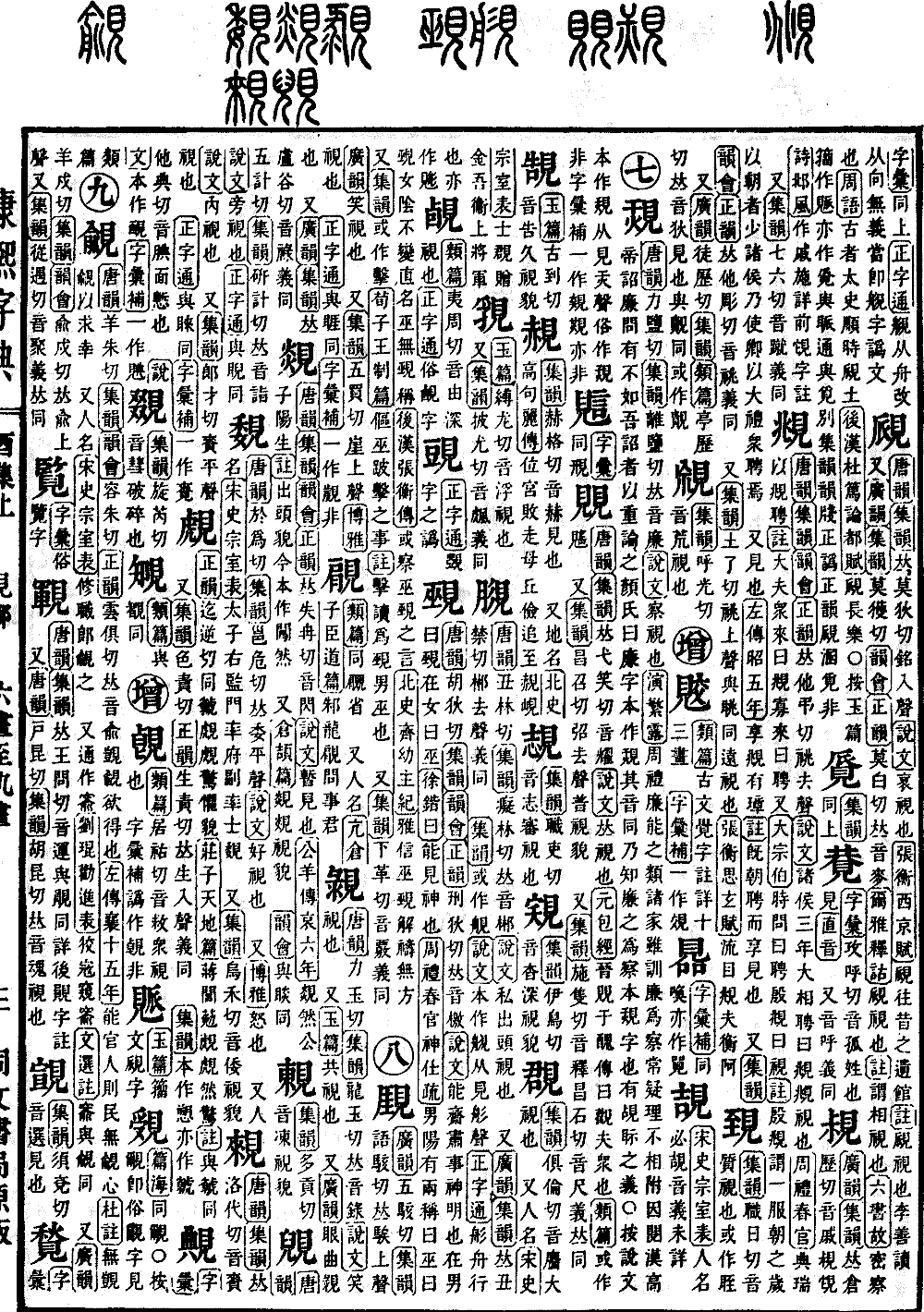
You Collection, Upper Volume
Radical: See (jiàn)
Kangxi Strokes: 14
Page 1135, Entry 01
Pronounced xi.
According to the Explaining Graphs and Analyzing Characters (Shuowen Jiezi), it refers to those who are able to perform rites and solemn duties to serve the spirits. For men, this is called xi; for women, it is called wu (shaman).
Xu Kai states: One who is able to see spirits.
In the Commentary on the Divine Officers of the Spring Offices from the Rites of Zhou (Zhouli), it is stated: Men of the yang principle have two names, wu and xi. Women of the yin principle remain unchanged and are strictly called wu, with no xi designation.
In the Biography of Zhang Heng from the Book of the Later Han (Hou Hanshu), it says: Or to investigate the words of the wu and xi.
In the Annals of the Child Emperor of Northern Qi from the History of the Northern Dynasties (Beishi), it says: He trusted the wu and xi, and his prayers for relief lacked proper method.
Additionally, in the Collected Rhymes (Jiyun), it is sometimes written as a variant form (ji).
In the Royal Regulations chapter of the Xunzi, it says: The affairs of hunched shamans and lame xi. The commentary notes: Ji is to be read as xi, referring to a male shaman.
Additionally, in the Collected Rhymes (Jiyun), it is pronounced he. The meaning is the same.