Shen Collection, Upper Volume
Radical: Grass (cǎo)
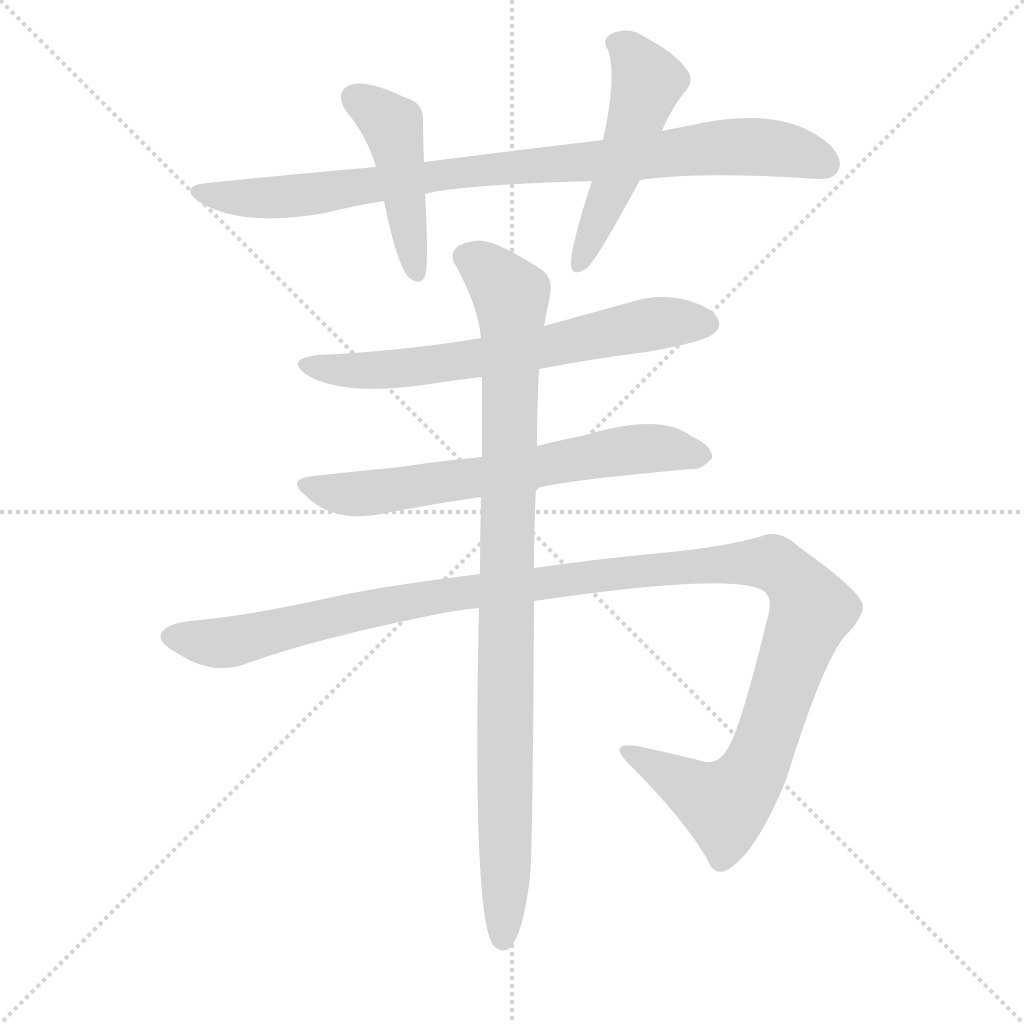
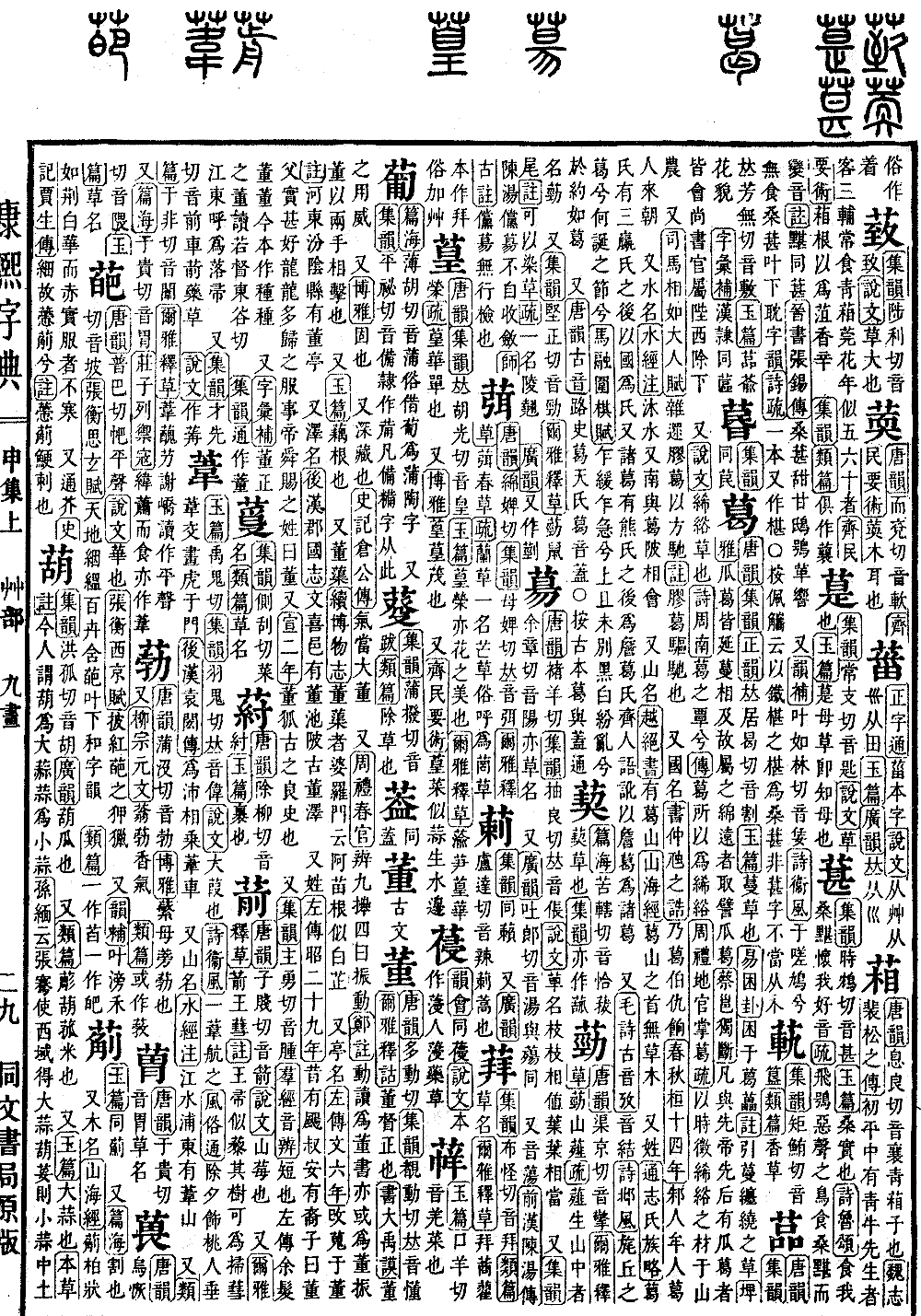
葦; Kangxi strokes: 15; Page 1045
Jade Chapters (Yupian): Pronounced wei.
Collected Rhymes (Jiyun): Pronounced wei.
Shuowen Jiezi: Large reed.
Book of Odes (Shijing), Odes of Wei: A single reed used to cross a river.
Comprehensive Customs (Fengsu Tong): On New Year's Eve, decorate with peach wood figures, hang crossing reeds, and paint tigers on the door.
History of the Later Han (Hou Hanshu), Biography of Yuan Hong: Served as the Minister of Pei, traveling in a reed carriage.
Also a mountain name.
Commentary on the Water Classic (Shuijing Zhu): East of the Yangtze River estuary is Reed Mountain.
Also from Categorized Chapters (Leipian): Pronounced wei.
Erya, Explanation of Grasses: The reed is called tiao. Xie Qiao reads it in the level tone.
Also from Sea of Chapters (Pianhai): Pronounced wei.
Zhuangzi, Lie Yukou: Wearing tattered clothes and eating. Also written as a variant form.
Textual Research:
Book of Odes (Shijing), Odes of Wei: A single reed used to cross a river. According to the original text, corrected from the character hang to the character hang.