Zi Collection, Middle Volume
Radical: Person (rén)
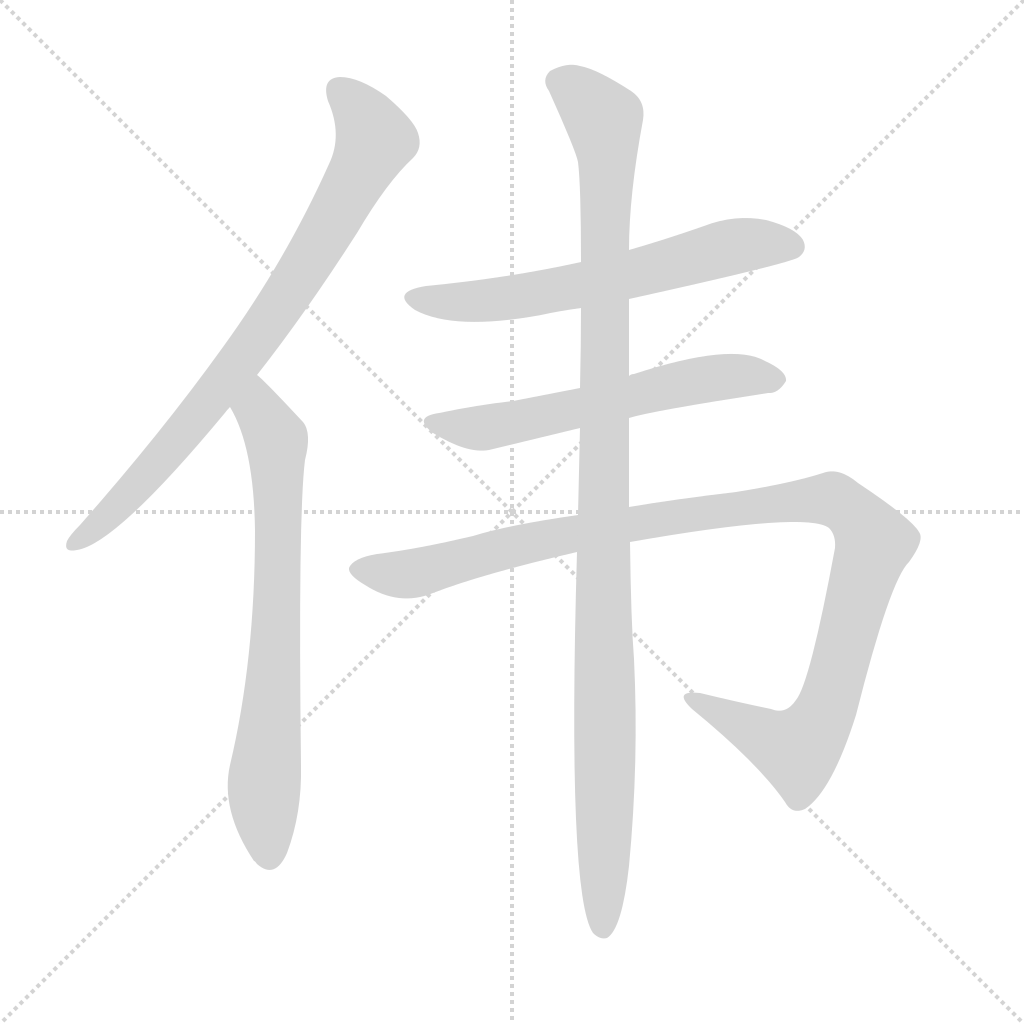
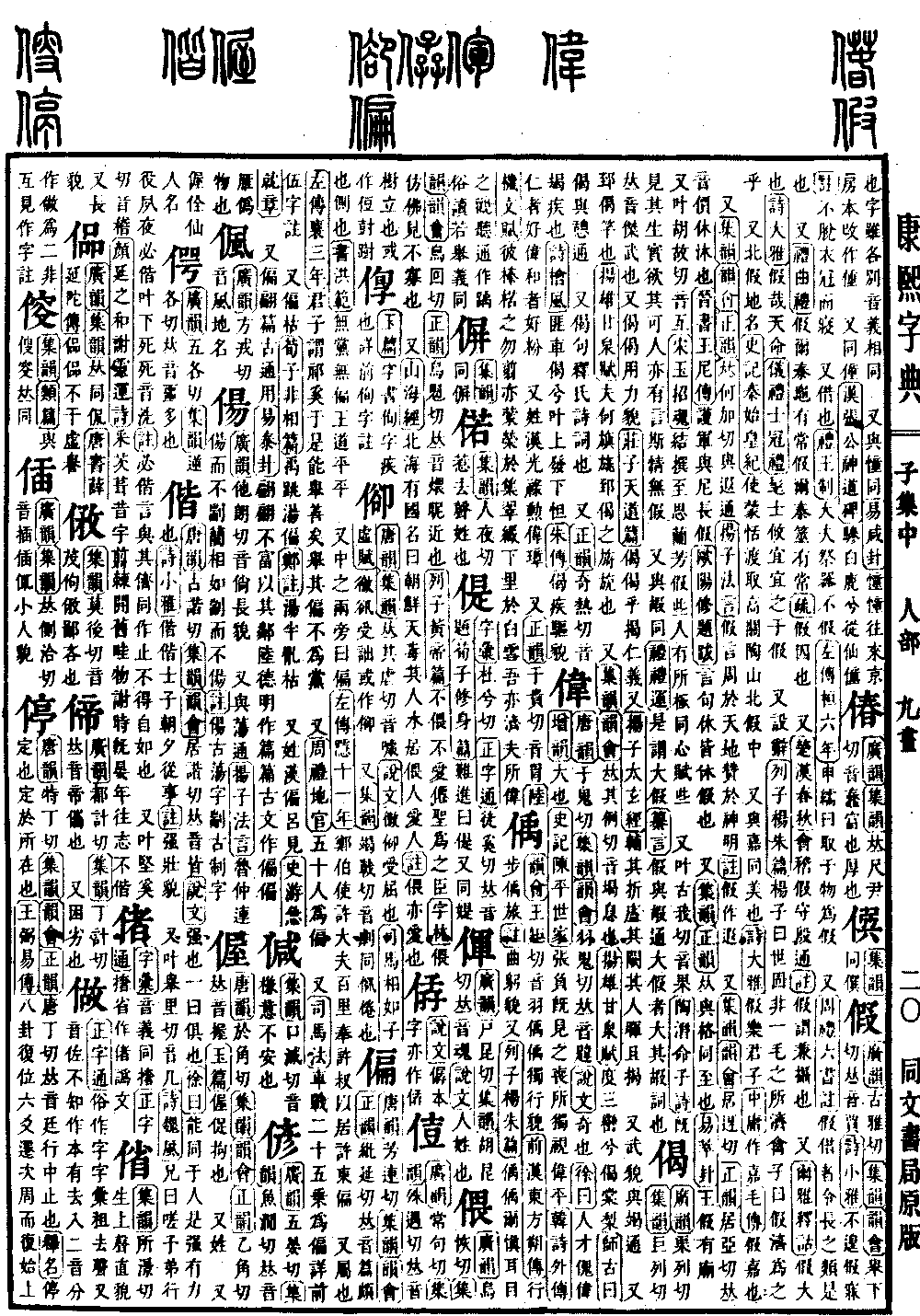
偉
Kangxi strokes: 11; page 110
From Tangyun (Tangyun): Pronounced yù guǐ qiè.
From Jiyun (Jiyun) and Yunhui (Yunhui): Pronounced yǔ guǐ qiè, with the sound wěi.
Shuowen Jiezi (Shuowen Jiezi) states it means "unusual" or "extraordinary."
Xu Xuan (Xu曰) comments: "talents are outstanding and magnificent."
Zengyun (Zengyun) states it means "great" or "large."
In Records of the Grand Historian (Shiji), "Hereditary House of Ping": "Zhang Fu, having already seen him at the mourning site, alone regarded Ping as magnificent."
In Hanshi Waizhuan (Hanshi Waizhuan): "The benevolent love what is grand; the harmonious love what is understated."
Also a surname. Wei Zhang, Grand Master of Guanglu in the Han dynasty.
From Zhengyun (Zhengyun): Pronounced yú guì qiè, with the sound wèi.
In Lu Ji's Rhapsody on Literature (Wenfu): "Those tangled thorns, left untrimmed, also receive glory from the gathered emerald. Connecting the rustic with the elegant, I too complete that which is considered grand."