Hai Collection, Upper Volume
Radical: Horse (mǎ)
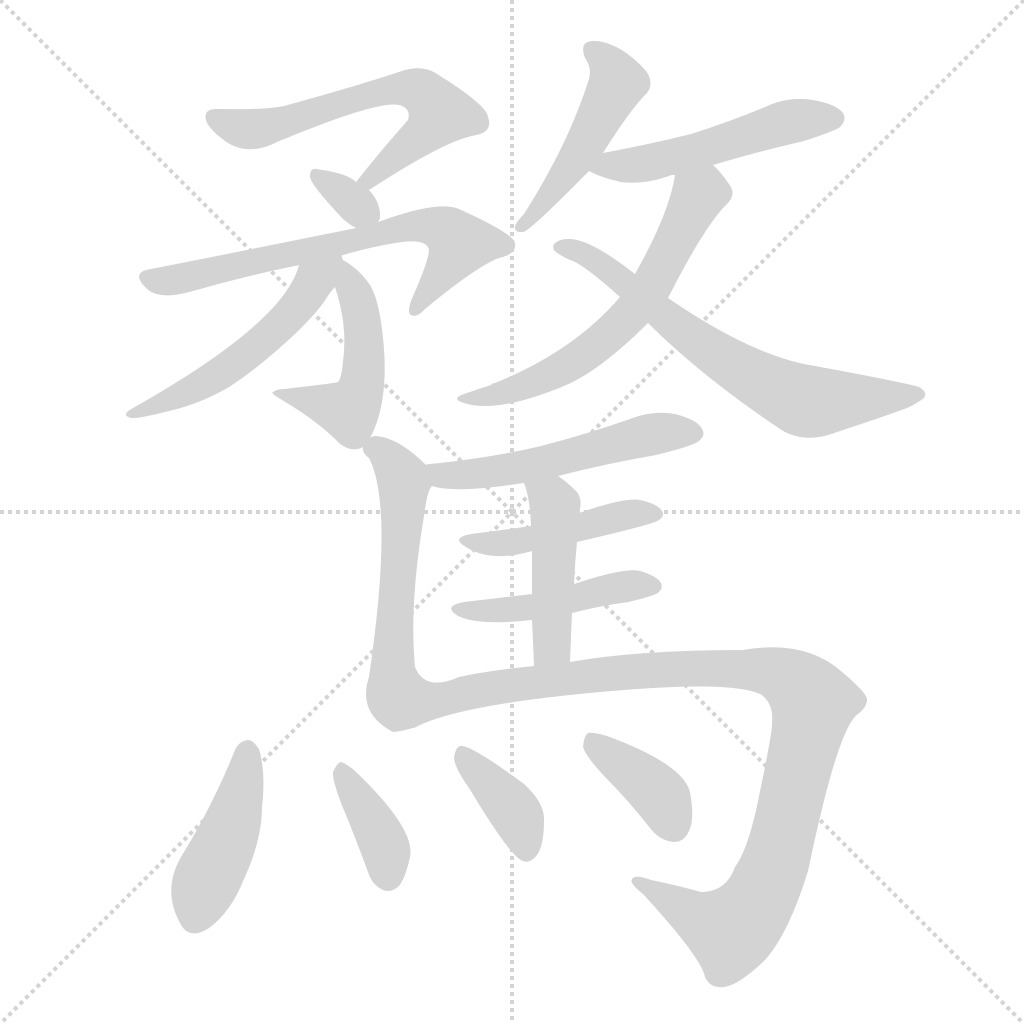
Entry: wu
Kangxi stroke count: 19
Page 1441, Entry 17
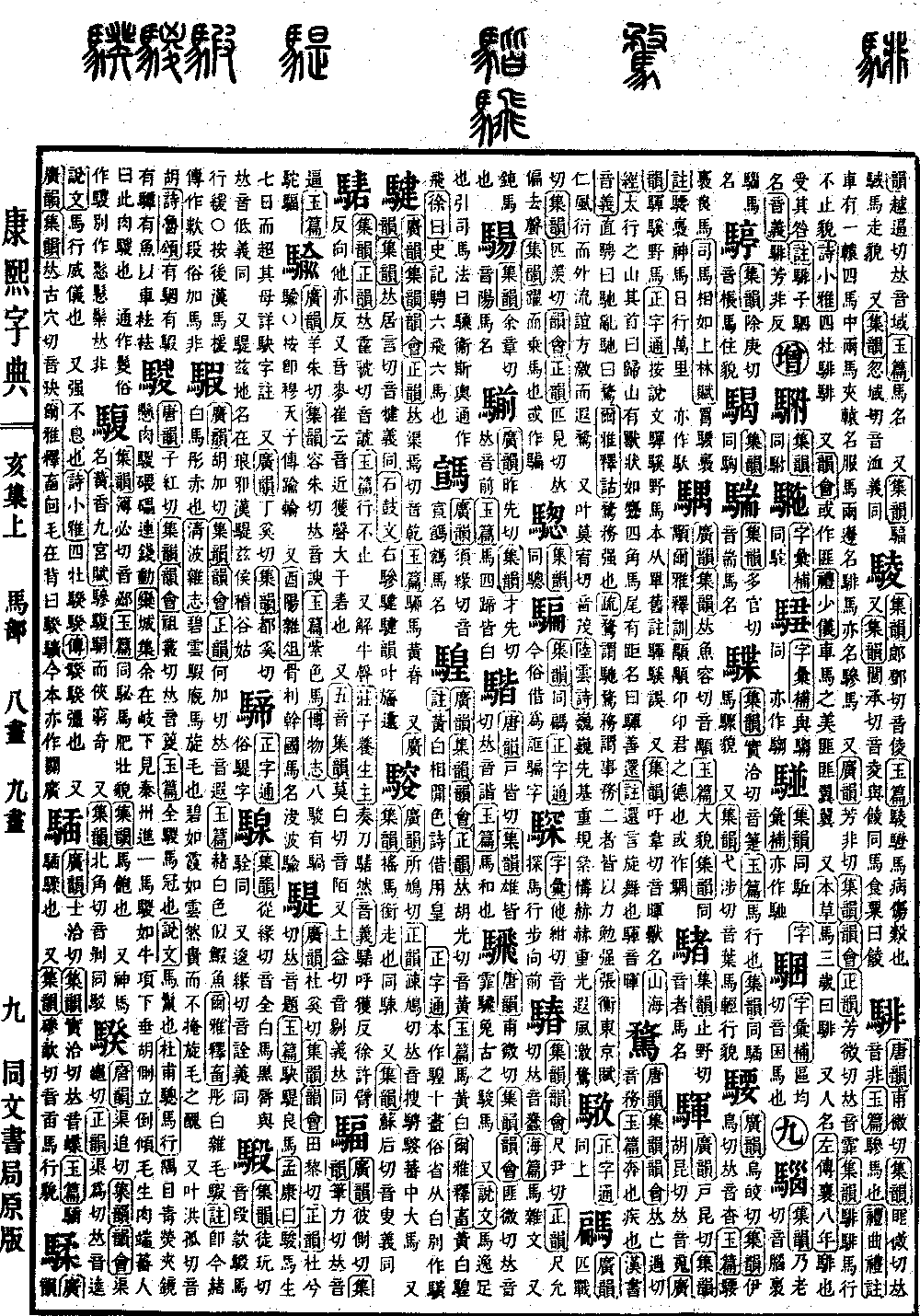
According to the Tang Rhyme (Tangyun), the Jiyun, and the Yunhui, the pronunciation is wu (falling tone), same as the word for task. According to the Jade Chapters (Yupian), it means to run or to be rapid. According to the Han Book (Hanshu) Sound and Meaning, running directly is called chi, while running recklessly is called wu. According to the Er Ya, Explanation of Words, wu means to strive for or to work diligently at something. The commentary explains that wu refers to running, while the word for task refers to affairs; both contain the meaning of exerting effort or striving. In the Eastern Capital Rhapsody (Dongjing Fu) by Zhang Heng: The influence of benevolent virtue spreads and flows outward, while the path of righteousness surges and speeds toward the distance.
It is also pronounced mao (falling tone), rhyming with the word for luxuriant. In the poetry of Lu Yun: The towering ancestral foundation, a magnificent structure inherited through generations. The illustrious glory accumulated over ages, the customs of distant lands surge and race.