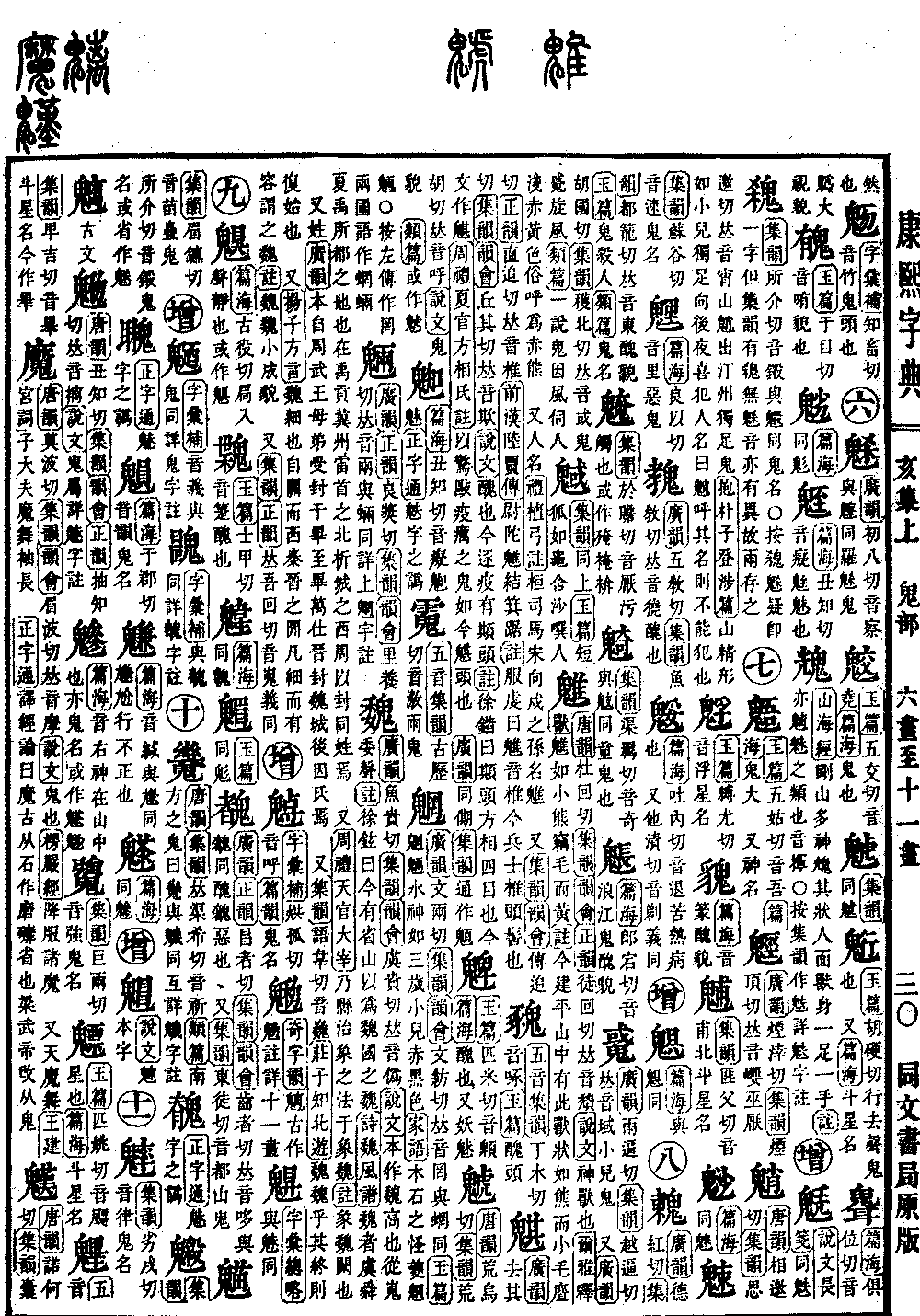
Hai Collection, Upper Volume
Radical: Ghost (guǐ)
Wei
Kangxi strokes: 18
Page 1462, Entry 40
Pronounced wei (falling tone).
Shuowen Jiezi (Shuowen): Originally written as wei. Meaning high. Composed of the radical for high and steep (wéi) and a phonetic component (wěi). Commentary: Xu Xuan says, people today omit the mountain radical to form the Wei used for the State of Wei.
Book of Odes (Shijing), Records of the Wei Songs: Wei is the place where Emperor Shun and Yu the Great resided. In the Yu Tribute, it is located north of Leishou and west of Xicheng in Jizhou, where the Zhou Dynasty enfeoffed its kin.
Zhou Rites (Zhouli), Offices of Heaven, Grand Administrator: Hang the laws of governance on the Xiangwei. Commentary: Xiangwei refers to the palace gates.
Also a surname. Broad Rhymes (Guangyun): Originally descended from the brother of King Wu of Zhou, who was enfeoffed at Bi. Later, Bi Wan served the State of Jin and was enfeoffed at Wei City, and the descendants adopted it as their surname.
Also pronounced wei (rising tone). Zhuangzi, Knowledge Wanders North: In a grand manner (wei wei), the end returns to the beginning.
Also Yangzi, Dialect (Fangyan): Wei means small. From the passes westward, between Qin and Jin, anything that is small and has capacity is called wei. Commentary: Wei wei describes a state of small completion.
Also pronounced wei (level tone). Meaning is the same.
Textual verification: Shuowen Jiezi says, originally written as wei. Meaning high. Composed of the radical for high and steep and a phonetic component. Commentary: Xu Xuan says, people today omit the mountain radical to form the Wei used for the State of Wei. Note: Following the original text, corrected to say people today.