Wei Collection, Middle Volume
Radical: Silk (mì)
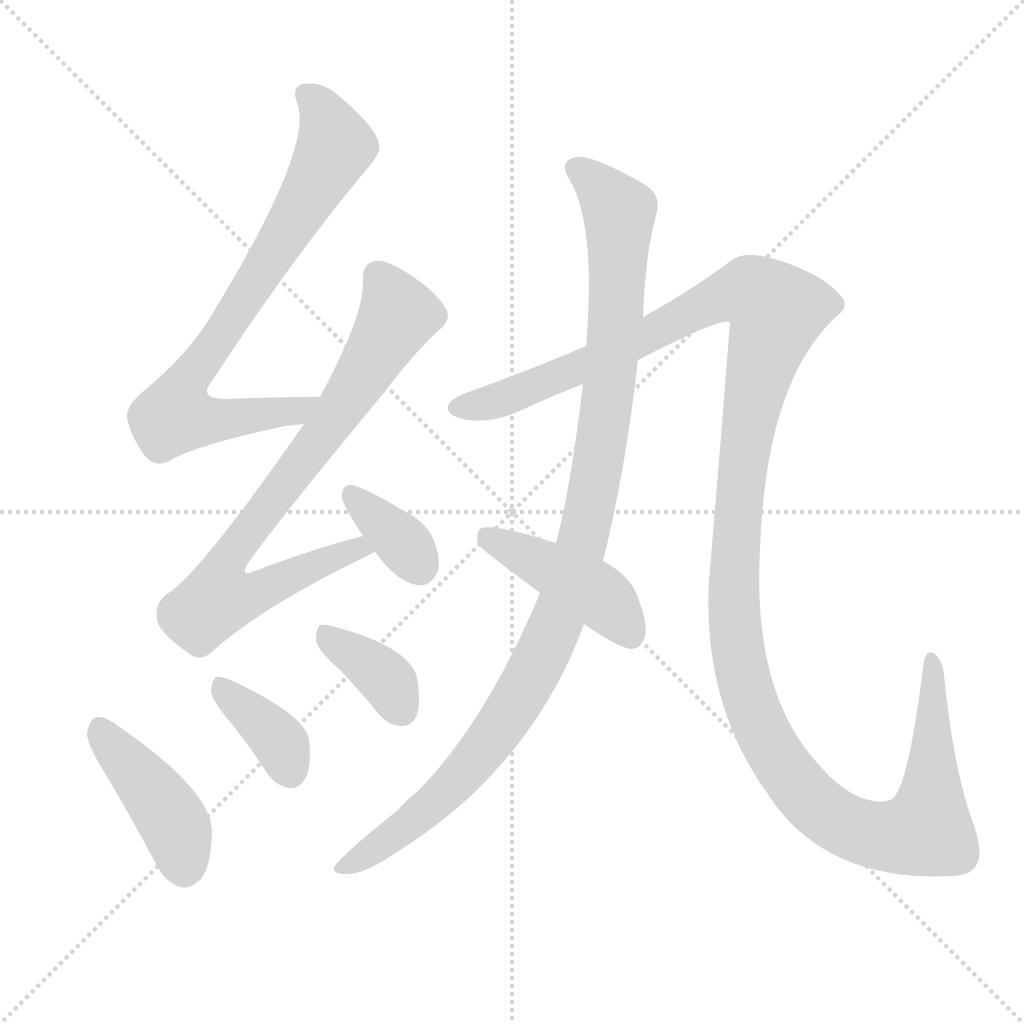
Wan
Kangxi stroke count: 9
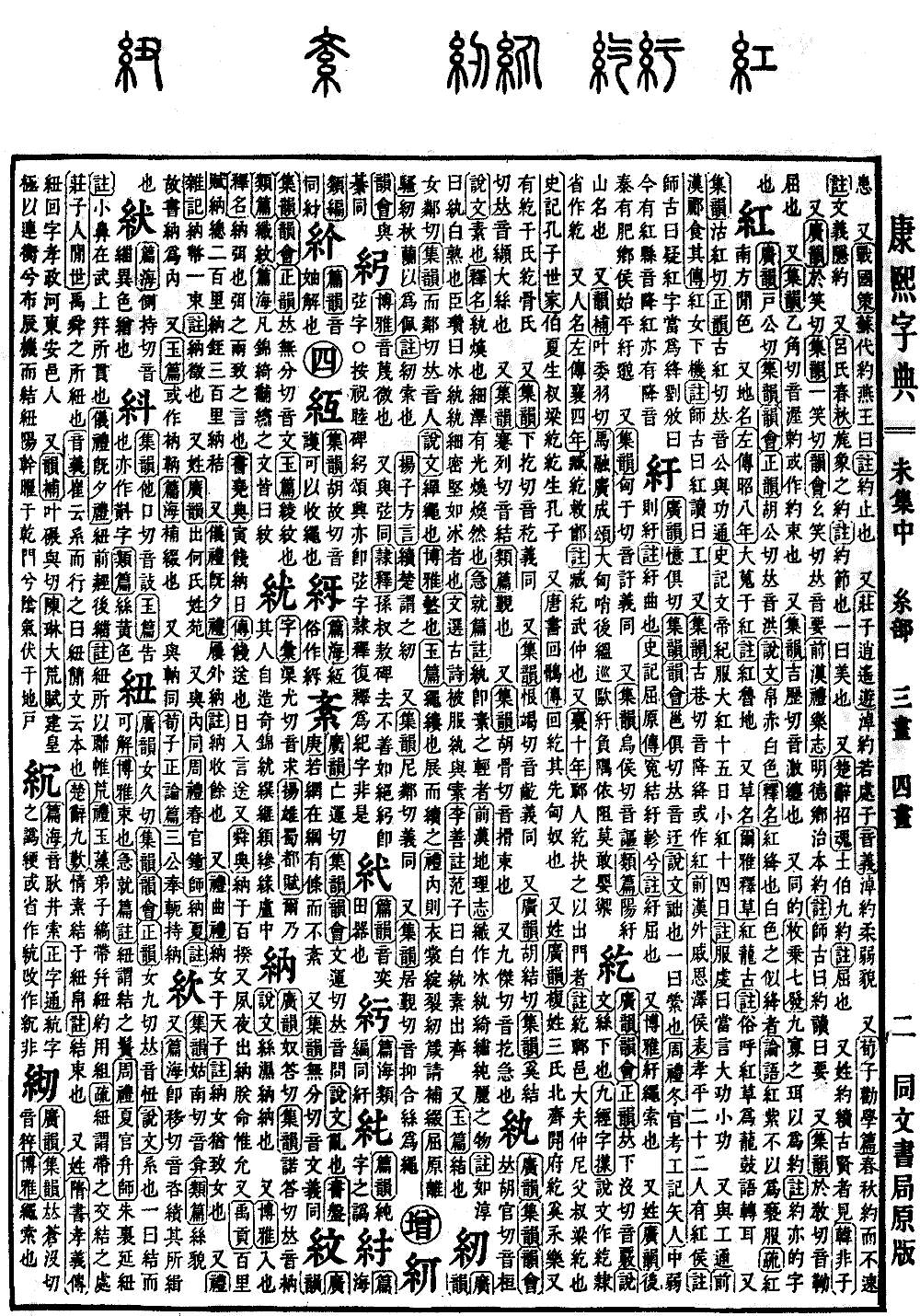
Page 916, Entry 04
According to the Extensive Rhymes (Guangyun), the Collected Rhymes (Jiyun), and the Collection of Rhymes (Yunhui), the pronunciation is huan.
As defined in the Analytical Dictionary of Characters (Shuowen), it refers to plain white silk.
As stated in the Explanation of Names (Shiming), wan means radiant. It is fine and smooth with a luster, appearing brilliant and bright.
In the commentary to the Urgent Receipt Chapter (Jijiupian), it is noted that wan is a lightweight form of plain white silk.
In the History of the Former Han (Qianhan Shu), Treatise on Geography, it states that weaving produced ice-like fine white silk, damask, embroidery, and pure, beautiful items.
The commentary by Ru Chun says that wan is white, processed silk. Chen Zan notes that ice-like fine white silk is wan that is fine, dense, and firm like ice.
In the Literary Selections (Wenxuan), Ancient Poems, it says: Wearing garments of white silk and plain silk.
The commentary by Li Shan quotes Fan Zi as saying that white silk and plain silk originate from the state of Qi.
According to the Jade Chapters (Yupian), it also means to tie or knot.