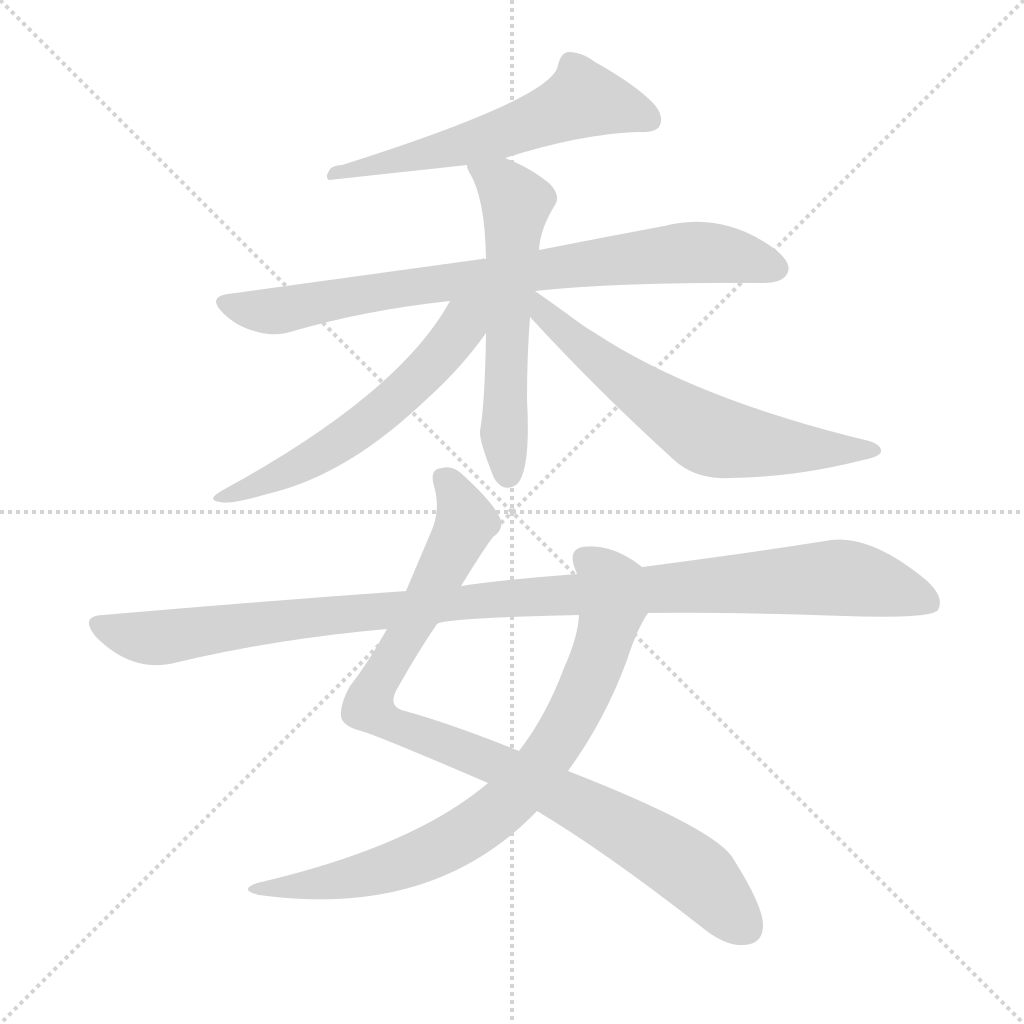
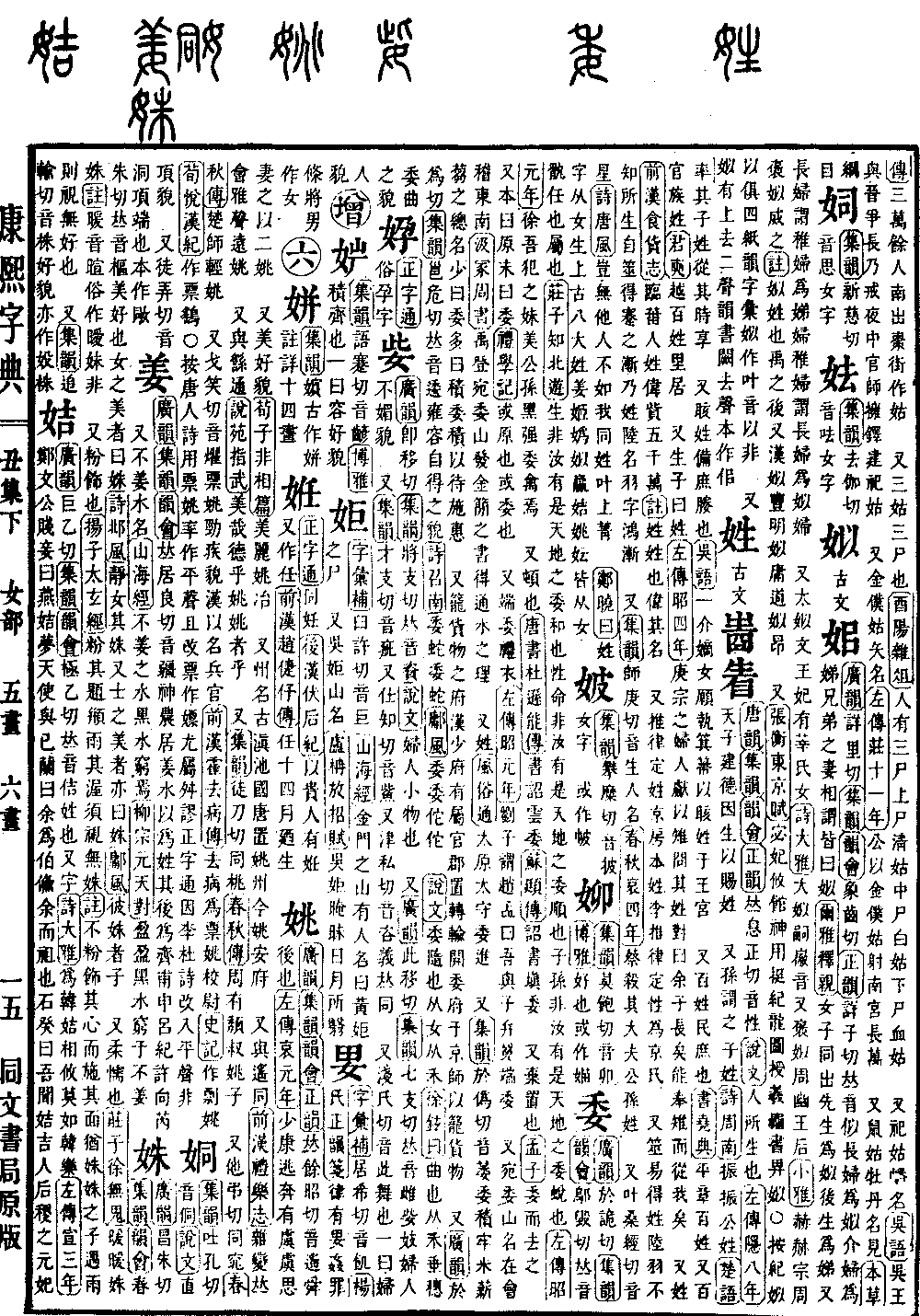
Chou Collection, Lower Volume
Radical: Woman (nǚ)
Kangxi stroke count: 8
Page 259, Entry 10
Guangyun: Pronounced wei (rising tone). Jiyun, Yunhui: Pronounced wei (rising tone).
To entrust; to belong to. Zhuangzi (Zhuangzi): Life is not something you possess; it is the entrusted harmony of heaven and earth. Nature and life are not things you possess; they are the entrusted compliance of heaven and earth. Descendants are not things you possess; they are the entrusted shedding of heaven and earth. Zuo Zhuan (Zuo Zhuan): The younger sister of Xu Wufan was beautiful, and Gongsun Hei forced her to accept betrothal gifts.
Also, to pile up. History of the Tang Dynasty (Tangshu): Imperial edicts and decrees were piled up. Biography of Su Ting: Imperial edicts were filled and piled up.
Also, to discard. Mencius (Mengzi): To abandon and leave it behind.
Also, the root is called the origin, the tip is called the wei (end). Record of Learning (Xueji): Some are origins, some are ends.
Also, duanwei, refers to ceremonial robes. Zuo Zhuan (Zuo Zhuan): Liu Zi said to Zhao Meng: I shall share with you the ceremonial cap and the formal robes.
Also, Wanwei, the name of a mountain, located southeast of Kuaiji. Zhou Documents from the Jizhong Tomb (Jizhong Zhoushu): Yu climbed Wanwei Mountain, opened the golden scriptures, and obtained the principles of regulating water.
Also, a surname. Comprehensive Customs (Fengsutong): The Governor of Taiyuan, Wei Jin.
Also, Jiyun: Pronounced wei (level tone). A collective term for grain, rice, firewood, and fodder. A small amount is called wei, a large amount is called ji; wei-ji refers to stores kept in readiness for distribution. Also, a treasury for hoarding goods. During the Han dynasty, the Lesser Treasury had subordinate officials, and the commanderies established transport stations, opening wei-fu (warehouses) in the capital to hoard goods.
Also, Guangyun: Pronounced wei (level tone). Jiyun: Pronounced wei (level tone). The appearance of being at ease and composed. Book of Odes (Shijing): Wei-yi, wei-yi. In the Yong Feng section: Wei-wei, tuo-tuo.
Shuowen (Shuowen): Wei means to follow. Composed of the characters for woman and grain. Xu Xuan says: It means curved. It is formed by the grain hanging its ears, signifying a winding and curved appearance.