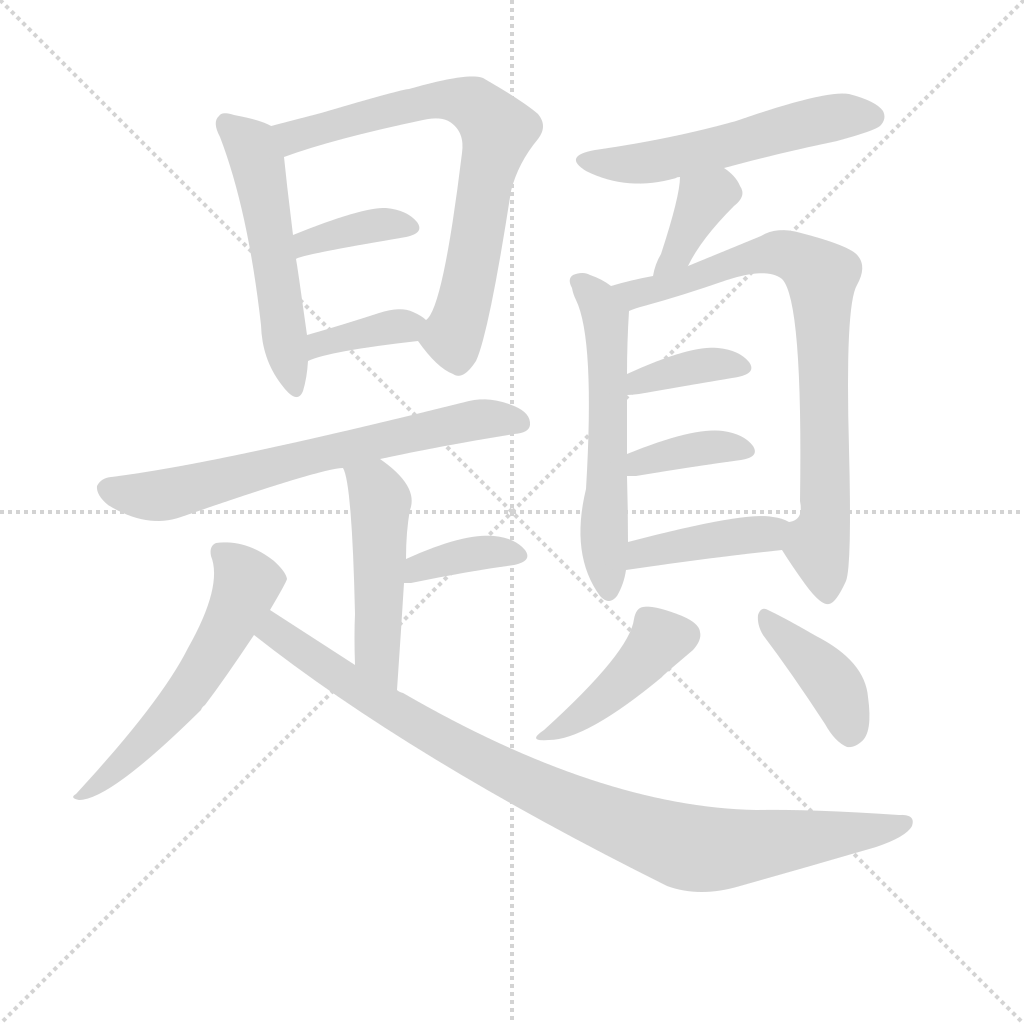
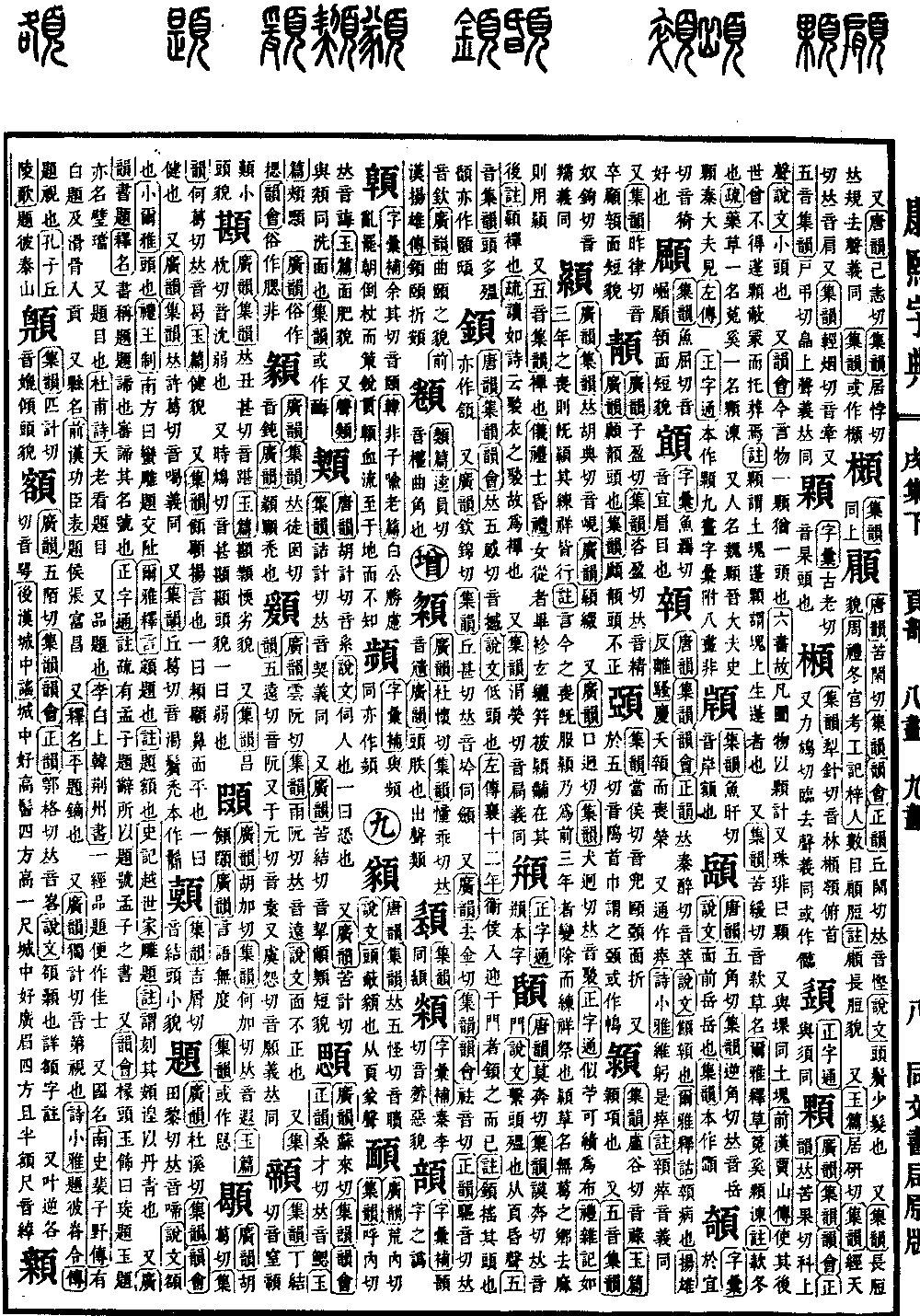
Xu Collection, Lower Volume
Radical: Page (yè)
Kangxi Strokes: 18
Page 1406, Entry 38
Pronounced ti.
Explanatory dictionary (Guangyun): Pronounced ti. Collective dictionary of sounds and rhymes (Jiyun) and Compendium of rhymes (Yunhui): Pronounced ti.
Analysis of characters (Shuowen): The forehead.
Small Elegantia (Xiao Erya): The head.
Book of Rites (Liji), Royal Regulations: The people of the south are called Man; they tattoo their foreheads (diao ti) and cross their feet.
Elegantia (Erya), Explanation of Words: The term zhen is defined as ti. Commentary: Ti means forehead.
Records of the Grand Historian (Shiji), Hereditary House of Yue: Tattooed foreheads (diao ti). Commentary: This refers to carving the forehead and filling it with red and green pigments.
Also: Book titles.
Broad refinement (Boya): To write is to title (ti). Ti means to examine carefully; to examine carefully the name and appellation.
Correction of characters (Zhengzitong): The commentaries on the classics include the title preface to the Mencius (Mengzi), which serves to title the work of Mencius.
Also: The jade decoration on the end of a rafter is called xuan ti or yu ti, also known as bi dang.
Also: A topic or subject.
Du Fu poetry: Heaven old man looks at the topic.
Also: To evaluate or praise.
Li Bai, Letter to Han Jingzhou: Once evaluated and praised, one becomes an excellent person.
Also: Name of a state.
History of the Southern Dynasties (Nanshi), Biography of Pei Ziye: The states of Baitie and Hugu sent tribute.
Also: Name of a county.
History of the Former Han (Qianhan), Table of Meritorious Officials: The Marquis of Ti, Zhang Fuchang.
Also: Broad refinement (Boya): Pingti refers to the arrowhead.
Also: Pronounced di. To look at.
Book of Odes (Shijing), Lesser Odes: Looking at that wagtail. Commentary: Ti means to look at.
Confucius, Song of the Hills and Mounds: Looking at that Mount Tai.
Textual research:
Records of the Grand Historian (Shiji), Hereditary House of Yue: Tattooed foreheads (diao ti). Commentary: This refers to carving the forehead and filling it with red and green pigments. Note: Based on the original text, the character huang has been corrected to nie.
Explanations of Names (Shiming): Pingti refers to the arrowhead. Note: The phrase is from Broad refinement (Boya); it has been corrected from Explanations of Names to Broad refinement.