Mao Collection, Upper Volume
Radical: Heart (xīn)
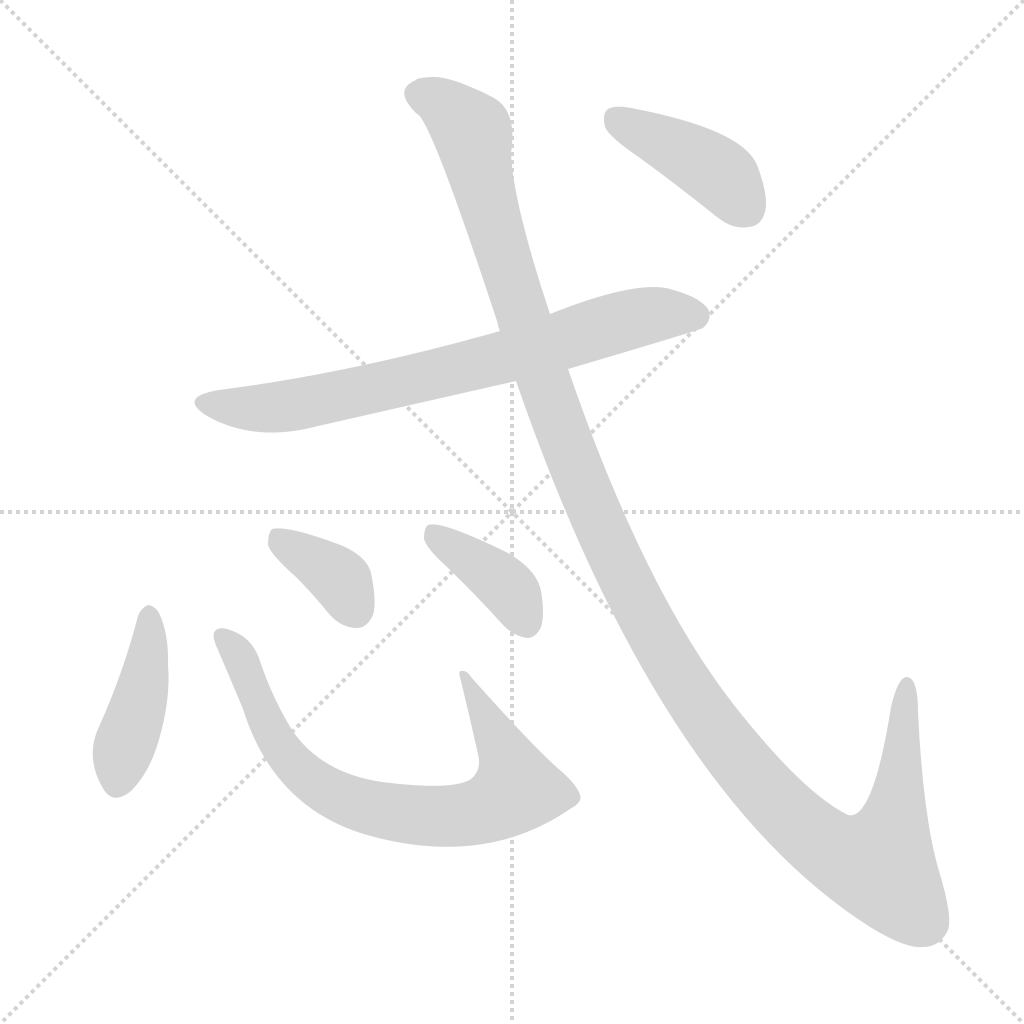
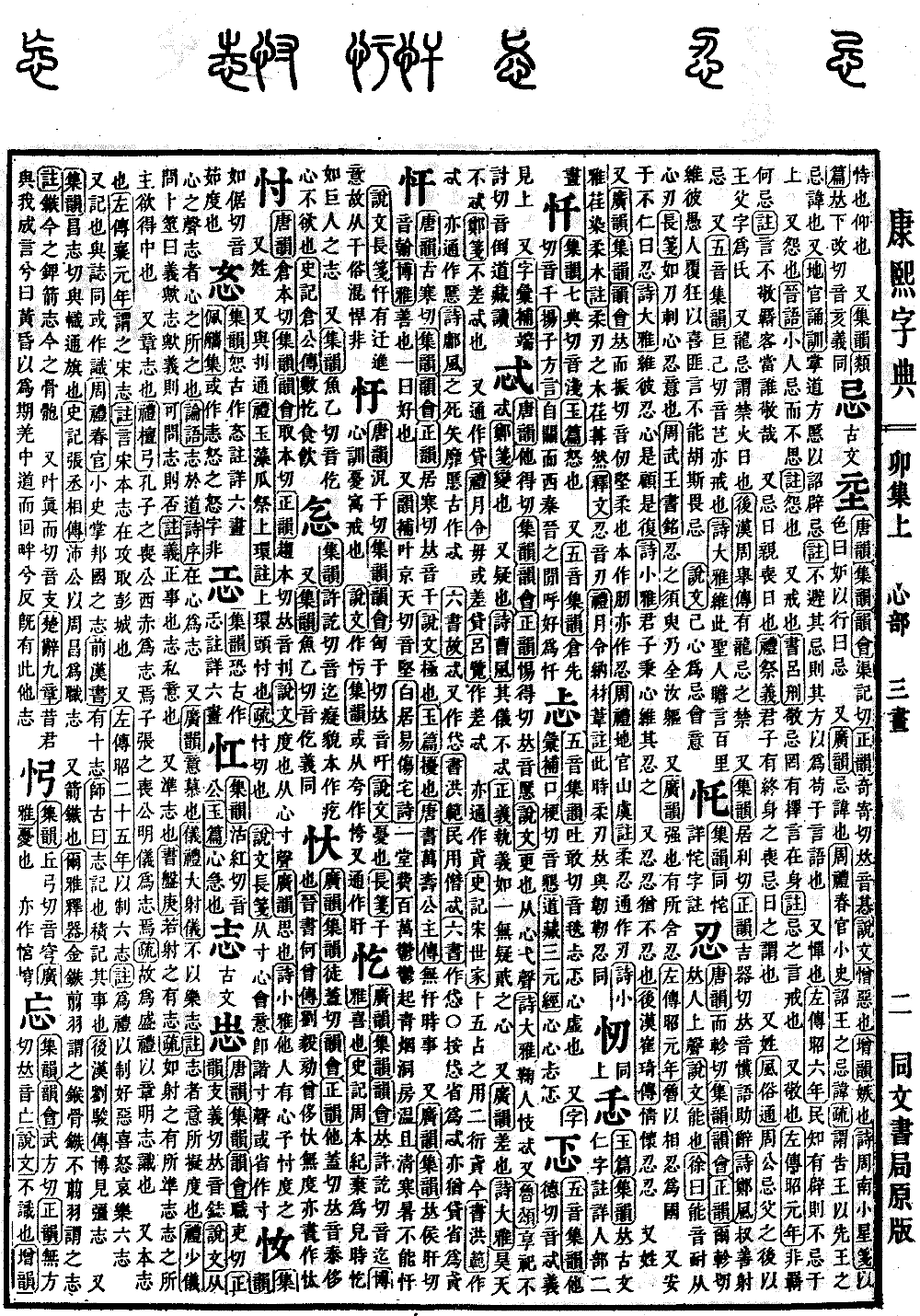
忒; Kangxi strokes: 7; Page 376, Entry 10
Tangyun (a dictionary of rhymes), Jiyun (a dictionary of rhymes), Yunhui (a dictionary of rhymes), and Zhengyun (a dictionary of rhymes) all state the pronunciation is te (entering tone), which is the same as the pronunciation of the character for evil intent (te).
Shuowen (Explaining Characters and Phrases) defines it as a change. The structure consists of the heart radical, with the component yi acting as the phonetic indicator.
The Book of Odes (Shijing), Greater Odes, contains the line: The oppressed people are perverse and change their ways.
The Book of Odes (Shijing), Eulogies of Lu, contains the line: The sacrifices are offered without error. Zheng Xuan's annotations define this as changing.
It also carries the meaning of suspicion. The Book of Odes (Shijing), Odes of Cao, contains the line: His demeanor is without suspicion. Kong Yingda's commentaries define this as upholding moral principles from beginning to end without any doubting or unsettled state of mind.
Guangyun (a dictionary of rhymes) defines it as a mistake or error. The Book of Odes (Shijing), Greater Odes, contains the line: The vast heaven makes no mistakes. Zheng Xuan's annotations define this as having no errors.
It is also used as a loan character for the character for loan (dai). The Book of Rites (Liji), Monthly Ordinances, contains the line: Do not permit any error or loan. The Master Lu's Spring and Autumn Annals (Lüshi Chunqiu) writes this as te.
It is also used as a loan character for the character for debt (te). The Records of the Grand Historian (Shiji), Annals of the Song, records: Divination by five, using two in the interpretation to extend the debt. In the current version of the Book of Documents (Shangshu), Great Plan, it is written as te.
It is also used as a loan character for the character for evil intent (te). The Book of Odes (Shijing), Odes of Yong, contains the line: Until death, I will swear not to have evil intent. In ancient times, this was written as te.
Liushugu (Explanation of the Six Scripts) records that te is also written in a variant form. The Book of Documents (Shangshu), Great Plan, contains the line: The people employ falsehood and error. The Six Scripts (Liushu) writes this in a variant form. Note: The simplified form is te, which is similar to how the character for loan (dai) is simplified to the character for debt (te).