Chen Collection, Lower Volume
Radical: Lack (qiàn)
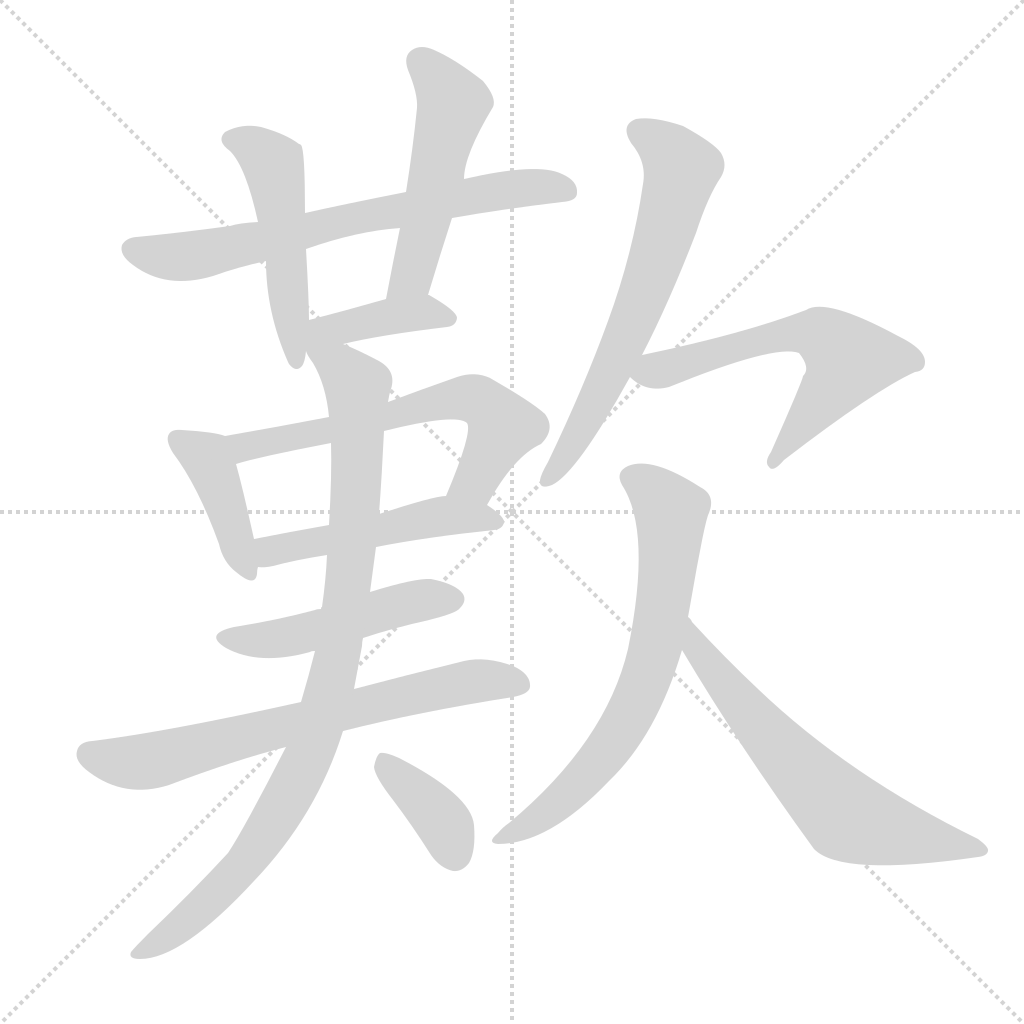
Character: 歎
Kangxi Strokes: 15
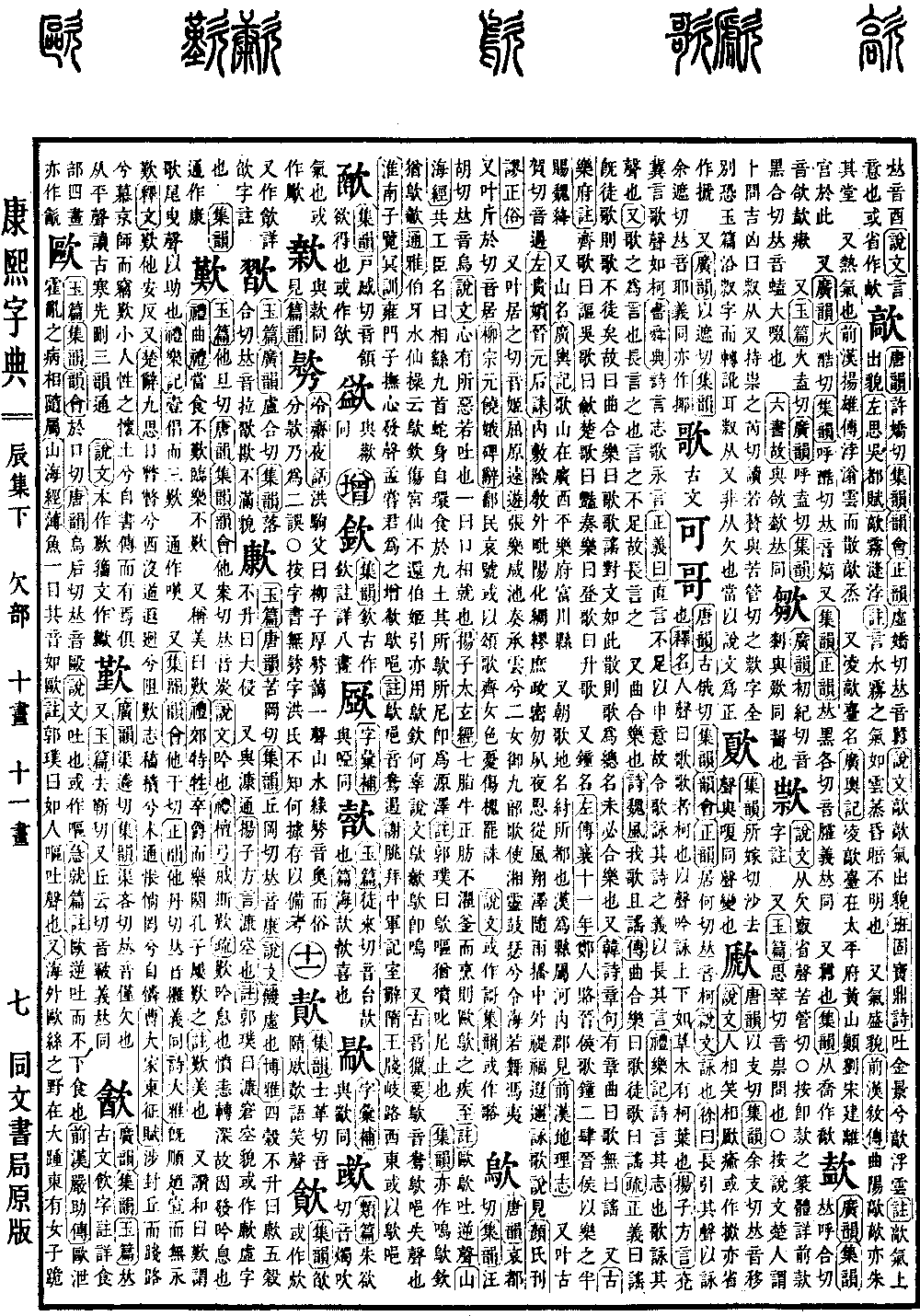
Page 571, Entry 24
Yu Pian (Book of Jade): Pronounced tan.
Tang Yun (Tang Dynasty Rhymes) and Ji Yun (Collection of Rhymes) and Yun Hui (Compendium of Rhymes): Pronounced tan.
Shuowen Jiezi (Explanation of Characters): To moan.
Book of Rites (Liji), Tanjing: Sorrow leads to moaning.
Commentary: To moan is to sigh with breath. When resentment or anger deepens, one sighs accordingly.
Book of Rites (Liji), Quli: When eating, do not sigh; when attending music, do not sigh.
Also, to praise is called tan.
Book of Rites (Liji), Jiaotesheng: After finishing the wine and the music ceases, Confucius sighed repeatedly.
Annotation: Tan means to praise.
Also, to chant in harmony is called tan, referring to the trailing sound at the end of a song used for accompaniment.
Book of Rites (Liji), Yueji: One leads the singing and three follow with sighs.
Often written in the variant form tan.
Also, according to Ji Yun (Collection of Rhymes) and Yun Hui (Compendium of Rhymes): Pronounced tan.
Zheng Yun (Correct Rhymes): Pronounced tan. The meaning is the same.
Book of Odes (Shijing), Daya: Follow the path and spread it, do not sigh forever.
Commentary: Tan is pronounced tan.
Also, Chu Ci (Songs of Chu), Jiusi: The sun sets in the west, the road is long and obstructed by sighing. Ambitions are stored and not yet fulfilled, feeling melancholy and grieving for oneself.
Ban Zhao, Dongzheng Fu: Traveling across Fengqiu and walking the road, I admire the capital and sigh in secret. The petty person misses his home, as recorded in books and transmissions.
All are read with a level tone. The three rhyming groups of han, xian, and shan are interchangeable in ancient times.
Shuowen Jiezi (Explanation of Characters): Originally written as lack. The Zhou script variant is written as shown.