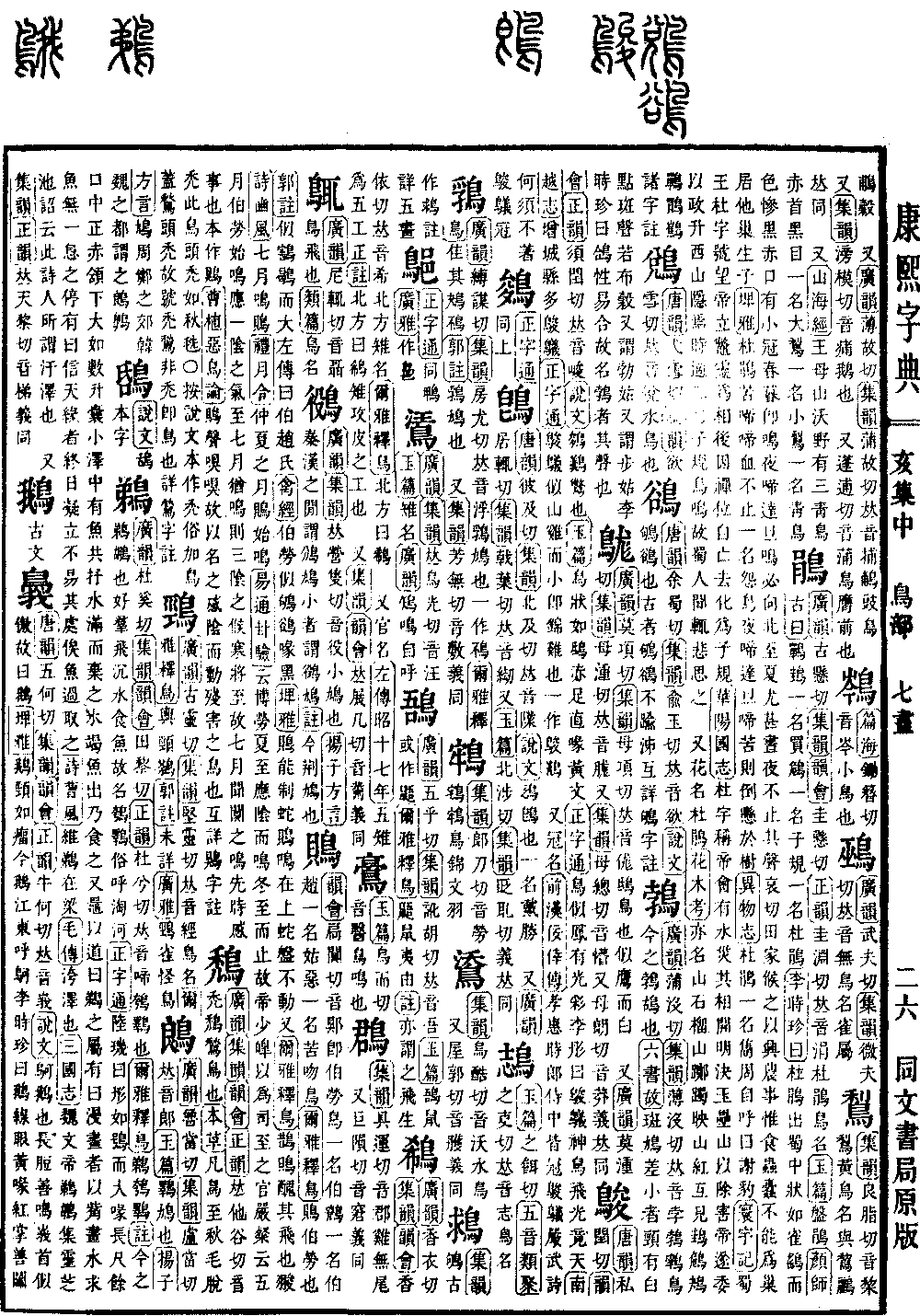
Hai Collection, Middle Volume
Radical: Bird (niǎo)
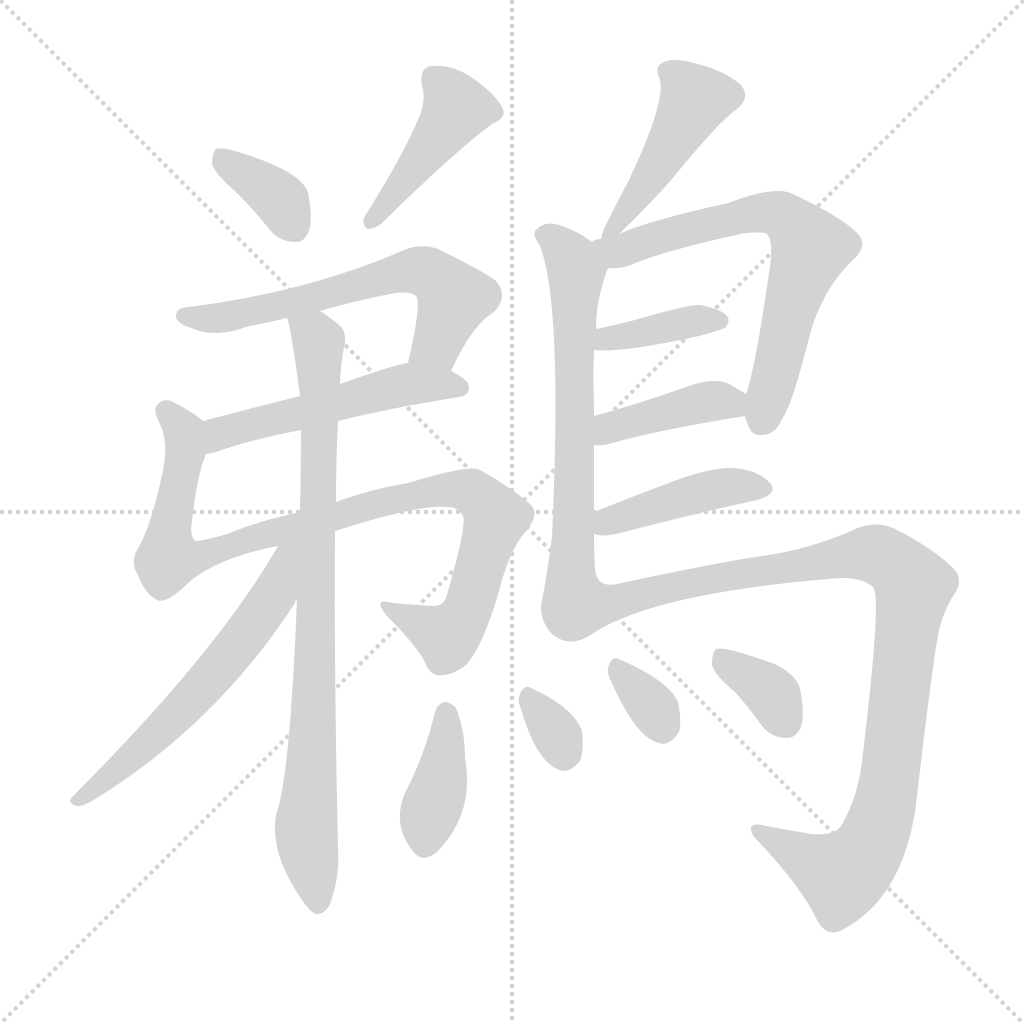
鵜
Kangxi Strokes: 18
Page 1490, Entry 30
Pronounced ti. Refers to the species Pelecanus. According to the Erya: Explaining Birds (Erya), the term鵜 refers to the species Pelecanus. Commentary: This refers to the modern-day pelican. It enjoys flying in flocks and diving into water to catch fish. It is colloquially known as the water-scooping bird. According to the Zhengzitong, Lu Ji states: It is shaped like an owl but larger, with a beak over a foot long. The inside of the beak is bright red, and the area beneath the lower jaw is large enough to function as a pouch capable of holding several liters. When there are fish in small marshes, these birds scoop up the water together until the marsh is drained, then consume the exposed fish. Furthermore, Chao Yidao states: Among pelicans, there is a type that scoops water with its beak to locate fish, moving continuously. There is another type that stands still all day without moving, waiting for fish to swim by to capture them.
Book of Odes (Shijing), Odes of Cao: The pelican is on the dam.
Mao Commentary: Refers to a low-lying marsh.
Records of the Three Kingdoms (Sanguozhi): Emperor Wen of Wei issued an edict regarding pelicans gathering in the Lingzhi Pond, stating: This is what the poet referred to as a muddy marsh.
Pronounced ti. The meaning is the same.