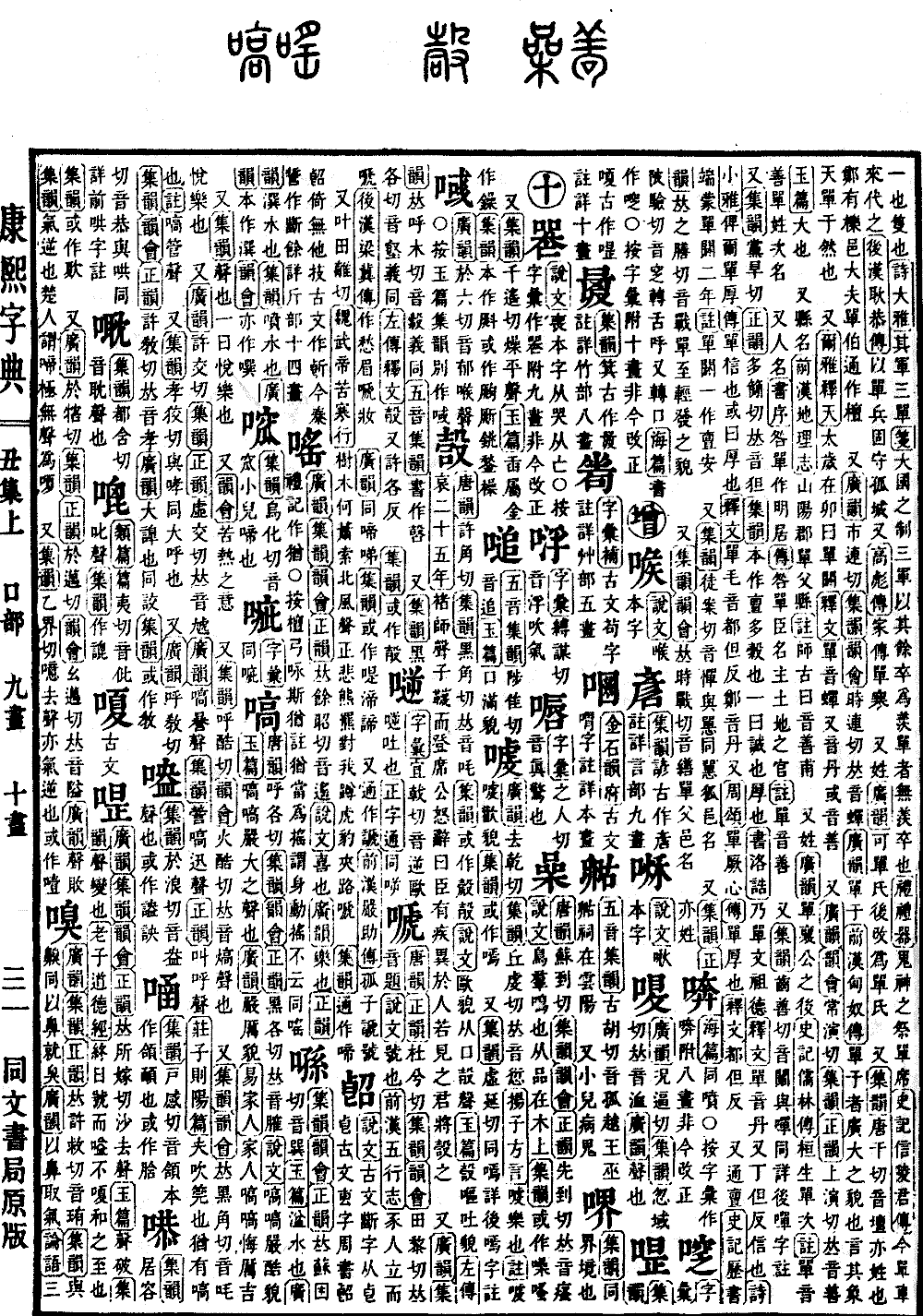
Chou Collection, Upper Volume
Radical: Mouth (kǒu)
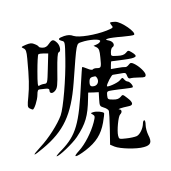
Character: di
Kangxi Stroke Count: 13
Page 201, Entry 22
Pronounced ti.
As defined in the Shuowen Jiezi (Shuowen), it means to wail.
In the History of the Former Han (Hanshu), Records of the Five Elements: A pig stood upright and wailed.
In the History of the Later Han (Houhanshu), Biography of Liang Ji: She wore a sorrowful brow and tearful makeup.
In the Extensive Dictionary of Rhymes (Guangyun), it is a variant of the character for wailing.
In the Collected Rhymes (Jiyun), it is sometimes written in variant forms (di).
It is also used interchangeably with another character (ti).
In the History of the Former Han (Hanshu), Biography of Yan Zhu: An orphaned child wails and cries out.
It also rhymes with li.
In Emperor Wu of Wei's Poem on Bitter Cold (Kuhan Xing): How desolate the trees and woods are, as the north wind blows with a sorrowful sound. Bears and grizzlies crouch before me, and tigers and leopards wail along the path.
In the Collected Rhymes (Jiyun), it is used interchangeably with the character for wailing.