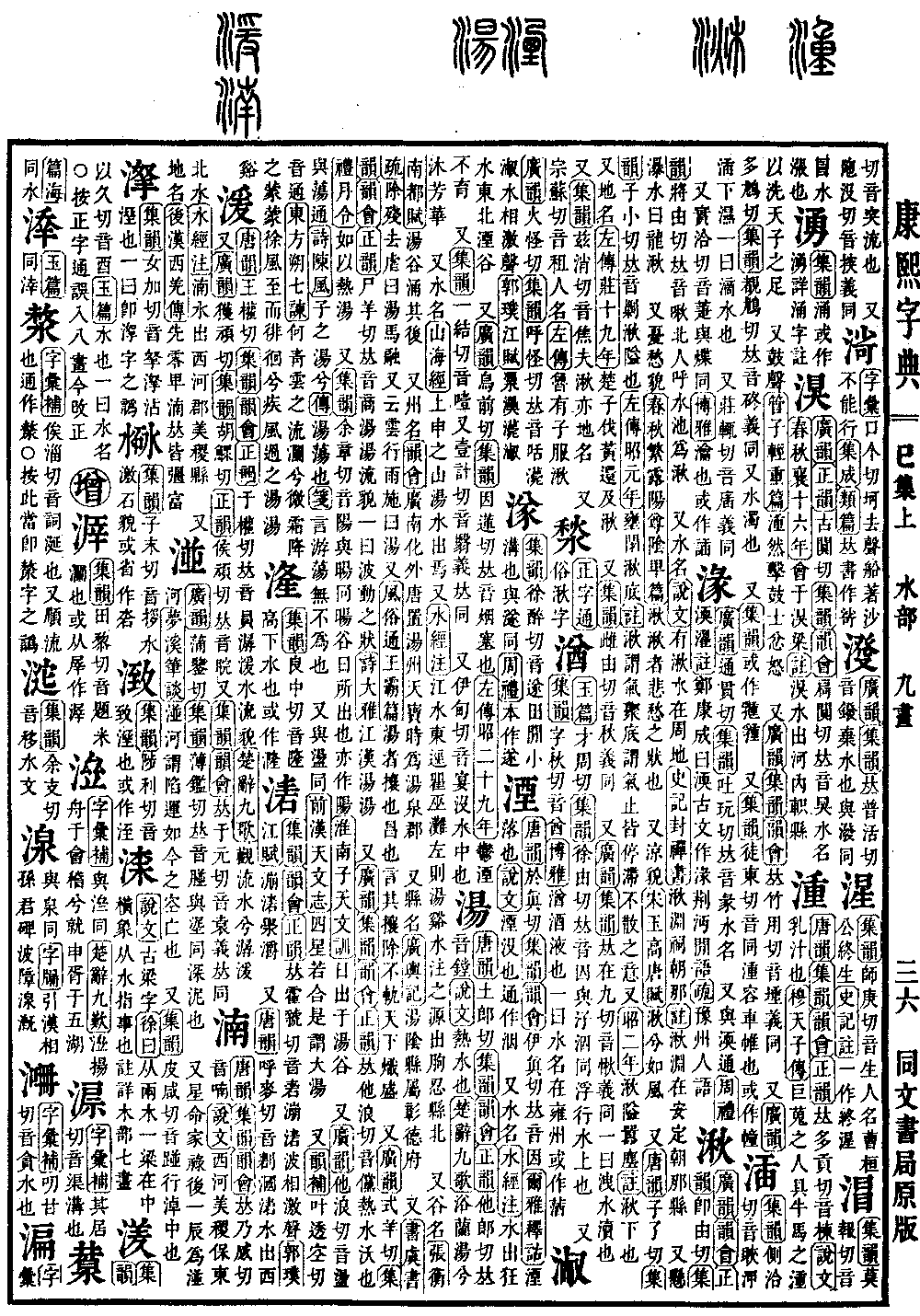
Si Collection, Upper Volume
Radical: Water (shuǐ)
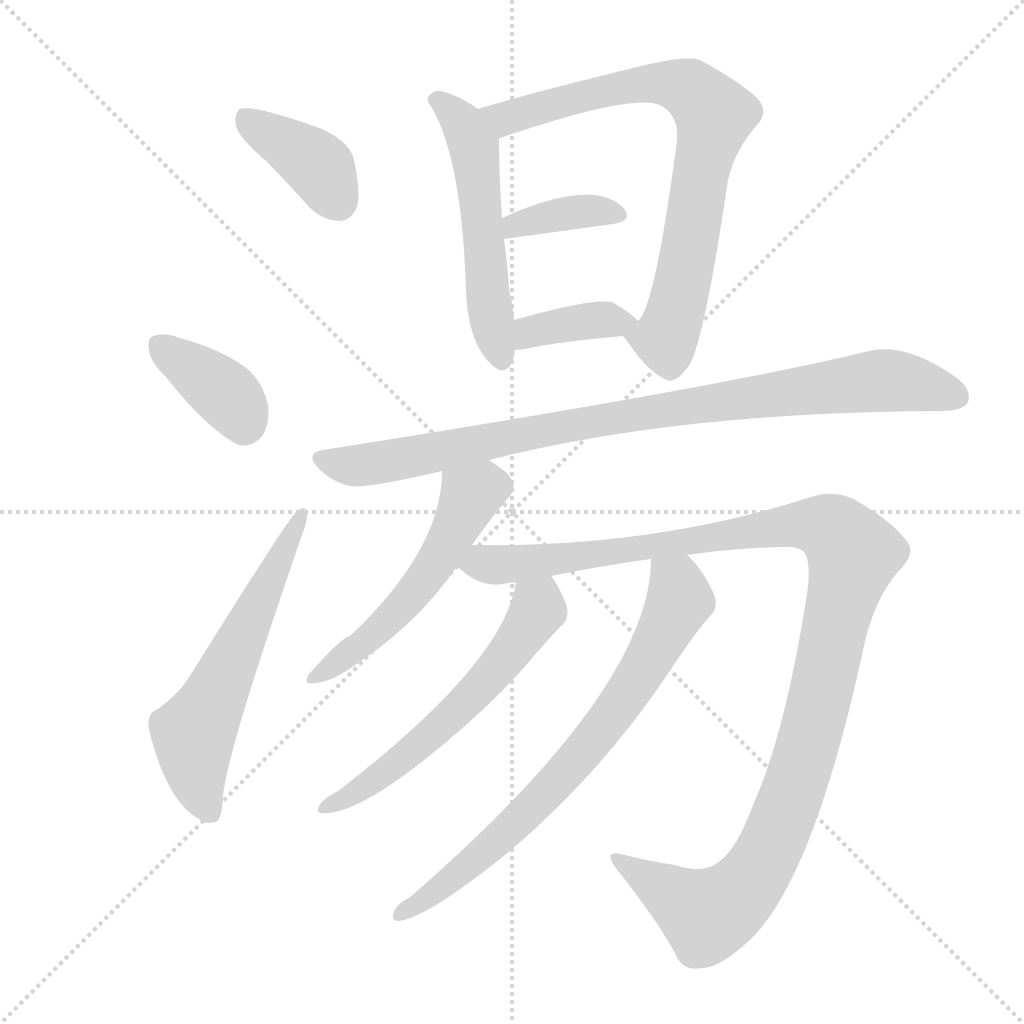
Tang
Kangxi Stroke Count: 13
Page 638, Entry 16
Pronounced tang. According to the Analytical Dictionary of Chinese Characters (Shuowen Jiezi), it refers to hot water. In the Nine Songs (Jiuge) of the Songs of Chu (Chuci): Bathe in orchid water, wash with fragrant herbs. Also, the name of a river. In the Classic of Mountains and Seas (Shanhaijing): The Tang River originates from Shangshen Mountain. In the Commentary on the Classic of Waterways (Shuijingzhu): The Yangtze River flows east past Quwu Shoal, where it is joined by the Tangxi River, which originates north of Quren County. Also, the name of a valley. In the Rhapsody on the Southern Capital (Nandufu) by Zhang Heng: Tang Valley surges behind it. Also, the name of a prefecture. According to the Compendium of Rhymes (Yunhui): Located in the outer regions of Guangnan, Tang Prefecture was established during the Tang Dynasty and renamed Tangquan Commandery during the Tianbao era. Also, the name of a county. According to the Comprehensive Records of the World (Guangyuji): Tangyin County is under the jurisdiction of Zhangde Prefecture. Also, in the Commentary on the Classic of History (Shu Shangshu Shu): Eliminating the remnants and removing the cruel is called tang. Ma Rong also stated: When clouds move and rain spreads, it is called tang. Also, in the Comprehensive Meaning of Customs (Fengsutong), Chapter on Kings and Hegemons: Tang means to expel or to prosper, implying the expulsion of rebels and the flourishing of the world.
Pronounced shang. Tangtang, the appearance of flowing water. Another meaning is the state of waves. In the Book of Odes (Shijing), Greater Odes: The Jiang and Han rivers flow tangtang.
Pronounced tang. Hot water used for washing. In the Book of Rites (Liji), Monthly Ordinances: Such as by using hot water.
Pronounced yang. Identical to the character yang. The Tang Valley is where the sun rises. Also written as yang. In the Huainanzi, Chapter on Astronomy: The sun rises from Tang Valley.
Pronounced tang. Interchangeable with the character for unrestrained (dang). In the Book of Odes (Shijing), Odes of Chen: You are so tang. The commentary states: Tang means unrestrained. The sub-commentary states: It refers to wandering and doing as one pleases. Also interchangeable with the character for sway (dang). In the History of the Former Han (Qianhanshu), Treatise on Astronomy: When four stars appear as if in conjunction, it is called the Great Tang.
Pronounced tong. In the Seven Remonstrances (Qijian) by Dongfang Shuo: Why do the blue clouds drift and ripple, while the light frost descends dimly? When the gentle breeze arrives, it lingers, but when the gale passes, it flows tangtang.
Editorial Note: In the Nine Songs (Jiuge) of the Songs of Chu (Chuci), the original text reads bathe in orchid water and wash in fragrance. The word flowers (hua) originally belonged to the following line and should not be read with fragrance. The word flowers has been omitted here.