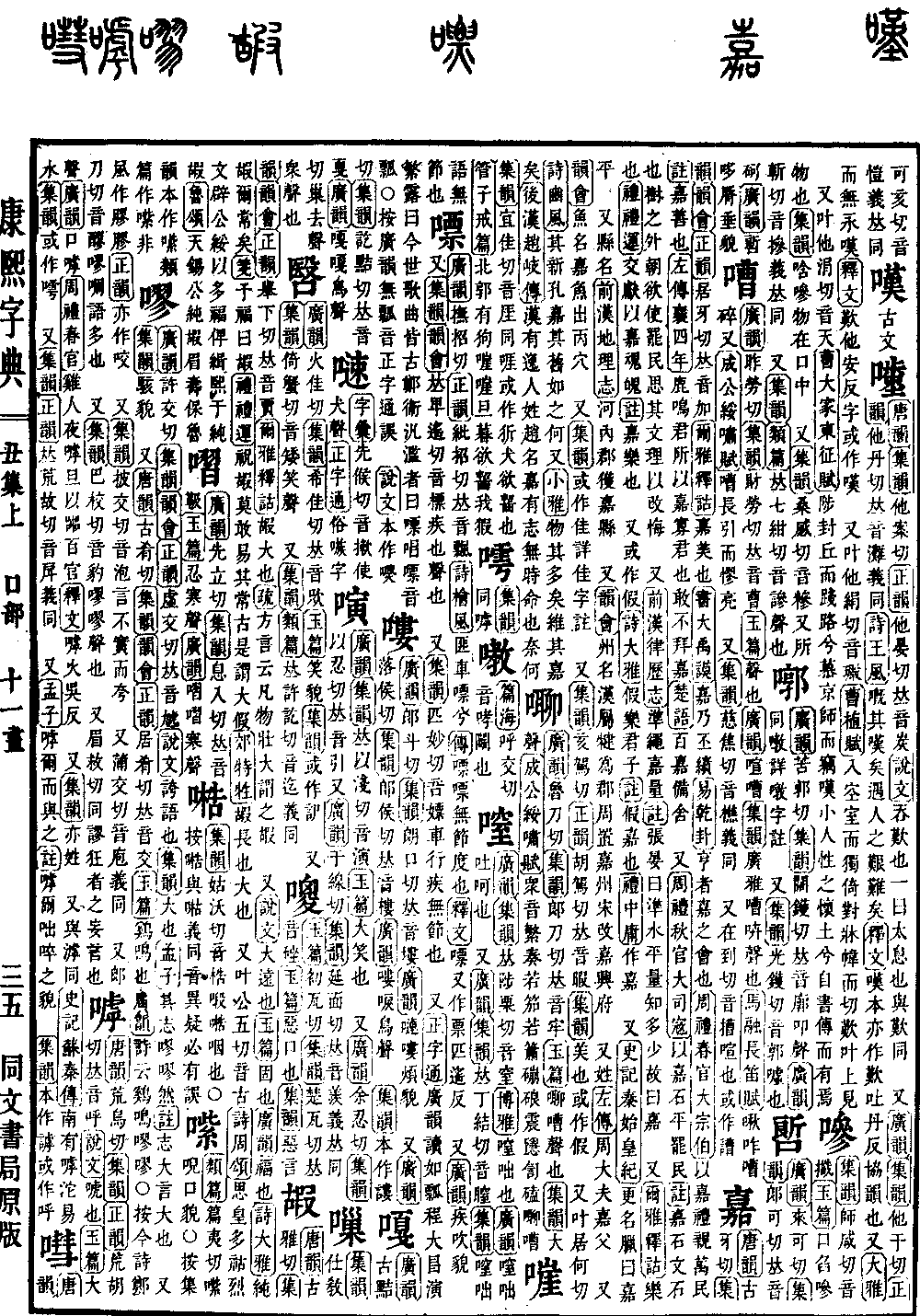
Chou Collection, Upper Volume
Radical: Mouth (kǒu)
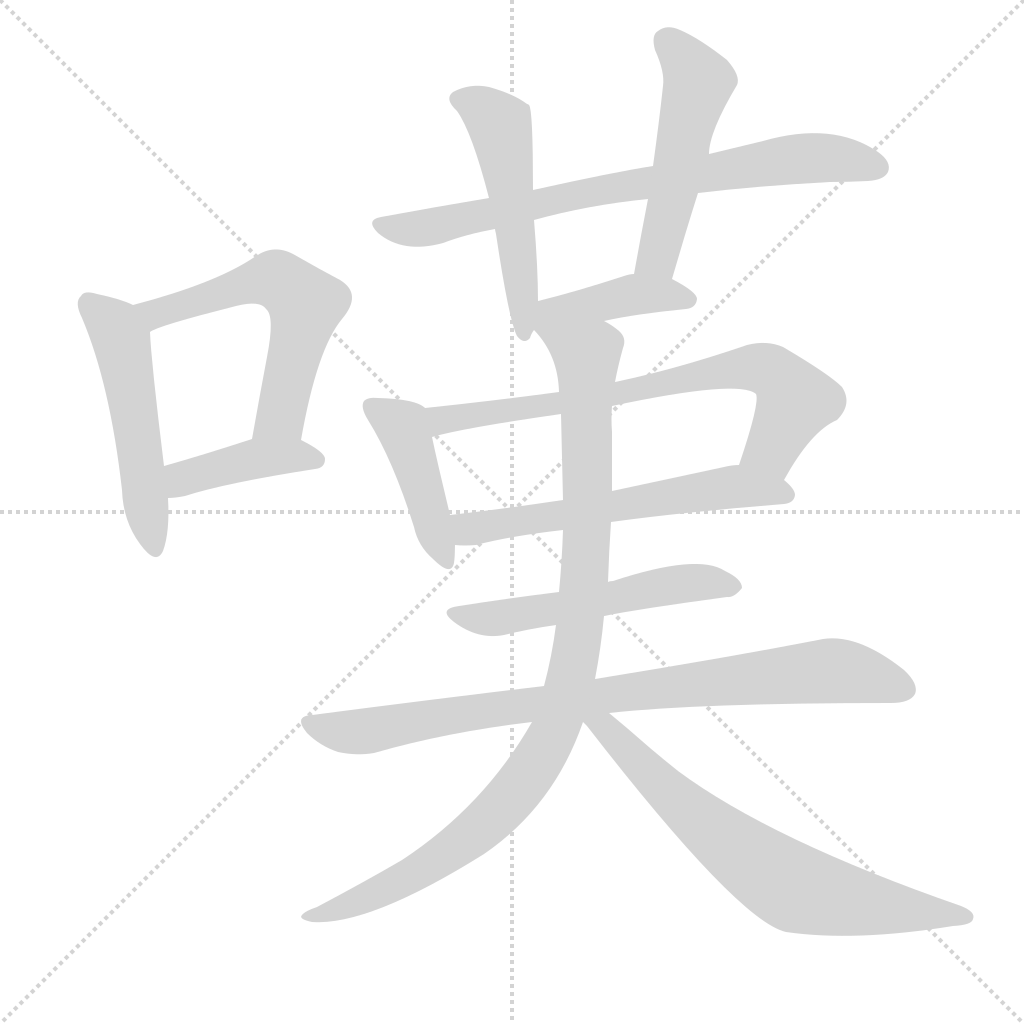
叹
Kangxi strokes: 14
Page 205, Entry 01
Ancient character form. According to the Tang Rhyme (Tangyun) and the Collected Rhymes (Jiyun), it is pronounced tan (falling tone). According to the Corrected Rhymes (Zhengyun), it is pronounced tan (falling tone). As stated in the Analytical Dictionary of Characters (Shuowen), it means to swallow and sigh. Another interpretation is to sigh deeply. It is identical to the character for sigh.
Also, according to the Extended Rhymes (Guangyun) and the Collected Rhymes (Jiyun), it is pronounced tan (level tone). According to the Corrected Rhymes (Zhengyun), it is pronounced tan (level tone). The meaning is the same.
In the Book of Odes (Shijing), in the section Odes of Wang: Expressing sighing, encountering the difficulties of others. According to the Explanation of the Text (Shiwen), the character for sigh was originally written as another form, pronounced tan (level tone) as a rhyming variant.
Also, in the Greater Odes (Daya): And do not sigh forever. According to the Explanation of the Text (Shiwen), the character for sigh is pronounced tan (level tone); the character is sometimes written as another form.
Also, rhyming with juan (falling tone), it is pronounced tan (falling tone). In a rhapsody by Cao Zhi: Entering an empty room and leaning alone, facing the bed curtains and sighing deeply.
Also, rhyming with juan (level tone), it is pronounced tian (level tone). In the Eastern Expedition Rhapsody (Dongzheng Fu) by Lady Cao: Ascending Fengqiu and walking the road, longing for the capital and sighing privately. Because the nature of small people is to cherish their home, this is recorded in books and transmissions.