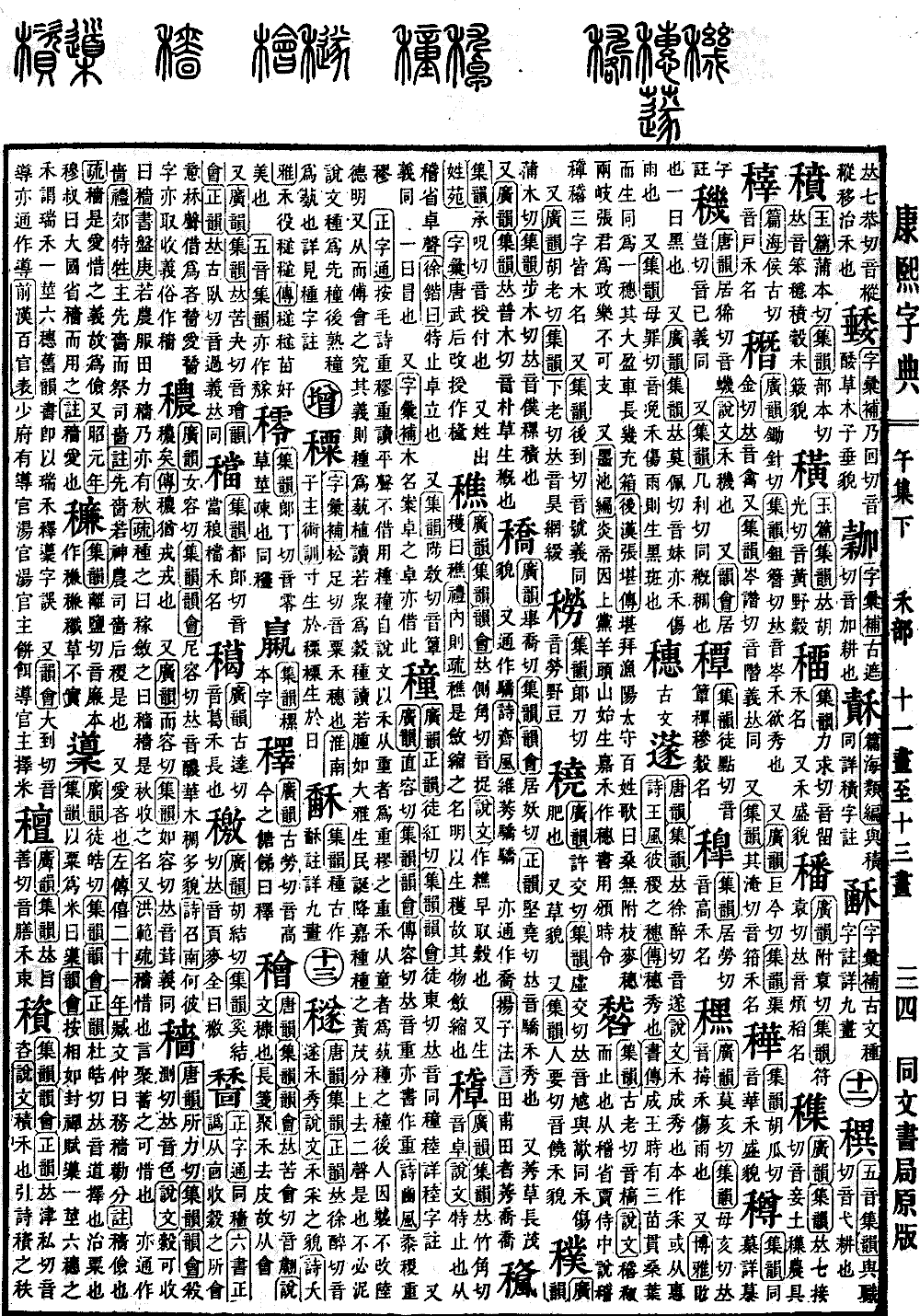
Wu Collection, Lower Volume
Radical: Grain (hé)
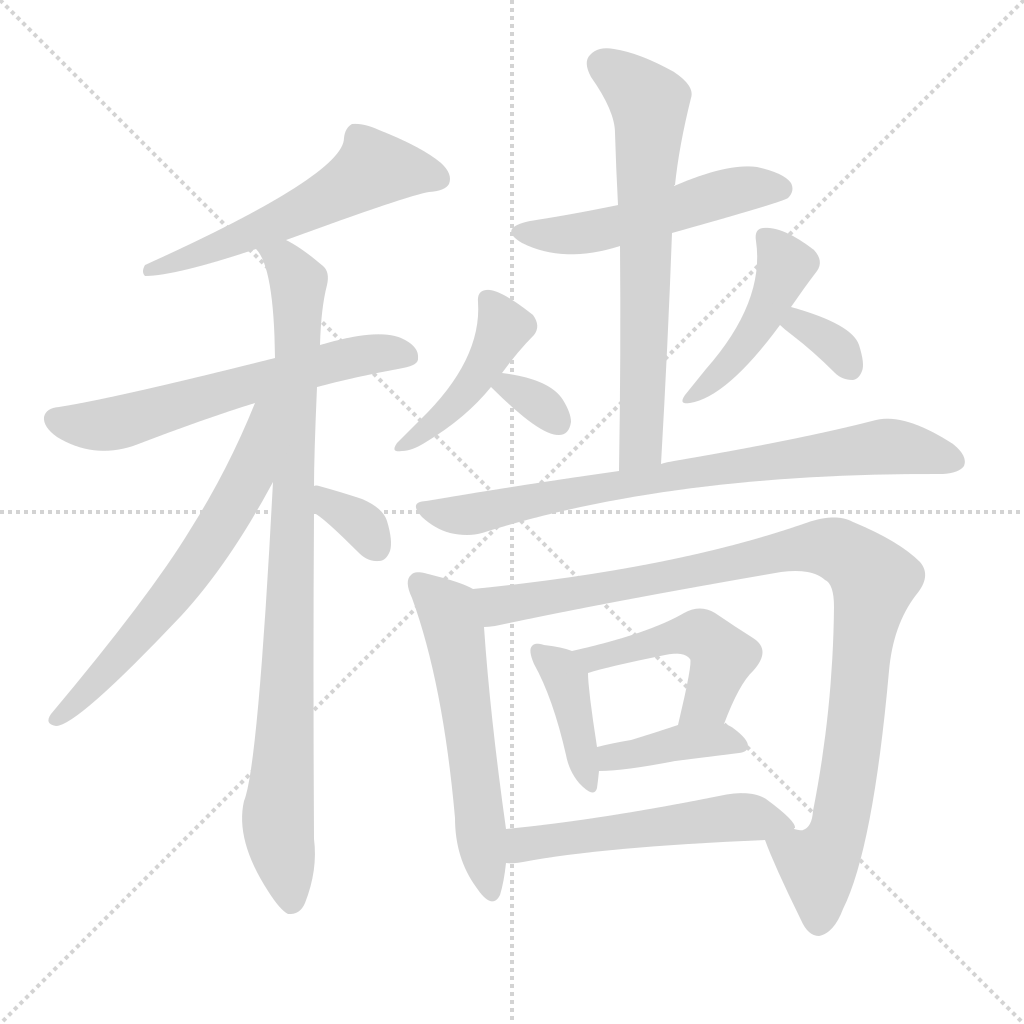
Se (sè); Kangxi stroke count: 18; Page 860, Entry 42
Pronounced se (falling tone).
According to the Explaining Graphs and Analyzing Characters (Shuowen jiezi), grain that is ready to be harvested is called se.
In the Book of Documents (Shangshu), chapter Pan Geng, it is written: Just as a farmer works the fields and toils at the harvest, so too shall there be an autumn yield. The sub-commentary states: Planting is called jia, and gathering is called se; se is the name for the autumn harvest.
In the sub-commentary to the Great Plan (Hongfan), it is stated: Se means to cherish; it implies that what has been gathered and stored is precious. It is also commonly written as the variant form (se).
In the Book of Rites (Liji), chapter Jiao Te Sheng, it mentions presiding over the first se and sacrificing to the officer of se. The commentary explains: The first se refers to someone like Shennong, and the officer of se refers to Houji.
It also means to be parsimonious or stingy. In the Zuo Tradition (Zuo Zhuan), under the twenty-first year of Duke Xi, Zang Wenzhong said: Devote effort to se and encourage the sharing of goods. The commentary explains: Se means frugality. The sub-commentary states: Se carries the meaning of cherishing, hence it denotes frugality.
In the first year of Duke Zhao, Mushu said: Large states practice frugality (se) and use their resources accordingly. The commentary explains: Se means to cherish.