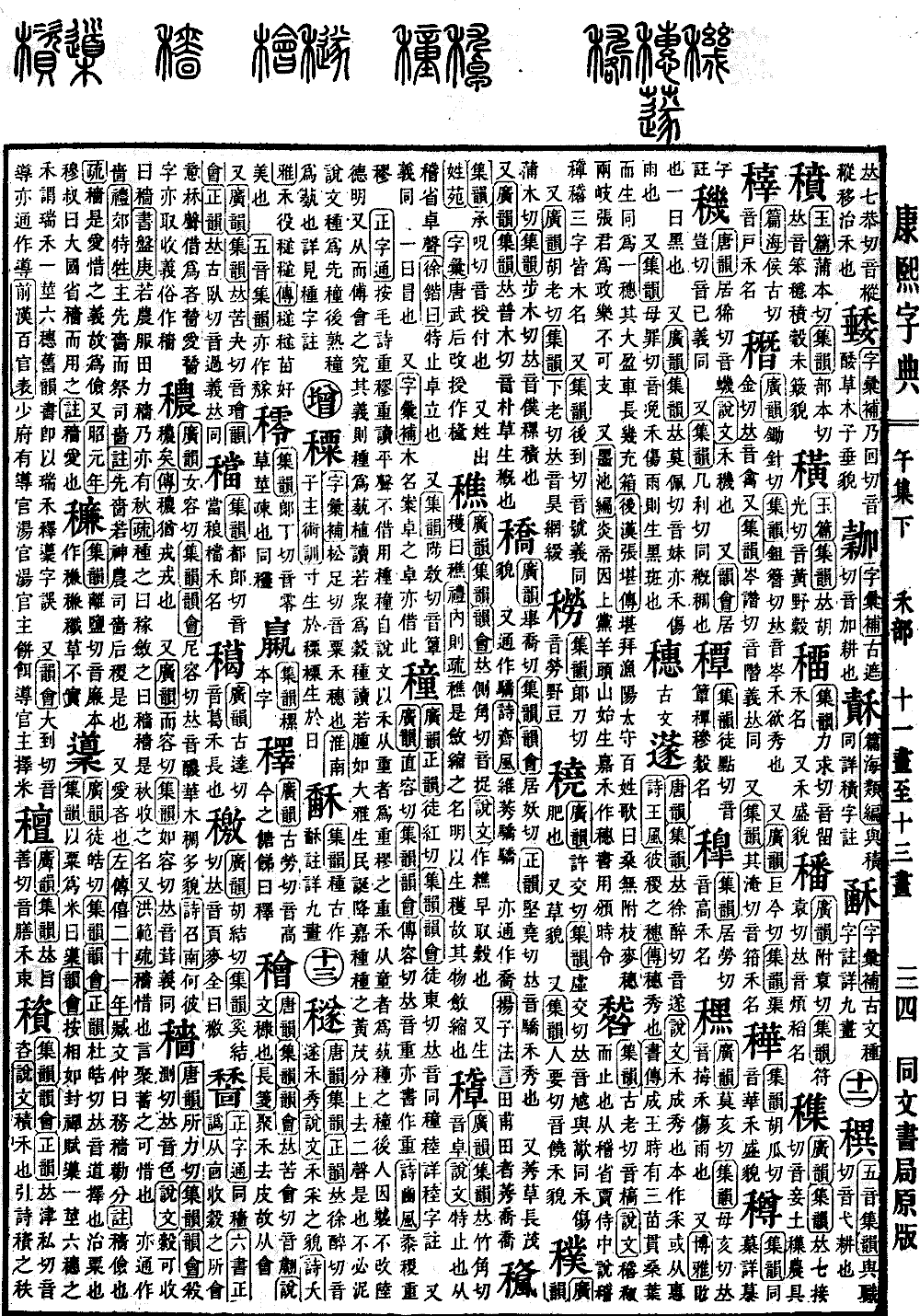
Wu Collection, Lower Volume
Radical: Grain (hé)
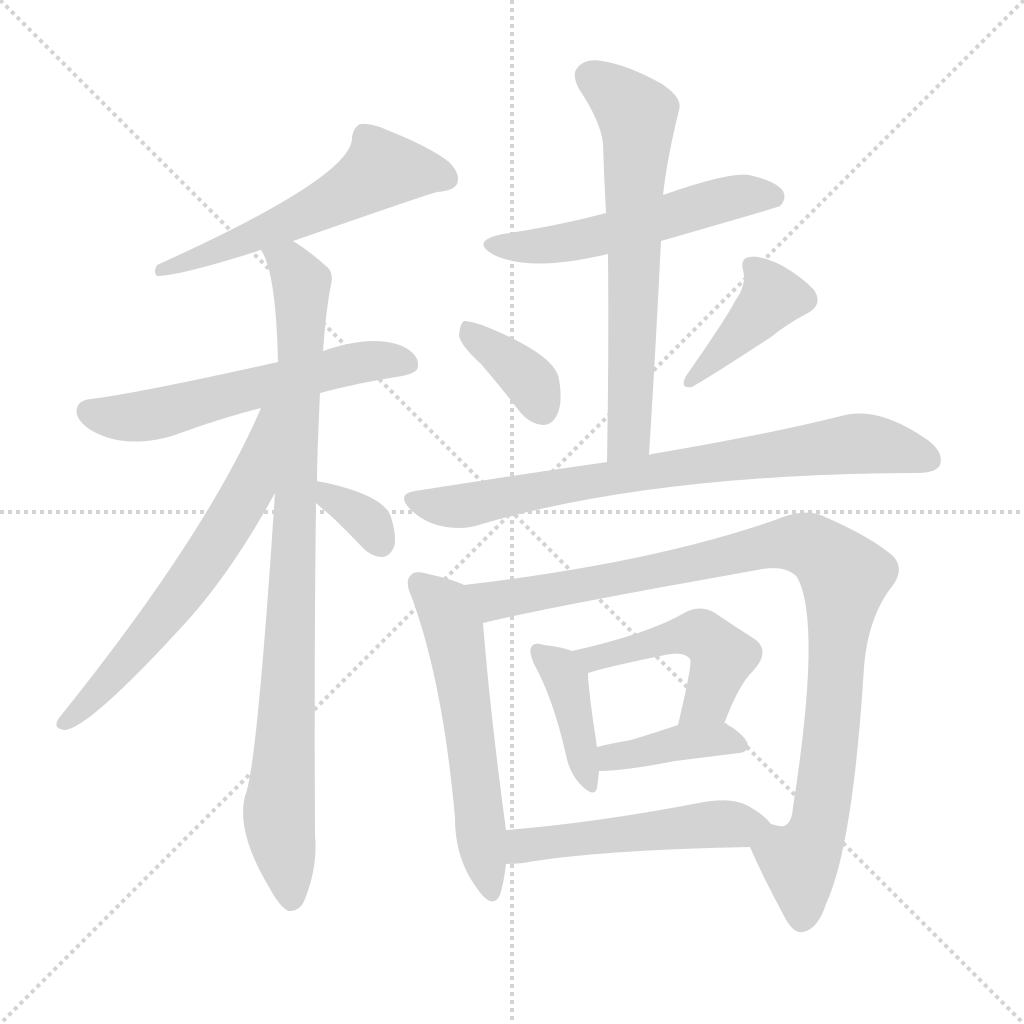
Character: se
Kangxi strokes: 18
Page 860, Entry 04
Pronounced se (falling tone).
According to the Explaining Graphs and Analyzing Characters (Shuowen Jiezi), grain that is ready to be harvested is called se.
In the Book of Documents (Shangshu), chapter Pan Geng, it is described as being like a farmer working in the fields and laboring at the harvest to obtain the autumn yield. The commentary explains that planting is called jia, and harvesting is called se; se is the name for the autumn harvest.
In the Commentary on the Great Plan (Hongfan Shu), se is defined as cherishing; it refers to the act of gathering and storing things that are worth cherishing. It is also written in a variant form (se).
In the Book of Rites (Liji), chapter Jiao Te Sheng, it mentions offering sacrifices to the First Husbandman and the Director of Husbandry. The commentary notes that the First Husbandman refers to Shennong, and the Director of Husbandry refers to Houji.
It also refers to being frugal or stingy. In the Zuo Tradition (Zuozhuan), twenty-first year of Duke Xi, Zang Wenzhong states that one should commit to frugality and encourage distribution. The commentary notes that se here means to be thrifty. The sub-commentary explains that se means to cherish, which is why it is interpreted as being thrifty.
In the first year of Duke Zhao, Mushu states that a great state should be frugal and put resources to good use. The commentary notes that se here means to cherish.