Chen Collection, Lower Volume
Radical: Stop (zhǐ)
Kangxi Strokes: 13
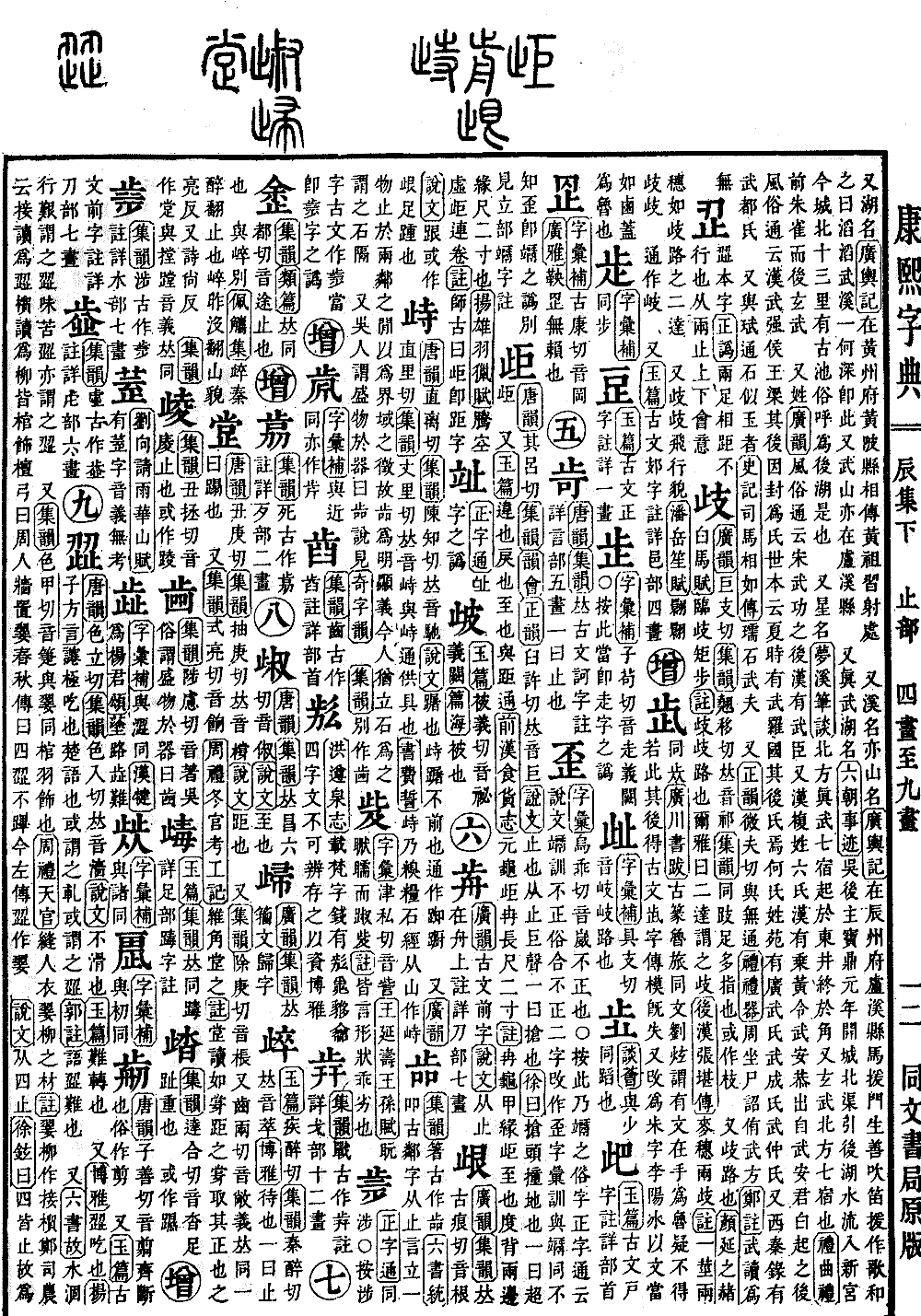
Page 576, Entry 43
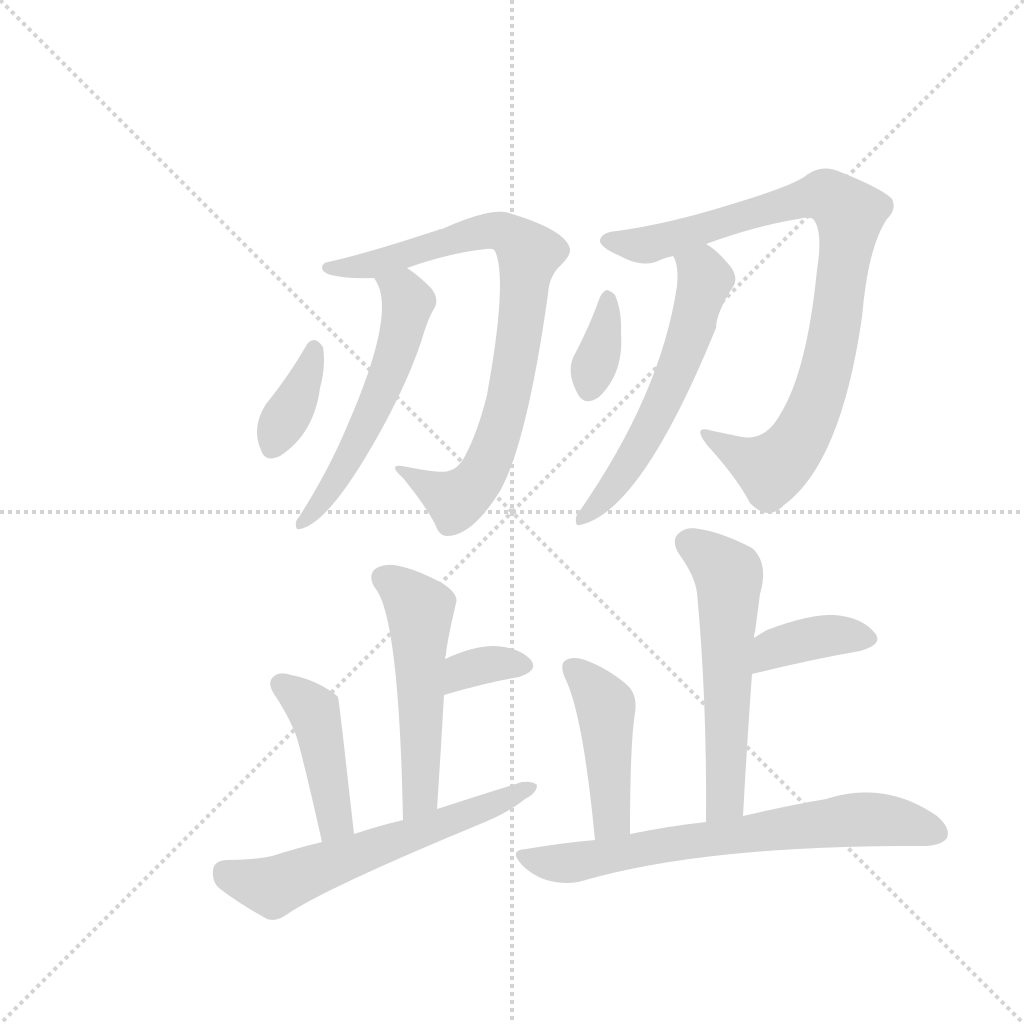
Pronounced se. Pronounced se. In both cases, the pronunciation is the same as the word for astringent or rough (se).
According to Explaining Graphs and Analyzing Characters (Shuowen Jiezi), it refers to something that is not smooth or slippery. According to the Jade Chapters (Yupian), it refers to something difficult to move or rotate.
Furthermore, the Broad Refinement (Boya) records that this character refers to a stutter. The Dialects (Fangyan) by Yangzi states that extreme difficulty in speech is a stutter, which is a regional dialect of the Chu territory; some regions call this ya, while others call it se. The annotation by Guo explains that this refers to speech that is performed with difficulty.
Furthermore, The Origins of the Six Writings (Liushu Gu) states: when water dries up and walking becomes difficult, it is called se, and a bitter or astringent taste is also called se.
Furthermore, according to the Collected Rhymes (Jiyun), it is pronounced sha. The pronunciation is the same as the character for a fan (sha). It refers to feather decorations on a coffin. The Rites of Zhou (Zhouli), Offices of Heaven, records: the sewing official is responsible for the covering materials of the coffin decorations. The annotation states that the decorations are written as a variant form (jie liu). Zheng Sinong states: the first part is read as se, and the second as liu; both are coffin decorations. The Book of Rites (Liji), Rites of the Various Families (Tanjong), states: people of the Zhou dynasty placed fans (sha) around the inner and outer coffins. The Spring and Autumn Commentary (Chunqiu Zhuan) states: the four fans (sha) did not clear the path. In the current Zuo Commentary (Zuozhuan), the character for this is written as sha.
Explaining Graphs and Analyzing Characters (Shuowen Jiezi) states that the character is composed of four stop radicals. Xu Xuan explains: all four parts are the stop radical, thus it is the character se. It should be written as se. In classical texts, it is written as se.
The Collected Rhymes (Jiyun) notes it is sometimes written as se or se. See the detailed entry under the water radical for the character se. The character se is composed of two stop radicals.