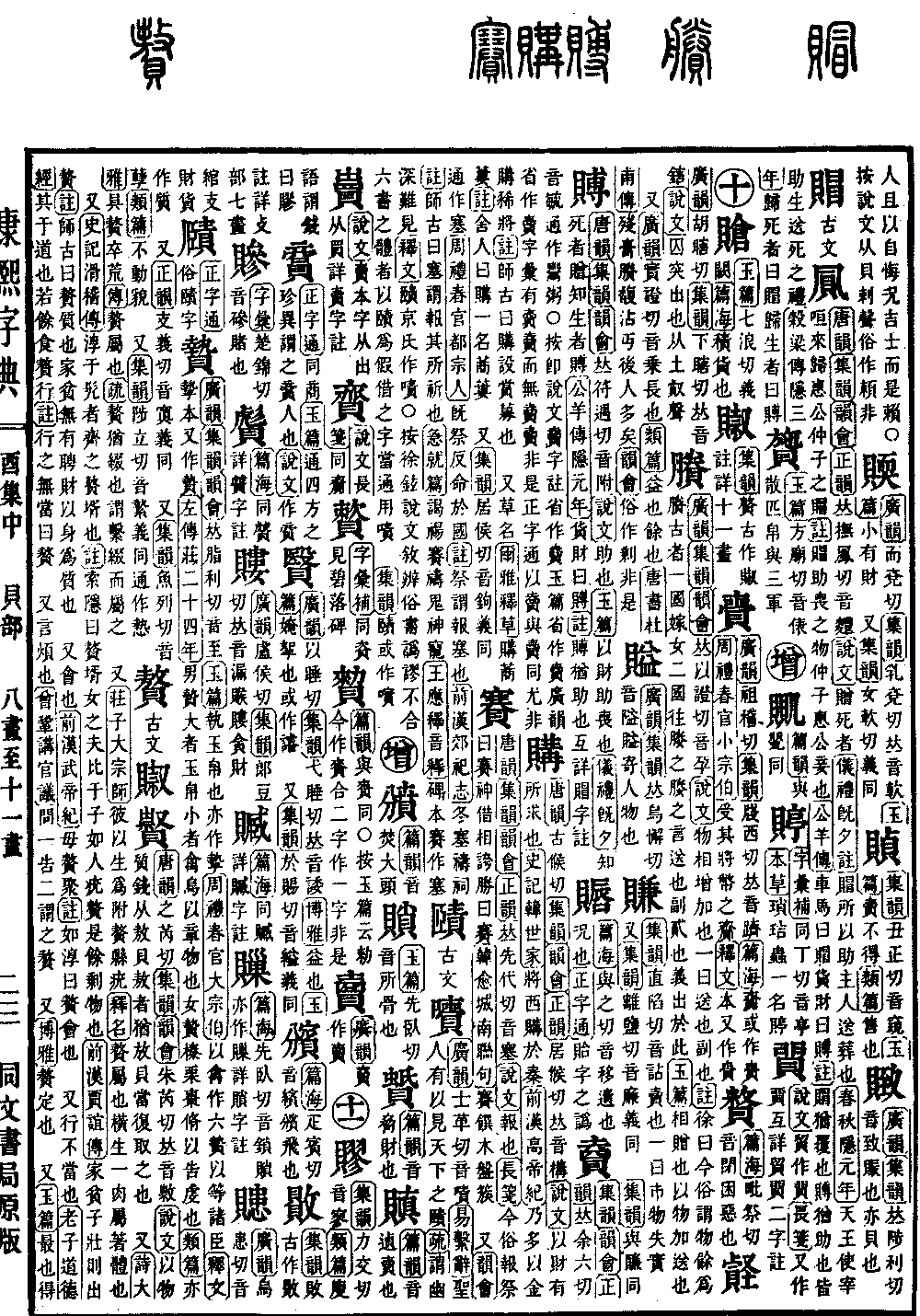
You Collection, Middle Volume
Radical: Shell (bèi)
赛
Kangxi stroke count: 17
Page 1211, Entry 01
Pronounced sai.
In the Shuowen Jiezi (Shuowen), it means to recompense. According to the Changjian, modern common parlance uses the term to describe offering a sacrifice in gratitude, known as sài shén (to sacrifice to the gods in gratitude), or to mutually boast of superiority, known as sài (to compete). In the City South Linked Verses (Cheng nan lian ju) by Han Yu, it is written: The sacrificial feast was clustered on wooden platters.
According to the Yunhui, it is also written as a variant form (sai). In the Rites of Zhou (Zhou li), Spring Officials, Metropolitan Ancestral Officer: Once the sacrifice is completed, return the mandate to the state. The commentary states: The sacrifice is called a recompense (sai). In the History of the Former Han (Qian han shu), Record of Suburban Sacrifices: In winter, offer prayers and sacrifices in gratitude (sai). The commentary by Yan Shigu states: The term sai refers to repaying that which was prayed for. In the Emergency Relief Chapters (Ji jiu pian): Seeking to exorcise and sacrifice to repay the spirits for their favor. In the Sound Explanations (Yin shi) by Wang Ying, the original character for sai is written as sai.